

Contents
Debunking the Myth: Does an Oven Really Use More Energy Than 65 Refrigerators?
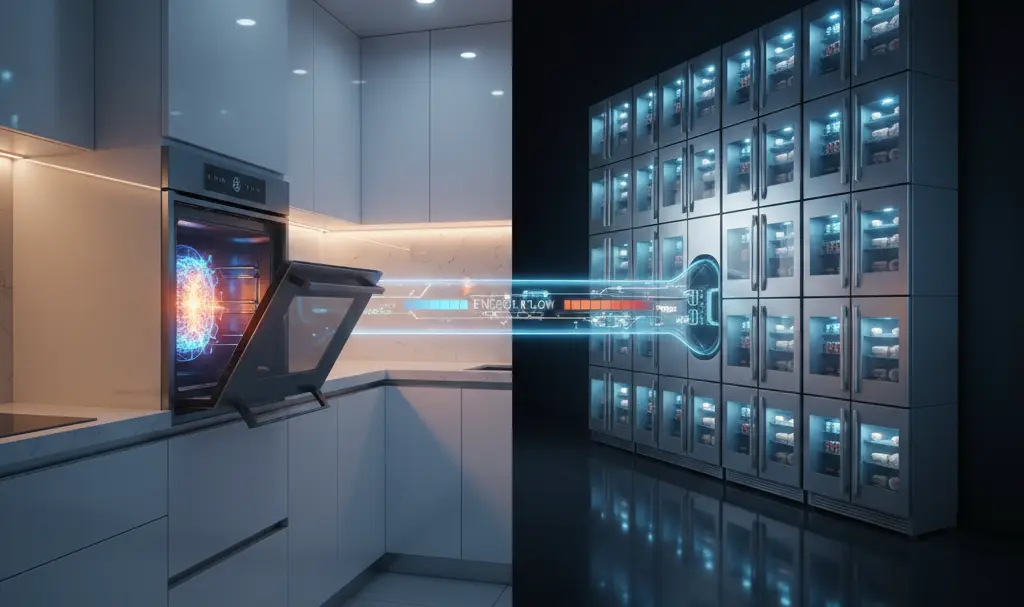
Some time ago, a viral comparison surfaced on the internet suggesting that a single kitchen oven consumes more electricity than 65 refrigerators. This provocative claim caught the attention of a journalist from the gaming and tech portal GameStar, who systematically debunked the myth, explaining why such a comparison is highly misleading.
The Origin of the Energy Consumption Myth
In September of last year, the French website JeuxVideo published an article comparing the electricity usage of 65 refrigerators to just one standard kitchen oven. The premise seemed shocking, but Nils Raettig, a tech journalist from GameStar, decided to fact-check the math behind the French authors’ thesis.
The primary criticism was the comparison’s selective use of data. As it turns out, the original claim only considered the oven’s absolute peak operating moments, completely ignoring the average cost of using the appliance over a standard billing period.
Breaking Down the Numbers: Peak Usage vs. Daily Averages
When analyzing the actual energy data, certain technical facts do align, but they require crucial context:
- Oven Energy Usage: A standard oven, during its first hour of heating to 200 degrees Celsius (about 400 degrees Fahrenheit), consumes approximately 2.5 kWh. It is worth noting that this is a worst-case scenario. Modern, energy-efficient ovens often consume up to 50% less power.
- Refrigerator Energy Usage: For comparison, a single refrigerator with an active freezer compartment draws about 0.04 kWh per hour.
If you multiply the refrigerator’s hourly usage by 65 units, you get an energy consumption of roughly 2.6 kWh. This makes it slightly higher than the peak hour of an older oven. However, this only looks at an isolated, one-hour window, which heavily distorts reality.
The Real World: Continuous vs. Selective Operation
The fundamental flaw in this viral comparison is the operational lifespan of the appliances. A refrigerator runs continuously—24 hours a day, 365 days a year. An oven, on the other hand, is only turned on for specific cooking tasks.
Many consumers looking to save on energy costs and cooking time are actually moving away from traditional ovens altogether, contributing to the rise of the air fryer replacing microwaves and ovens. If you are curious about these more efficient alternatives, reading a Tefal Easy Fry Infrared Air Fryer review can provide insights into modern, low-energy cooking solutions.
Monthly Electricity Consumption: The True Cost
To truly understand the difference in energy consumption, we must look at realistic monthly usage:
- The Oven’s Monthly Usage: If we assume a household bakes regularly for one hour every single day, the monthly energy consumption would be around 75 kWh (2.5 kWh × 30 days).
- The Refrigerators’ Monthly Usage: One refrigerator operating all day consumes roughly 1 kWh, totaling about 30 kWh per month. Therefore, 65 refrigerators working simultaneously for a whole month would consume a staggering 1,950 kWh (65 × 30).
While an oven certainly has a higher instantaneous draw, comparing its momentary power spike to the steady baseline power of dozens of fridges is mathematically accurate but practically absurd.

Conclusion: Context is Everything
Basic mathematics remains uncompromising. A deeper dive into the numbers clearly demonstrates that the comparison made by the French publication contained glaring factual omissions. By confusing peak hourly power draw with actual real-world energy consumption, the viral claim created a false narrative about household energy efficiency.
Frequently Asked Questions (FAQ)
Why is comparing oven and refrigerator energy consumption misleading?
Comparing an oven to a refrigerator is misleading because they operate on completely different cycles. An oven uses a high amount of energy for a very short, specific period (e.g., one hour of baking), whereas a refrigerator runs continuously 24/7. Comparing their peak hourly draw ignores real-world usage patterns over a month or year.
How much electricity does a modern oven actually use?
An older standard oven might use up to 2.5 kWh during its first hour of heating to 200°C (400°F). However, modern energy-efficient models, especially convection ovens, often use up to 50% less power.
Are there more energy-efficient alternatives to traditional ovens?
Yes. Smaller appliances like air fryers, toaster ovens, and microwaves heat up much faster and have a smaller interior space to keep warm, making them significantly more energy-efficient for everyday cooking tasks compared to full-sized conventional ovens.
Source: JeuxVideo, GameStar. Opening photo: Gemini
About Post Author
