
Contents
Dreame Enters the Smartphone Market: A Closer Look at the Aurora NEX and LUX Series
Dreame, a company widely recognized for its high-performance vacuum cleaners, is shaking up the tech industry by stepping into the smartphone arena. At the recent “DREAME NEXT” event in San Francisco, the brand surprised tech enthusiasts worldwide by unveiling its highly anticipated Dreame Aurora series. But are these innovative devices ready for the international market, or are they simply a glimpse into the future?
From Smart Vacuums to Smartphones
Dreame Technology is aiming high, making it explicitly clear that it has no intention of simply copying existing market leaders. The introduction of the Aurora NEX and LUX models highlights the company’s serious global ambitions in the mobile segment. Adding significant credibility to the event, Apple co-founder Steve Wozniak made an unexpected appearance, validating Dreame’s bold technological leap.
Aurora NEX: The Return of Modular Smartphones
The technological flagship of the lineup is the Aurora NEX. From an engineering standpoint, this smartphone is built around a highly versatile modular hardware architecture. It allows users to physically upgrade and modify their device’s capabilities using magnetic attachments.
Among the available modules showcased are:
- A 50MP action camera equipped with lightning-fast autofocus for dynamic environments.
- A 50MP telephoto lens featuring 10x to 20x zoom and LOFIC technology, which ensures single-shot HDR clarity.
- A satellite connectivity module for off-the-grid communication.
- A dedicated cooling fan module designed for intense mobile gaming sessions.
- An “Agent” module, functioning as an AI companion, though full details regarding its specific capabilities remain under wraps.
The modularity of the NEX revives an exciting concept in the tech world, reminiscent of projects like Fairphone, Motomods, or Google’s discontinued Project Ara—ambitious designs that aimed to reduce electronic waste and empower users but have yet to conquer the mainstream market.
Impressive Camera and Hardware Specs
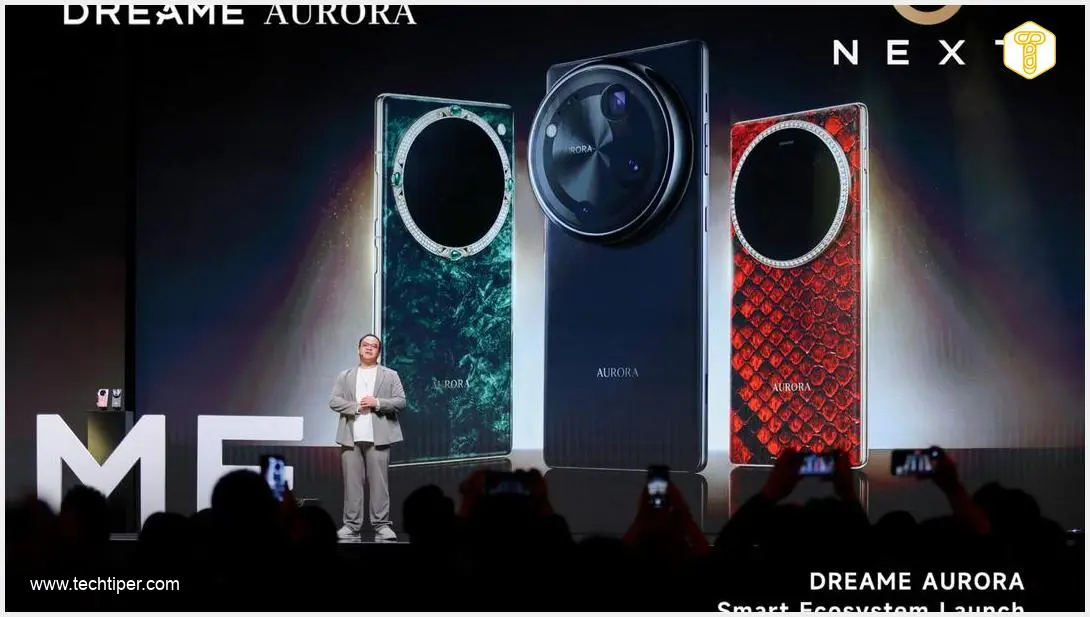
The standard Aurora model sports a large, circular camera module on the back, a design trend that draws visual comparisons to premium flagships. If you are following upcoming industry trends, this design language may remind you of devices highlighted in the Oppo Find X9 Ultra launch date revealed leaks.
For photography enthusiasts, the on-paper specifications of the Aurora NEX are nothing short of spectacular. The camera system boasts full-range 200-megapixel recording, LOFIC technology across all focal lengths, 3D spatial modeling, and 8K video recording at a smooth 60 frames per second without any cropping. These high-end features position it to rival premium upcoming devices, much like the Oppo Find X9 Ultra built-in teleconverter system. To power these demanding features, Dreame promises a massive 7,000 mAh battery with support for lightning-fast 80W wireless charging.
Aurora LUX: A Smartphone Crafted Like Fine Jewelry
Shifting the focus from raw technological utility to pure extravagance, Dreame also introduced the Aurora LUX lineup. These devices are marketed strictly as luxury items, blurring the line between a modern smartphone and a high-end jewelry accessory.
Each LUX device is finished using techniques borrowed from traditional craftsmanship and high-end jewelry making. The manufacturing process includes meticulously hand-applied details, 3D engraving, and classical artistic methods passed down through centuries. The LUX series offers five distinct design collections: Luxe Loop Sanctuary, Imperial Totem, Golden Age, Regalia Shield, and Axiom Geometry. Each collection features an identity so unique that they could easily be mistaken for entirely different brands.

Pricing for the LUX series reflects its exclusivity. In China, these premium devices are priced between 70,000 and 100,000 CNY (approximately $9,600 to $13,800 USD), positioning them firmly in the ultra-luxury tier.
Aurora AIOS 1.0: Dreame’s Custom Operating System
Perhaps one of the most ambitious aspects of Dreame’s mobile entry is its custom operating system: Aurora AIOS 1.0. Following extensive internal testing rounds, the OS is slated for an official release in the second half of 2026, explicitly tailored for the AURORA device family.
The operating system integrates four core AI-driven modules:
- AI Imaging: Optimizes the entire photography workflow to deliver professional-grade results.
- AI Privacy & Security: Provides robust protection for sensitive user data and financial transactions.
- AI Agents: Delivers personalized assistance by detecting user emotions and intelligently handling complex, multi-step tasks.
- AI Aesthetic Design: Generates dynamic themes, interfaces, and wallpapers tailored perfectly to the user’s current mood and preferences.
Early hands-on impressions from industry journalists suggest the software is built upon an Android foundation but draws heavy aesthetic inspiration from modern interface designs, with elements reminiscent of Apple’s future software iterations.
When and Where Can You Buy the Dreame Aurora?
Currently, the DREAME NEXT event served more as a showcase of the company’s technological capabilities rather than a traditional product launch. Dreame has not provided an official global release date, international retail pricing for the NEX, or confirmation of when—or if—these smartphones will hit international retail stores in regions like North America or Europe.
Frequently Asked Questions (FAQ)
Will the Dreame Aurora NEX modular phone be available globally?
As of now, Dreame has not announced official global availability or retail pricing for the Aurora NEX. The DREAME NEXT event served primarily as a technology showcase, and release dates for international markets remain unconfirmed.
What makes the Dreame Aurora LUX so expensive?
The Aurora LUX series is priced between roughly $9,600 and $13,800 USD because it is crafted like luxury jewelry. Each phone features hand-applied details, 3D engraving, and materials processed with traditional, multi-century artisanal techniques, making it an ultra-premium luxury item rather than a standard consumer electronic.
Can I use the Aurora AIOS 1.0 on other Android devices?
No, the Aurora AIOS 1.0 is a proprietary operating system developed by Dreame. It is currently slated for release in the second half of 2026 and will be available exclusively for smartphones within the Dreame AURORA series.
Source: Gsmarena, Techadvisor, Gizmodo, PR Newswire. Opening photo: Dreame press materials.
About Post Author