

Contents
The Record-Breaking Sale of “Jodi” the Nanotyrannus
A highly anticipated auction at Sotheby’s in New York saw a remarkably preserved Nanotyrannus skeleton, affectionately known as “Jodi,” shatter expectations. Initially estimated to fetch between $6 million and $9 million, the rare specimen ultimately sold for an astonishing $47.3 million. This significant sale highlights the growing private market for invaluable paleontological treasures, while also raising questions about their role in scientific advancement.
The Auction: A Swift and Secretive Sale
The bidding for “Jodi” commenced on October 27, 2026, and concluded in a mere 12 minutes. Six bidders actively participated in the intense competition, with the winning offer placed over the phone by an anonymous individual. The final price of $47.3 million underscores the immense value placed on such unique fossils by collectors, far exceeding the auction house’s initial projections.
Discovered in 2019 by Jodi Pierson on her ranch in Montana, the skeleton was named in her honor. The specimen was meticulously prepared for exhibition before entering the collector’s market. Sotheby’s confirmed that the sale included comprehensive documentation verifying its preservation status, authenticity, and legal ownership, ensuring a legitimate and well-vetted transaction for the discerning buyer.
Unveiling the Uniqueness of “Jodi”
“Jodi” represents a nearly complete, mounted skeleton of Nanotyrannus cf. lancensis, a smaller predatory dinosaur from the tyrannosaur group that roamed the Earth approximately 67 million years ago during the Late Cretaceous period. This fossil originates from the renowned Hell Creek Formation in Garfield County, Montana—one of the world’s most significant sites for discoveries from the era that marked the end of the dinosaurs.
Comprising approximately 191 fossilized bone elements, “Jodi” stands about 2.9 meters (approximately 9.5 feet) tall and stretches nearly 6 meters (about 19.7 feet) in length. Its most exceptional feature is an exceptionally well-preserved, almost complete skull, boasting around 50 teeth. Sotheby’s emphasized that “Jodi” is one of only three relatively complete Nanotyrannus skeletons known to science, making it a pivotal specimen for paleontological study.
The Debate: Nanotyrannus vs. Juvenile T. rex
For decades, a significant debate existed among paleontologists: were the small tyrannosaurs found in North America merely juvenile specimens of Tyrannosaurus rex that had yet to undergo a growth spurt? Or were they a distinct species?
This long-standing question began to be resolved in 2025 when two independent research teams published groundbreaking findings. Their studies, featured in prestigious journals like Nature and Science, presented compelling evidence that Nanotyrannus lancensis was indeed a separate taxon. This agile, faster, and smaller predator coexisted with T. rex, and crucially, the examined specimens were mature adults, not growing juvenile tyrannosaurs. This discovery significantly reshapes our understanding of Late Cretaceous predatory ecosystems.
“Jodi” Sets New Records, But Not All-Time Highs
The impressive $47.3 million sale price solidified “Jodi’s” position as the second most expensive dinosaur skeleton ever sold at a public auction. This record was previously held by a T. rex specimen, which fetched $50.1 million, also at Sotheby’s, in June of the same year. While “Jodi’s” sale was historic, it narrowly missed taking the top spot.
Despite the excitement surrounding such high-profile sales, the scientific community often voices concerns regarding the future accessibility of privately owned specimens. “Jodi” could offer invaluable insights into the diversity of predators at the close of the Cretaceous period, the evolution of tyrannosaurs, and the complex ecosystems of the Hell Creek Formation. However, there is no guarantee that its new, anonymous owner will make the specimen available to researchers or for public display, potentially limiting its scientific contribution.

Frequently Asked Questions (FAQ)
“Jodi” is considered exceptionally valuable due to its near-complete status, including a remarkably preserved skull with around 50 teeth. It’s one of only three relatively complete Nanotyrannus skeletons known, offering critical evidence in the scientific debate that recently confirmed Nanotyrannus as a distinct species from juvenile T. rex, thereby providing unique insights into Late Cretaceous biodiversity and tyrannosaur evolution.
Scientists are concerned because once a significant fossil enters private hands, its future accessibility for scientific research and public education becomes uncertain. An anonymous private owner might choose not to allow researchers to study the specimen or to display it in a museum, potentially hindering advancements in paleontology and limiting public engagement with natural history.
The 2025 research, published in Nature and Science, was crucial because it provided definitive evidence that Nanotyrannus lancensis was a distinct species, not merely a juvenile T. rex. This resolved a long-standing paleontological debate, revealing that Nanotyrannus was a mature, smaller, and more agile predator that coexisted with T. rex, thus enriching our understanding of Late Cretaceous predatory dynamics.
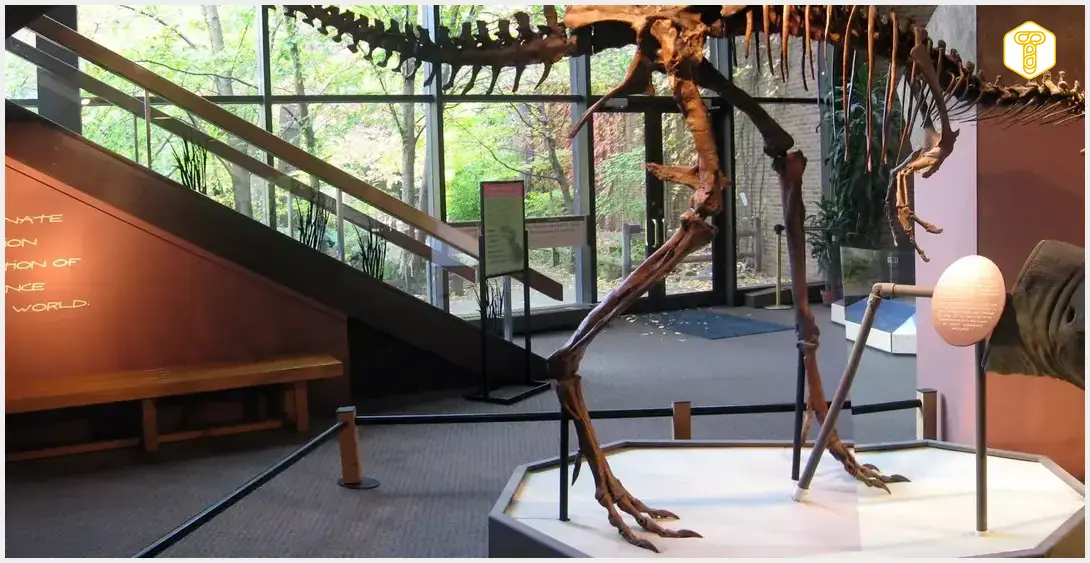
Source: The Sun, Sotheby’s. Opening photo: Matt Celeskey from Albuquerque – Jane (composite photo), CC BY-SA 2.0 / Wikimedia.org
About Post Author
