

Contents
The Future of Cooking: Invisible Induction Countertops Taking Over Kitchens in 2026
Induction hobs have become a staple in modern kitchens over the last decade. However, as we approach 2026, a revolutionary new solution is emerging. While it builds upon proven induction technology, this innovative approach is set to completely transform how we interact with our cooking spaces, offering unmatched functionality and seamless aesthetics.
What Is the Invisible Induction Countertop?
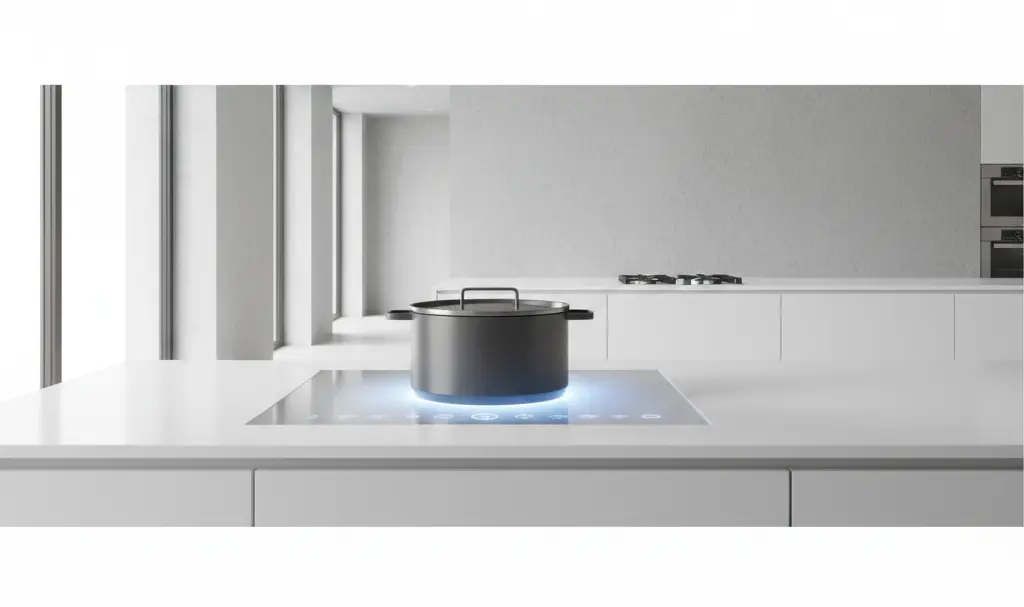
Imagine smooth, uninterrupted countertops featuring flexible yet completely invisible induction zones. This sleek design is rapidly replacing traditional glass cooktops, which are often considered among the most energy-intensive appliances in households. The standout feature of these modern smart counters is the complete absence of restrictive burner lines, rings, or markings.
At first glance, it looks like a standard high-end porcelain or ceramic kitchen island. However, the technology hidden beneath the surface is highly advanced. The system relies on automatic cookware detection. As long as your pot or pan has a magnetic base and a diameter between 6 to 14 inches (15–35 cm), the invisible cooktop instantly recognizes its exact position and adjusts the heating element to match its base perfectly.
Heat That Follows Your Cookware
One of the most impressive advancements in this 2026 kitchen tech is dynamic tracking. If you shift your pot or frying pan to another area of the counter, the heat actively follows the cookware, maintaining your precise temperature settings without interruption. Furthermore, the countertop remains completely dark until you touch it; the illuminated digital controls only appear upon contact, preserving the minimalist look of the kitchen.
This seamless integration into countertops is part of a broader shift toward hidden, multifunctional kitchen appliances. Similar to how the rise of the air fryer replacing microwaves and ovens has changed our countertop real estate, invisible induction systems are redefining the main cooking area.
Major Benefits of Hidden Induction Systems
Industry experts and kitchen designers are highlighting several core advantages that make this technology the top choice for modern home renovations:
- Ultimate Flexibility: You can place your pots and pans anywhere on the designated surface area, and they will still heat up evenly and efficiently.
- Effortless Cleaning: Without the raised edges or distinct glass panels of a traditional hob, cleaning up is as simple as wiping down the counter with a damp sponge.
- Exceptional Durability: Modern induction countertops are crafted from ultra-durable materials resistant to scratches and thermal shock. Additionally, when repairs are necessary, the modular components underneath are surprisingly cost-effective to fix.
- Aesthetic Appeal: It creates a stunning, unbroken visual line across the kitchen island, perfect for open-plan living spaces.
The primary drawback of this cutting-edge solution is the higher initial installation cost. However, considering the longevity, durability, and added home value, design experts strongly advise treating this system as a long-term investment rather than an immediate expense.
The True Cost of Cooking: Comparing Appliances
When planning a kitchen upgrade, it is crucial to evaluate ongoing operational costs. How much does it actually cost to cook your daily meals? The answer largely depends on your chosen technology. The most common setups today include gas stoves, traditional induction hobs, and electric ceramic cooktops.
Recent energy efficiency tests continually demonstrate that induction technology—whether traditional or invisible—remains significantly cheaper to run than gas or older ceramic models. Induction transfers heat directly into the cookware using electromagnetic fields, meaning almost zero ambient heat is lost in the process.

As you optimize your kitchen for energy efficiency, supplementing your main cooktop with specialized small appliances can drive down costs further. For example, exploring our Tefal Easy Fry Infrared Air Fryer review reveals how targeted infrared and air-frying technology can handle daily cooking tasks using a fraction of the electricity required by a full-size oven.
Frequently Asked Questions (FAQ)
Can I use regular pots and pans on an invisible induction countertop?
No, just like standard induction hobs, invisible induction countertops require cookware with magnetic bases. Materials like cast iron, enameled cast iron, and many types of stainless steel will work perfectly. Aluminum, copper, or glass pans will not generate heat unless they feature a specialized magnetic bottom plate.
Does the countertop surface get extremely hot to the touch?
The countertop itself does not generate heat; the electromagnetic field heats the pan directly. However, some residual heat will transfer from the hot pan back to the countertop surface. While it will feel warm or hot immediately after cooking, it cools down much faster than traditional electric ceramic hobs and drastically reduces the risk of severe burns.
What materials are invisible induction countertops made from?
These specialized countertops are typically manufactured using large-format porcelain or ultra-compact sintered stone. These materials are chosen because they are non-porous, highly resistant to thermal shock, scratch-resistant, and do not interfere with the electromagnetic waves required for the induction cooking process.
Source: Truc Mania – Ouest-France & Opening photo: Gemini
About Post Author
