

Contents
Google Unveils the Future of Mobile: Major Announcements from Android Show I/O 2026
During the highly anticipated Android Show I/O 2026 conference, Google presented a diverse array of new technological solutions set to hit the market soon. Moving beyond traditional system updates, the tech giant is expanding its hardware and software horizons, fundamentally altering how users interact with the Android ecosystem. From mobile software to artificial intelligence and automotive tech, Google has officially laid its cards on the table.
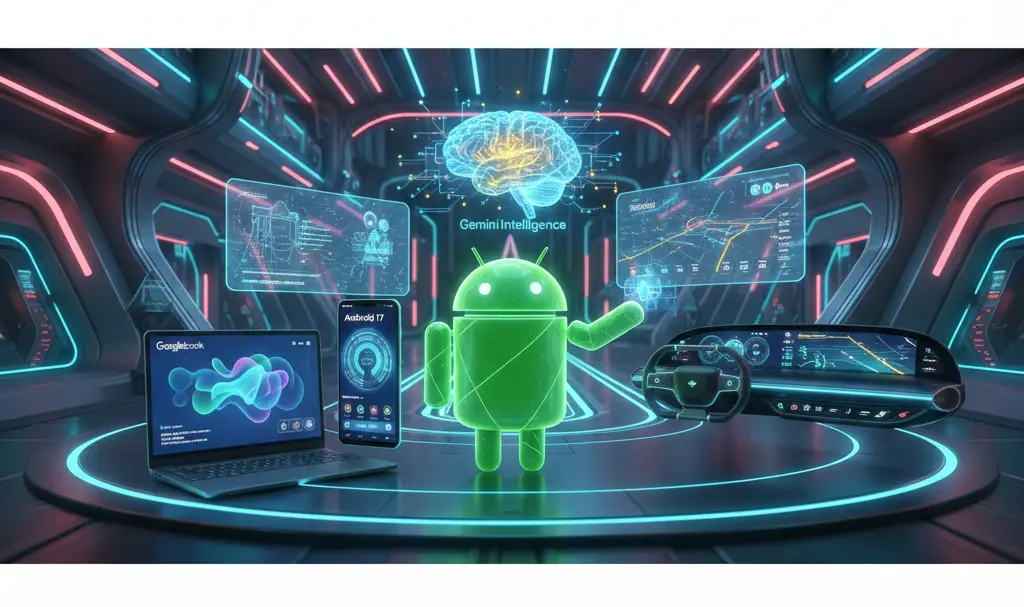
Here are the four upcoming Android innovations that are poised to completely change the system.
1. Android 17: Bridging Ecosystems and Enhancing Media
The event prominently featured announcements regarding the upcoming Android 17. This next-generation operating system introduces tools designed for modern digital communication and content creation.
- Screen Reactions: A brand-new feature allowing users to simultaneously record their screen and themselves using the front-facing camera, perfect for tutorials and reaction videos.
- Instagram Optimizations: A comprehensive package of updates for the Android Instagram app brings much-needed tablet optimization, advanced video stabilization, and integration with Instagram Edits—an AI-powered video mounting tool.
- Adobe Premiere Integration: This summer, a dedicated, system-level version of Adobe Premiere will be introduced to enhance native video editing capabilities.
Breaking Down the Walls Between Android and iOS
Perhaps the most groundbreaking update is the improved connectivity between Android and iOS devices. Google’s Quick Share feature will soon integrate directly with Apple’s AirDrop. This seamless cross-platform sharing will be available on smartphones from Samsung, Xiaomi, vivo, OPPO, OnePlus, and Honor. Furthermore, transitioning from iOS to Android will become significantly easier this summer, with streamlined transfers for photos, applications, contacts, and even saved passwords.
2. Gemini Intelligence: AI Deeply Woven into the System
Artificial Intelligence took center stage with the introduction of Gemini Intelligence, an advanced suite of AI tools making its debut in the coming months. Early adopters utilizing Google Pixel and Samsung Galaxy smartphones will be the first to experience these features.
What can users expect from Gemini Intelligence?
- Task Automation: Enhanced capabilities for automating repetitive tasks across various applications.
- Smarter Browsing: Google Chrome will feature deep Gemini integration, allowing users to ask contextual questions based on the active website they are reading.
- Personal Intelligence: A new feature that intelligently and automatically fills out complex forms securely.
- WearOS Upgrades: Smartwatch users will soon have the ability to generate highly personalized widgets and tiles on their wearable devices.
3. Googlebook: The Next Generation of Laptops
Historically, Google’s involvement in the laptop space has been synonymous with Chromebooks. However, driven by the rapid evolution of Gemini Intelligence, Google is introducing an entirely new category of portable computers: Googlebooks.
Scheduled for a broader market debut this fall, these laptops are built from the ground up for AI integration. They will feature deep synchronization with smartphones and allow users to create custom, AI-driven widgets directly on their desktops. To bring this hardware to life, Google is collaborating with top-tier manufacturers, including Lenovo, HP, Dell, Acer, and Asus.
4. Android Auto: A Revolutionary Driving Experience
The final major announcement from Android Show I/O 2026 involves a massive overhaul of Android Auto. This update represents a minor revolution for in-car software, primarily driven by a modernized interface featuring fluid animations, updated typography, and an immersive navigation layout.

High-Definition Entertainment on the Go
Media playback is taking a massive leap forward. Android Auto will soon support Full HD (1080p) video playback at a smooth 60 frames per second. To complement the visual upgrade, vehicles will receive Dolby Atmos support for a premium, spatial audio experience.
This high-end entertainment package will initially roll out to a select group of car manufacturers, including BMW, Mercedes-Benz, Škoda, Renault, Volvo, Hyundai, KIA, Mahindra, Genesis, and Tata.
AI in the Passenger Seat
Finally, Google confirmed that a much deeper Gemini Intelligence integration into Android Auto is slated for later this year. While exact release dates remain undisclosed, this AI integration promises to offer proactive assistance, smarter navigation, and advanced voice controls for drivers.
Frequently Asked Questions (FAQ)
Will the new Googlebooks replace traditional Chromebooks?
While Chromebooks will likely continue to exist as budget-friendly, cloud-based options, Googlebooks represent a new premium tier of laptops focused heavily on local AI processing and deep ecosystem integration via Gemini Intelligence.
How does the Quick Share and Apple AirDrop integration work?
The upcoming update will allow supported Android devices (from brands like Samsung, Xiaomi, and OnePlus) to discover and transfer files directly to and from iOS devices via Apple’s AirDrop protocol, effectively bridging the file-sharing gap between the two major mobile operating systems.
Which smartphones will get the Gemini Intelligence features first?
Google has stated that the initial rollout of Gemini Intelligence will prioritize their own Google Pixel devices, alongside flagship Samsung Galaxy smartphones, before expanding to other Android manufacturers in the future.
Source: Google, 9to5Google. Opening photo: Gemini
About Post Author
