

Contents
Pioneering Electric Ice Exploration: Pursuit’s Innovative Vehicle
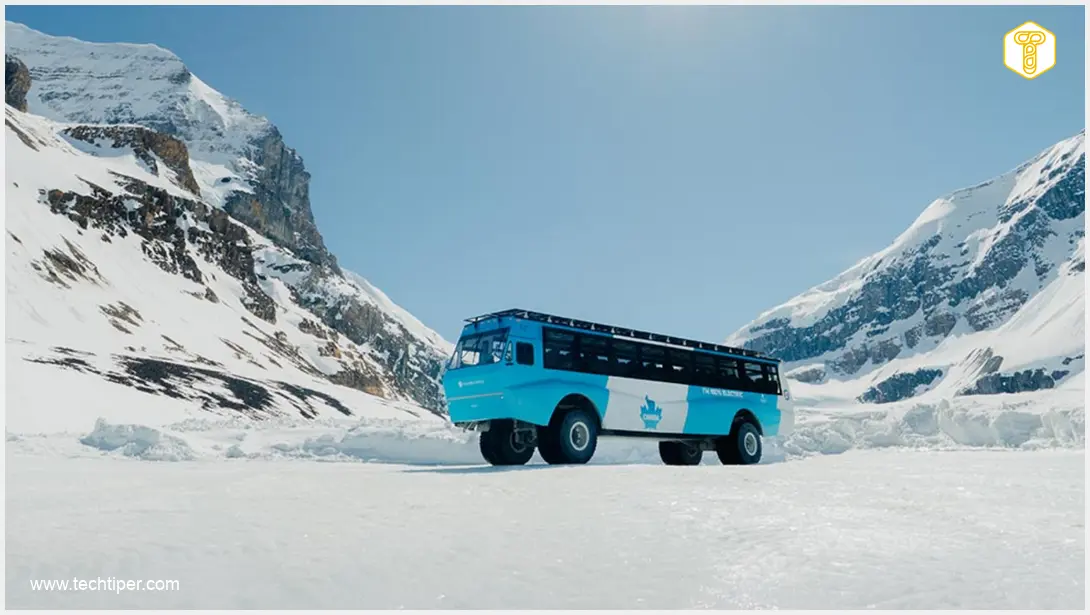
The world of electric mobility has seen exponential growth and innovation in recent years, constantly redefining what’s possible. Yet, even in this rapidly evolving landscape, some developments still manage to captivate and surprise. One such breakthrough comes from the Canadian company Pursuit, which has unveiled an extraordinary electric vehicle designed for exploring icy terrains. What makes this innovation particularly compelling is its origin: this state-of-the-art explorer was once powered by a traditional diesel engine.
From Diesel Power to Electric Might: A Groundbreaking Transformation
In a remarkable collaboration, Pursuit, a Canadian firm, partnered with Noble Northern to create a truly unique ice exploration vessel. This machine stands out not just for its robust capabilities, but for being the world’s first fully electric vehicle of its kind.
The transformation involved a comprehensive overhaul, meticulously converting the vehicle from its original diesel powertrain to an advanced electric cell system. This wasn’t merely an engine swap; the modernization also included implementing a lighter undercarriage and a sophisticated pneumatic suspension system, significantly enhancing its performance and efficiency on ice. Interestingly, the only component that remains from its previous incarnation is the upper cabin, a testament to the depth of the electric conversion.
Advanced Features for Arctic Adventures
The newly electrified ice explorer is equipped with a substantial 528 kWh battery pack. This impressive capacity allows for extended operations, equivalent to numerous round trips across vast and challenging icy environments like the Columbia Icefield in Alberta, Canada.
Beyond its formidable power source, the vehicle incorporates several other cutting-edge features crucial for extreme conditions:
- Optimal Temperature Management System: Ensures peak battery performance and longevity even in sub-zero temperatures.
- Regenerative Braking: Captures and reuses energy during deceleration, further extending the vehicle’s operational range.
- Integrated Photovoltaic Cells: The roof features twelve solar panels, which, under favorable conditions, feed additional energy directly into the battery, enhancing self-sufficiency during long expeditions.
This electric conversion also delivers significant environmental benefits. Compared to its diesel predecessor, the electric ice explorer can reduce CO₂ emissions by as much as 300 kilograms per operating cycle, marking a substantial step towards more sustainable exploration practices.
Extending Electric Vehicle Battery Lifespan: The Role of AI
One of the most frequently discussed topics regarding electric vehicles (EVs) is the longevity of their batteries. While concerns about battery degradation are common, innovative solutions are constantly emerging to address this. Fortunately, advancements in technology, particularly those leveraging artificial intelligence (AI), are proving instrumental in significantly extending battery life.
For those interested in how various technologies are pushing battery boundaries, exploring developments in areas like semi-solid-state batteries for vehicles such as the MG4 Urban and MG S9 can offer further insights.
Scientists at Sweden’s Chalmers University of Technology have developed a remarkable algorithm that utilizes AI to manage battery charging and discharge cycles more efficiently. This AI-powered solution can extend an electric vehicle battery’s lifespan by up to 23% without compromising the charging speed typically offered by standard fast chargers. This innovation highlights the potential for AI to overcome one of the key challenges in wider EV adoption. Understanding such technologies can also help individuals optimize their personal devices; for instance, learning how to improve iPhone battery life through settings adjustments utilizes similar principles of efficient power management.

Frequently Asked Questions (FAQ)
What makes Pursuit’s electric ice explorer unique?
It is the world’s first fully electric vehicle designed specifically for ice exploration, having been completely converted from a diesel-powered machine to an advanced electric powertrain. It features a substantial 528 kWh battery, optimal temperature management, regenerative braking, and rooftop solar panels.
How does the electric conversion impact the environment?
The electric ice explorer significantly reduces its environmental footprint by cutting CO₂ emissions by up to 300 kilograms per operating cycle compared to its diesel predecessor, contributing to more sustainable arctic research and tourism.
What role does AI play in enhancing EV battery life?
AI algorithms, such as those developed by Chalmers University of Technology, can optimize battery charging and discharge processes, potentially extending an electric vehicle’s battery lifespan by as much as 23% without compromising fast charging capabilities. This technology addresses concerns about battery degradation in EVs.
Source: InsideEVs. Opening photo: Gemini
About Post Author
