

Contents
The Double Standard: Patients Embrace AI for Health While Criticizing Doctors Who Do
Patients often spend hours conversing with AI chatbots like ChatGPT about their medical scan results, asking for explanations in “human language.” Yet, the same individuals express outrage when a doctor uses the very same tool to draft a discharge summary. This apparent contradiction highlights a significant shift: artificial intelligence has long since entered clinics, hospitals, and diagnostic systems, becoming an undeniable part of our healthcare reality.
Internet Users Outraged by Doctor Using ChatGPT, While AI Has Long Been Part of Medicine
Many people only became aware of doctors using AI after an incident at a regional pediatric hospital. A doctor there used ChatGPT to proofread a patient’s emergency room discharge summary. Likely due to an oversight, a fragment revealing the chatbot’s use was not removed, which a concerned social media user flagged:
“This personally terrifies me. Today a discharge summary, tomorrow treatment using AI?”
The hospital confirmed the authenticity of the document, explaining that no identifiable patient data was fed into the AI model. “The resident doctor creating the entry, both in the subjective and objective examination, used the medical documentation forms applicable in the hospital. The tool was used to draft three sentences of the interview for linguistic correction. No sensitive patient data was entered,” the hospital management stated in response to inquiries.
Despite this explanation, internet users reacted sharply, accusing the doctor of lacking the competence required for the profession. Comments ranged from disbelief – “I was convinced it was fake. I literally can’t believe someone could be so stupid. If only it were some demanding form” – to more radical demands: “Ban them from practicing for life, inform the rest of the quacks, and let them be afraid.” This incident sparked a broader conversation about AI in healthcare and doctor-patient trust, as detailed in our previous coverage: ChatGPT in the Emergency Room: Hospital Responds to Allegations of AI Use in Healthcare.
More Technology in Hospitals: Government Initiatives and Widespread Adoption
Many commentators are seemingly unaware that similar tools have been used in medical care for a long time. Moreover, some facilities openly inform their patients about this. A user in an online community shared a photo of a sign in a hospital stating that “The Emergency Department is supported by an AI Scribe.”
The sign indicated that conversations with doctors would be “supported by an AI system that will help precisely record important information.” Patients who did not consent were asked to inform the medical staff.
The fact that hospitals are increasingly keen to implement such technologies is no secret. Algorithms are currently used for tasks such as detecting lung cancer in CT scans, assisting mammography, and diagnosing strokes during acute emergencies. In some examinations, these systems achieve effectiveness comparable to an experienced radiologist, while simultaneously reducing image analysis time.
The European Society of Radiology even speaks of “augmented radiology,” a model where a doctor and an algorithm collaborate under human supervision. According to industry data, over 60% of diagnostic centers in the European Union are expected to use AI in at least one area of imaging diagnostics by 2026.

The role of the doctor is also changing. Increasingly, radiologists do not analyze images from scratch but supervise and approve initial analyses prepared by algorithms. AI performs the initial data processing, lesion segmentation, or comparison with previous examinations, while the specialist is responsible for the final clinical interpretation. Reports suggest that the time to describe a single examination has decreased from an average of 15 to 6 minutes, and productivity has increased by about 40%.
However, regulations like the European Union’s AI Act clearly emphasize that responsibility for diagnostic decisions still rests with a human. An algorithm can support image analysis, organize data, or indicate potential abnormalities, but it does not replace a doctor’s clinical judgment. Systems used in diagnostics are considered high-risk medical devices and are subject to strict certification.
New regulations also require greater transparency. Patients have the right to know that their examination was evaluated with AI support, and facilities should maintain documentation showing how the algorithm operates. The World Health Organization (WHO) and UNESCO even recommend special “AI Assisted” labels in diagnostic reports.
Beyond Diagnostics: Other Applications of AI in Healthcare
Diagnostic imaging is just one facet of AI’s expanding role. AI is increasingly supporting healthcare professionals during consultations themselves.
Advertisements for such tools regularly appear on platforms aimed at medical practitioners. Many medical professionals receive invitations to webinars on using AI in medicine, often accompanied by e-books explaining how to use chatbots in a clinical setting.
These resources often highlight how AI can:
* **Simplify medical reports**: Making them more understandable for patients.
* **Act as virtual assistants**: Suggesting possible diagnoses based on provided information.
* **Support telemedicine**: Collecting preliminary information about symptoms to determine the need for a more thorough medical examination.
* **Automate note-taking**: Systems can operate in the background during consultations, processing conversations and preparing summaries including symptoms, diagnoses, treatment plans, and medication lists within seconds.
“Management Encourages Us to Use AI Tools”
To verify the practical application of these tools, one doctor, Piotr, working in a network of private medical facilities, confirmed that his superiors actively promote similar solutions. “They encourage us to use an AI tool for transcribing consultations,” he shared.
Piotr also uses chatbots to articulate sentences better. He never inputs any identifiable patient data, although technically, he could. “We have permission to embed confidential data in certain corporate subscriptions because it’s not used to train the model,” he explains.
Therefore, if he encounters a patient who speaks quickly and chaotically, Piotr can transcribe the conversation and then organize it into a logical summary. This saves him time, allows him to dedicate more attention to the patient, and provides a clear visit summary.
Healthcare Professionals Believe AI Can Shorten Treatment Waiting Times
Healthcare professionals generally approach these technologies without major apprehension. Over 76% believe that artificial intelligence can shorten waiting times for treatment and increase access to services, according to the Future Health Index 2025 report prepared for Philips.
This isn’t about AI making diagnoses without a doctor’s involvement. Most often, it concerns the automation of repetitive tasks, assistance in information retrieval, or support in diagnostic decision-making.
Imagine a scenario where a doctor, instead of spending minutes manually writing notes, transcribes a patient conversation and only organizes and corrects it afterward. This allows them to see the next person faster, reducing long waits in emergency departments.
However, there’s a flip side: not every medical professional possesses extensive knowledge about AI tools. Without proper training, they might unknowingly feed private patient data into a chatbot. The official implementation of such systems gives facilities at least partial control over which tools employees use and how they use them.
Patients Criticize Doctors’ AI Use While Self-Diagnosing with AI
Patients often react to doctors using AI with reluctance—even outrage. The discussion following the hospital incident perfectly illustrates this. The paradox, however, is that people are increasingly asking chatbots for health advice themselves.
“When I received my diagnosis, I asked ChatGPT for an explanation because the doctor wrote it in a way that I couldn’t understand half of it,” says Kacper.
His medical documents only stated that he had “a broad disc protrusion, modeling the dural sac, narrowing the lateral recesses…” Kacper understood little from this—he only knew he was in pain. The prescribed medications caused stomach problems, forcing him to choose between avoiding back pain or abdominal pain.
His orthopedic specialist primarily recommended lying down with his legs elevated. It was an AI chatbot that suggested over-the-counter medications that might be less irritating to the stomach and recommended exercises that wouldn’t worsen the situation.
“Ultimately, I learned more than during a fifteen-minute doctor’s visit,” he admits. He shared a snippet of a conversation where ChatGPT suggested: “You should stretch daily and lie on a hard surface several times a day.” Kacper implemented these recommendations, and his friends no longer find it strange when he suddenly lies on the floor during social gatherings. He also asked if he could hang from a pull-up bar, if medication would speed up recovery, if he would get an orthopedic corset, and if he should get a massage. ChatGPT even generated a graphic with a red dot marking where the disc was pressing on the nerve, helping him better understand the source of his pain.
AI Chatbots Can Misinterpret Symptoms, Like Heartburn for a Heart Attack
Similar stories regularly appear on online forums. “I learned more about my own heart from ChatGPT than from two cardiologists. The visit lasted 15 minutes, and I chatted with AI all evening,” one user shares. Another also praises AI: “My foot hurt. I started looking for an orthopedic specialist. A public healthcare doctor? Next year. Private? 15 minutes for 400 zloty (approximately 100 USD). I fired up ChatGPT, Gemini, and Copilot. They drew up an exercise plan for me. My foot no longer hurts. Goodbye, quacks, 400 zloty in my pocket!”
And this is where a certain trap lies. Many patients assume that since a chatbot provided them with more detailed answers than a doctor, it is automatically a “better specialist.” They fail to realize that they spent fifteen minutes in the doctor’s office, but several hours with AI. The chatbot had time to analyze subsequent symptoms, ask additional questions, and search vast resources of information before generating an answer.
A doctor during a visit often focuses primarily on ruling out the most dangerous scenarios and making a specific medical decision. A chatbot does not feel time pressure, does not have a queue of patients outside the door, and can generate a dozen potential explanations for a single symptom. However, AI also has a tendency to hyperbolize; a sudden headache can be interpreted as a stroke or an aneurysm, and heartburn—as a heart attack. Consequently, many people fall into a spiral of anxiety, analyzing possible diseases for hours. This hyper-focus on worst-case scenarios and potential for distress is a critical concern, as highlighted in warnings about AI chatbot risks to mental health.
Consequences of an Inefficient Healthcare System Affect Everyone
In this entire “controversy,” perhaps the issue isn’t that doctors are using AI, but a lack of understanding of how they are using it. Many patients imagine that a doctor consults with a chatbot during a visit, or allows an algorithm to make decisions for them. Meanwhile, AI most often merely transcribes conversations, organizes notes, or helps to improve a part of the documentation.
And this is where the paradox arises. Patients readily ask chatbots about their test results, medication side effects, or interpretations of diagnoses, while simultaneously expecting their doctor to work entirely manually. If a doctor uses AI, they are very quickly branded as a “quack.” It matters little that they operate within a healthcare system that has been on the brink of collapse for years and increasingly struggles without additional tools to support medical staff.
Many countries face a shortage of medical professionals. For example, the Organization for Economic Co-operation and Development (OECD) points out that the problem stems from an aging workforce, migration of healthcare workers, and an insufficient number of medical graduates. The consequence is increasingly longer queues in clinics and hospitals and more difficult access to services.
OECD data illustrates the scale of the problem. Many nations, like Poland mentioned in the original context, still have fewer nurses than the OECD average (e.g., 5.9 per thousand inhabitants versus an average of 9.2 in some regions). Access to long-term care and modern diagnostic equipment also lags. While some countries might fare better in terms of hospital beds (e.g., 6.3 per 1,000 population compared to an OECD average of 4.2), the overall picture is one of strain.
AI in Medicine Can Partially Address Systemic Gaps
The OECD notes that one of the biggest barriers to accessing treatment remains waiting lists. This refers both to patients waiting for hours in emergency departments and to doctors completing documentation after multiple shifts, or residents who, after a brief conversation, still need to fill out paperwork, describe examinations, and prepare discharge summaries.
AI will not solve the root problem and will not magically increase the number of medical professionals or hospital beds. However, it can become a tool that helps to partially patch up the strained system. If an algorithm can reduce the time taken to create documentation by several minutes for each patient, a doctor can see the next person waiting in the emergency room or clinic faster.
While such “patching” might resemble putting a bandage on a broken arm rather than a real healthcare reform, it perfectly illustrates why artificial intelligence is so quickly making itself at home in this sector today. Neither outrage nor calling doctors “quacks” has, to date, shortened queues or eased the burden on overworked medical professionals.
Frequently Asked Questions (FAQ)
Is it safe for doctors to use AI like ChatGPT in healthcare?
When used responsibly and ethically, AI tools can be safe and beneficial. Hospitals and regulatory bodies emphasize that AI should assist, not replace, human judgment. Sensitive patient data must never be directly entered into public AI models, and clinicians must maintain oversight and final responsibility for all medical decisions. Transparency with patients about AI support is also crucial.
How does AI help doctors save time in patient care?
AI primarily helps by automating repetitive and time-consuming administrative tasks. This includes transcribing patient conversations, drafting initial summaries of consultations, simplifying complex medical reports for patient understanding, and assisting with documentation. By reducing the time spent on these tasks, doctors can dedicate more attention to direct patient interaction and see more patients, potentially shortening waiting times.
What are the risks of patients using AI chatbots for self-diagnosis?
While AI chatbots can provide information and explanations, they are not a substitute for professional medical advice. A key risk is misinterpretation of symptoms: AI might catastrophize common ailments (e.g., heartburn as a heart attack) or miss critical nuances, leading to unnecessary anxiety or, conversely, a delay in seeking appropriate medical care for serious conditions. Chatbots lack the ability to conduct physical examinations, understand full medical history, or account for individual patient context. Always consult a qualified healthcare professional for diagnoses and treatment plans.
What are the ethical considerations for AI in medical diagnostics?
Ethical concerns include ensuring transparency with patients about AI involvement, maintaining human oversight and final responsibility for diagnostic decisions, and rigorously certifying AI systems as high-risk medical devices. There are also concerns about data privacy and preventing bias in algorithms, which could lead to disparities in care for certain patient groups. Regulatory frameworks, like the EU AI Act, aim to address these challenges.
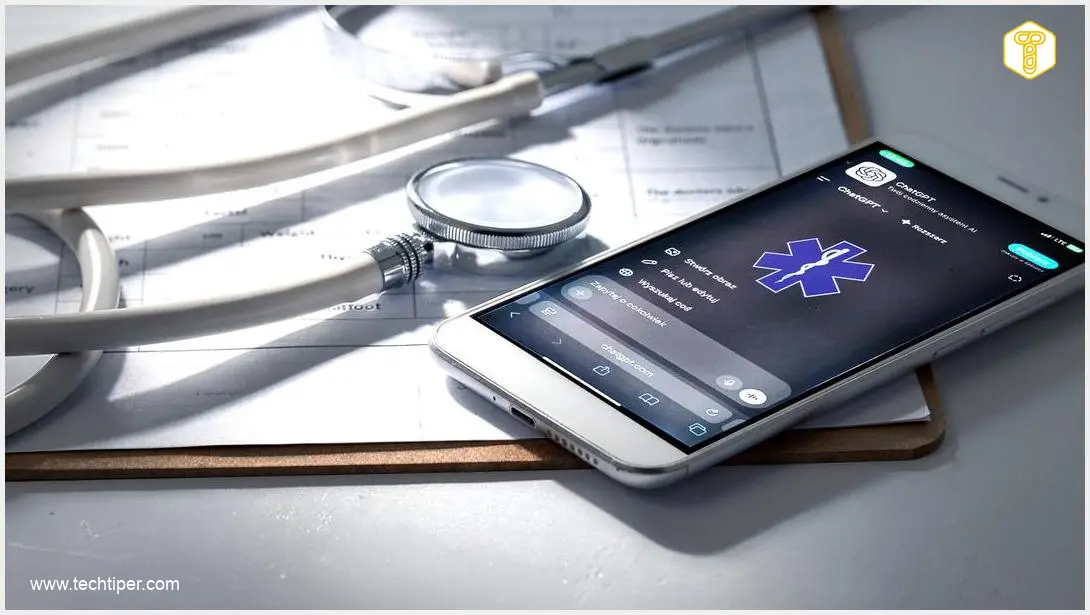
*Source: Original reporting. Opening photo: Gemini.*
About Post Author
