

Contents
Unveiling the Deep: A Golf-Ball Sized Blue Octopus and Ancient Underwater Structures
The world’s oceans are vast, mysterious realms, constantly revealing incredible surprises that challenge our understanding of life and history. From the shimmering depths to ancient submerged landscapes, scientists are continuously unearthing discoveries that captivate and enlighten us. Two such recent findings—a remarkable blue octopus found nearly two kilometers deep and colossal stone blocks hinting at an ancient lighthouse—highlight the ongoing allure of underwater exploration.
A Deep-Sea Gem: The Blue Octopus of the Galapagos
Off the coast of Ecuador, near the iconic Galapagos Islands, a groundbreaking discovery has thrilled the scientific community. Scientists from the Charles Darwin Foundation, during an ambitious mission to survey the deep Pacific Ocean, encountered an unprecedented creature: a vibrant blue octopus.
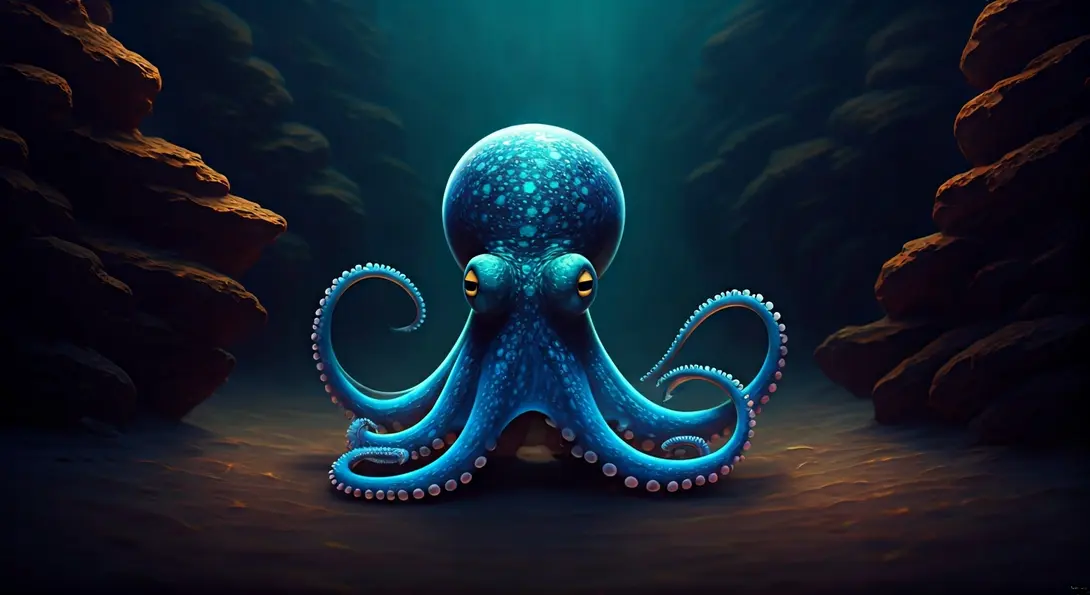
This unusual cephalopod, no larger than a golf ball, was found at a staggering depth of 1,773 meters (approximately 1.1 miles). The expedition, utilizing a camera-equipped submersible, proved immensely successful in documenting this new species in its natural, extreme habitat.
Unraveling the Mystery: Microeledone galapagensis
Following its capture, the enigmatic octopus was transported to the Field Museum of Natural History in Chicago for detailed examination. Invertebrate specialist Janet Voight was entrusted with the crucial task of identification.
Voight described her initial reaction with awe: “When it came to me, preserved in a jar of formalin, I thought: ‘My God, it’s beautiful.’ I was afraid to touch it, fearing I would damage this unique, palm-sized specimen.”
The Charles Darwin Foundation team officially named the new species Microeledone galapagensis, a nod to its diminutive size and discovery location. Intriguingly, this creature belongs to the Megaleledonidae family, a group of octopuses predominantly found in the frigid waters surrounding Antarctica. Its presence in the warmer equatorial Pacific suggests a broader distribution or unique adaptation pathways for this deep-sea family.
Distinctive characteristics of Microeledone galapagensis include short arms adorned with single rows of suckers and a striking bright blue coloration on its dorsal side. Scientists believe this vibrant hue is not merely aesthetic but serves as a crucial natural defense mechanism, providing camouflage or warning against potential predators in the dimly lit deep-sea environment.
The discovery of this tiny blue octopus underscores the immense biodiversity yet to be explored in the deep ocean, reminding us that every expedition holds the promise of uncovering entirely new forms of life. Much like the efforts to understand and conserve delicate ecosystems like those vital to horseshoe crabs on Cape Cod, safeguarding these deep-sea habitats is paramount for future discoveries.
Echoes of the Past: Ancient Stones in the Mediterranean
Beyond the deep-sea marvels of the Pacific, another intriguing discovery has recently emerged from the Mediterranean Sea, transporting us back to ancient times. A research team led by Isabelle Hairy from the French CNRS institute conducted fascinating excavation work off the coast of Alexandria, Egypt.

Their efforts uncovered monumental blocks of stone, each weighing an astounding 70 to 80 metric tons. The sheer scale of these boulders immediately raised questions about their origin and purpose. Researchers quickly determined that these colossal stones are remnants of an ancient lighthouse, a structure that once dominated the coastline and guided mariners through treacherous waters.
This finding offers invaluable insights into advanced ancient engineering and maritime history, shedding light on the architectural prowess of civilizations that predate modern technology. Understanding how these massive structures were built and operated provides a window into the daily lives and technological capabilities of people millennia ago.
Such archaeological expeditions continuously redefine our historical narratives, much like paleontological discoveries, such as findings related to oviraptor dinosaur nest incubation, reshape our understanding of prehistoric life and behavior.
These underwater discoveries, whether biological or archaeological, remind us that our planet’s submerged regions are not only cradles of unique ecosystems but also vaults of untold historical secrets, waiting to be unveiled by persistent scientific inquiry.
Frequently Asked Questions (FAQ)
What makes the newly discovered blue octopus, Microeledone galapagensis, unique?
Microeledone galapagensis is notable for its vibrant blue coloration, its small size (about the size of a golf ball), and its discovery at significant deep-sea depths (1,773 meters) near the Galapagos Islands. Furthermore, it belongs to a family (Megaleledonidae) typically found in Antarctic waters, making its presence in the equatorial Pacific a significant finding. Its blue color is also believed to be a natural defense mechanism.
What is the significance of the massive stone blocks found in the Mediterranean Sea near Alexandria?
These colossal stone blocks, each weighing between 70 to 80 metric tons, are believed to be remnants of an ancient lighthouse. Their discovery offers crucial insights into advanced ancient engineering, maritime navigation, and the architectural capabilities of past civilizations. It helps historians and archaeologists reconstruct the coastal landscapes and technological achievements of antiquity.
Why are deep-sea and underwater archaeological discoveries so important?
Deep-sea and underwater archaeological discoveries are vital because they reveal entirely new species and ecosystems, expanding our understanding of biodiversity and evolution. For archaeology, submerged sites often preserve artifacts and structures in remarkable condition, providing unique windows into ancient cultures, technologies, and historical events that would otherwise be lost to time. These discoveries continuously challenge and enrich our knowledge of Earth’s natural and human history.
Source: Charles Darwin Foundation, Le Figaro.
Opening photo: Gemini
About Post Author
