

Contents
Forza Horizon 6: Benchmarking the RTX 5080 in a Japanese Paradise
Forza Horizon 6, one of the most anticipated and critically acclaimed games of 2026, has captivated players worldwide with its stunning visuals and immersive gameplay. While the title is accessible even on mobile devices like handhelds at lower detail settings, a crucial question remains for PC enthusiasts: how does the formidable RTX 5080 perform at the highest graphical settings? We took on the challenge to find out.
Welcome to Forza Horizon 6’s Exquisite Japan
Each installment of the Forza Horizon series transports players to a new and exotic location. Following the vibrant landscapes of Mexico in Forza Horizon 5, the latest iteration takes us to Japan—a nation celebrated for its deep-rooted automotive culture and thrilling racing scene. But what does the gameplay experience truly entail?
Forza Horizon 6 prioritizes pure playability and fun. Developed by Xbox Games Studio, the game delivers an exhilarating experience filled with countless collectibles, a vast open world, and an abundance of races and speed challenges, ensuring players are never bored. After nearly 20 hours of gameplay, it’s clear that the Japanese atmosphere, while present, doesn’t always saturate the screen. If one were to accidentally drive into the Mexican setting of Forza Horizon 5, the change might not be immediately noticeable. Tokyo, in terms of its size and urban traffic, proved somewhat underwhelming. However, the bamboo-lined avenues interspersed with traditional temples are perfectly executed. Iconic landmarks and the in-game Japanese radio stations successfully create an authentic and unmistakable ambiance.
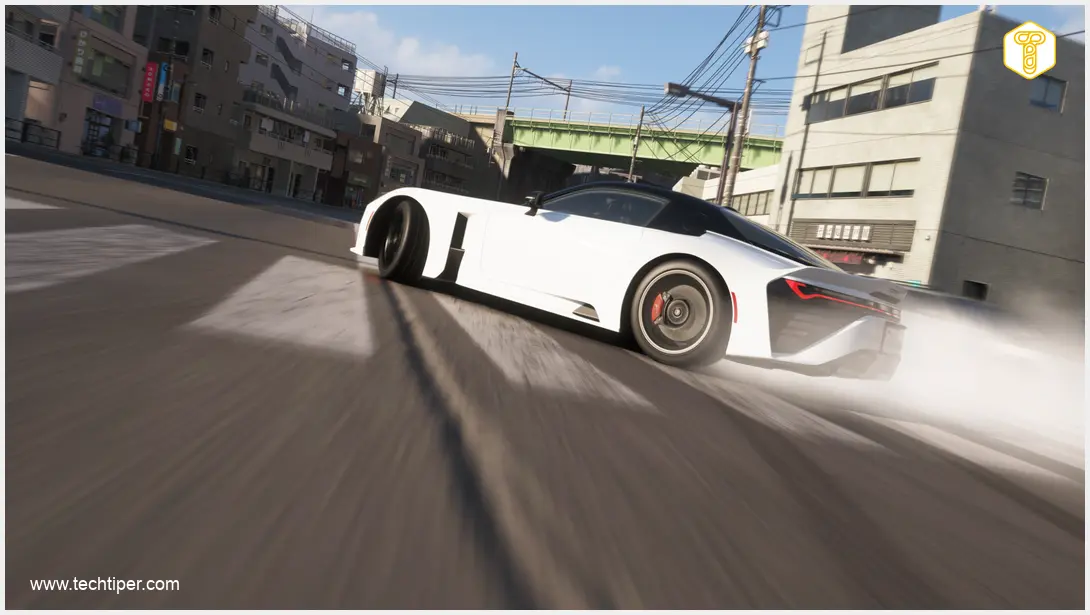
The true stars of the game are the hundreds of meticulously detailed cars. Most vehicles look exceptional, especially at the highest graphical settings. Both the exteriors and interiors are replicated with remarkable accuracy. To highlight this, I even purchased a digital replica of my own daily driver within the game. Aside from the number of doors, my virtual Golf VII R differed from my real car only by being significantly cleaner! Particle effects are also stunning, with brake lights perfectly illuminating the smoke from tires during drifts, adding to the visual spectacle.
Understanding Forza Horizon 6’s System Requirements
What are the hardware demands for this visually rich title? For low detail settings at 1080p resolution, a processor like a Ryzen 5 1600 or Core i5 8400, paired with a GTX 1650 and 16 GB of RAM, should suffice.
However, to experience the latest Forza Horizon in extreme settings with ray tracing at 2160p, a robust PC is essential. The developers recommend an Intel Core i7 12700K or AMD Ryzen 7 7700X processor, alongside an RTX 5070 Ti or Radeon RX 9070 XT graphics card, and 32 GB of RAM.
Our High-Performance Test Platform
Our testing was conducted on a powerful configuration featuring an RTX 5080 and one of the most potent consumer processors available, the Ryzen 9 9950X. While a CPU with 3D V-Cache might offer slightly higher frame rates, we experienced no performance bottlenecks during gameplay. Tests were performed using the latest available graphics driver (version 610.47) and Windows 11 (version 25H2).
Test System Specifications:
- Case: Be Quiet Light Base 600 LX
- Processor: AMD Ryzen 9 9950X
- Graphics Card: MSI GeForce RTX 5080 Gaming Trio
- Motherboard: GIGABYTE X870E Aorus Elite WiFi7
- RAM: GOODRAM IRDM DDR5 32 GB
- Storage: GOODRAM PX700 SSD 2 TB
- Cooling: ARCTIC Liquid Freezer III Pro 360
- Power Supply: Be Quiet Straight Power 12 1200W
- Monitor: AOC U27G3X/BK
- Mouse: Razer Deathadder V3 Hyperspeed
- Keyboard: Razer Blackwidow V4 75%
RTX 5080 Performance Across Resolutions (No Ray Tracing)
We initiated our fluidity tests using the game’s built-in benchmark. Forza Horizon 6 proved to be a stable game, with frame rates observed during nearly 20 hours of gameplay closely aligning with the results from the synthetic benchmark. These results were further validated by the performance tracking application, RivaTuner Statistics Server (RTSS), which breaks down average, 1% low, and 0.1% low frame rates for individual components (CPU simulation, CPU rendering, and GPU). For this analysis, we focused on the lowest reported values.
First, we evaluated the RTX 5080’s performance across various 16:9 resolutions without ray tracing enabled, using the maximum (Extreme) graphical preset. Image upscaling technologies like DLSS, XeSS, and FSR were also disabled. The results are as follows:

- 1080p: Average FPS ~140 (1% Low: 105.0, 0.1% Low: 81.0)
- 1440p: Average FPS ~127 (1% Low: 97.1, 0.1% Low: 74.9)
- 2160p (4K): Average FPS ~101 (1% Low: 90.0, 0.1% Low: 73.1)
Forza Horizon 6 looks impressive even without ray tracing. In every tested resolution, the average frame rate exceeded 100 FPS. However, it’s worth noting that even at 1920×1080 pixels, the average FPS in the built-in benchmark didn’t quite reach 144.
Performance with Ray Tracing Enabled
Next, we raised the bar by enabling ray tracing on top of the extreme graphical settings, keeping other variables consistent. The focus remained on performance across different resolutions with upscaling still disabled.
- 1080p: Average FPS ~96 (1% Low: 75.3, 0.1% Low: 65.8)
- 1440p: Average FPS ~79 (1% Low: 71.7, 0.1% Low: 61.5)
- 2160p (4K): Average FPS ~49 (1% Low: 43.9, 0.1% Low: 42.4)
The title looks phenomenal with ray tracing. However, Forza Horizon 6 significantly stresses the graphics card, causing average frame rates for 4K to drop well below 60 FPS. For such a fast-paced game, approximately 49 FPS is rather disappointing. This brings us to the importance of image upscaling technologies.
Leveraging Image Upscaling Technologies
For NVIDIA GPU users, activating Deep Learning Super Sampling (DLSS) is a natural step to enhance gameplay fluidity. We tested the default Super Resolution settings for “Extreme + Ray Tracing” with a sharpness of 0.8 at 4K resolution.
DLSS Performance (4K, Extreme + RT):
- Quality: Average FPS ~67 (1% Low: 61.3, 0.1% Low: 56.7)
- Balanced: Average FPS ~76 (1% Low: 69.8, 0.1% Low: 59.7)
- Performance: Average FPS ~82 (1% Low: 70.6, 0.1% Low: 56.6)
- Ultra Performance: Average FPS ~95 (1% Low: 74.6, 0.1% Low: 60.1)
It’s no surprise that activating DLSS significantly boosts average, 1% low, and 0.1% low frame rates. The “Quality” preset pushes average FPS above the 60 FPS target many gamers aim for, with minimal noticeable difference in visual quality compared to native rendering. As the upscaling intensity increases, the algorithms become more aggressive in generating frames.
Forza Horizon 6 also supports Frame Generation (MFG). We investigated how this technology impacts FPS when combined with our preferred DLSS Quality preset. Interestingly, the results from the built-in benchmark diverged slightly here. Forza Horizon 6 likely reported rendered frames, showing 112 FPS for 2x Frame Generation, while RTSS indicated an average of 65.8 FPS. Therefore, we relied on RTSS for more accurate measurements.
Frame Generation Performance (4K, DLSS Quality + RT, RTSS Results):
- 2x Frame Generation: Average FPS ~111.2 (1% Low: 85.1, 0.1% Low: 57.1)
- 3x Frame Generation: Average FPS ~149.6 (1% Low: 102.9, 0.1% Low: 84.4)
- 4x Frame Generation: Average FPS ~184.7 (1% Low: 116.9, 0.1% Low: 75.2)
The frame rates and latency levels are impressive with Frame Generation. In practice, MFG is highly usable. Personally, I found the combination of DLSS in Quality mode and MFG set to 2x provided an excellent experience. The game looks superb, with artifacts mostly noticeable around the car’s outline at higher speeds.
We also explored AMD’s FSR and Intel’s XeSS upscaling methods, which are compatible with the RTX 5080.
FSR and XeSS Performance (4K, Extreme + RT):
- FSR Quality (0.8 sharpness): Average FPS ~70 (1% Low: 59.5, 0.1% Low: 56.0)
- FSR Performance (0.8 sharpness): Average FPS ~88 (1% Low: 66.1, 0.1% Low: 52.8)
- XeSS Quality (0.8 sharpness): Average FPS ~76 (1% Low: 62.4, 0.1% Low: 54.1)
- XeSS Performance (0.8 sharpness): Average FPS ~89 (1% Low: 65.9, 0.1% Low: 56.4)
Visually, DLSS on the RTX 5080 appears slightly superior, though the differences are primarily visible in freeze frames. In day-to-day gameplay, discerning differences between DLSS, XeSS, and FSR is challenging. Intel’s XeSS delivered the highest raw frame rates for comparable settings, followed by AMD’s FSR, with DLSS offering the smallest fluidity boost. This is excellent news for owners of AMD or Intel graphics cards. However, NVIDIA’s proprietary Frame Generation technology gives RTX cards a significant edge, showcasing their superior performance in terms of fluidity against competing solutions.
Forza Horizon 6: Optimization is Key to Excellence
After approximately 20 hours with Forza Horizon 6, three key conclusions emerged: The game is visually stunning, and its playability is exceptionally high. The operational stability is also commendable, with consistently high 1% and 0.1% low frame rates across all tested settings and smooth frametime graphs.
The final observation is that to play the game at its highest settings in 2160×3840 (4K) resolution, a top-tier graphics card is essential. While the RTX 5080 performs very well, we relied on DLSS and 2x Frame Generation to consistently achieve over 100 frames per second in daily gameplay.
Frequently Asked Questions (FAQ)
Yes, Forza Horizon 6 demonstrates excellent optimization, offering stable performance even on a wide range of hardware. Our tests show high 1% and 0.1% low frame rates and smooth frametimes, indicating a polished gaming experience.
Achieving a consistent 60 FPS in 4K with ray tracing and extreme settings requires a very powerful GPU like the RTX 5080, and even then, you’ll likely need to enable upscaling technologies like DLSS and Frame Generation to reach and surpass that target. Without these, average FPS dipped to around 49 in our tests.
While DLSS provides a slight visual edge, all three technologies—DLSS, FSR, and XeSS—significantly boost performance. Intel’s XeSS often delivered the highest raw frame rates, followed by AMD’s FSR, and then NVIDIA’s DLSS in terms of pure FPS uplift. However, NVIDIA’s unique Frame Generation feature offers an additional layer of performance enhancement that other cards cannot match.
For low settings at 1080p, you’ll generally need a CPU equivalent to a Ryzen 5 1600 or Core i5 8400, a GPU like a GTX 1650, and 16 GB of RAM. This makes the game accessible to a broad audience.
Source: Self-developed. Opening photo: Krzysztof Wilamowski.
About Post Author
