

Just a few years ago, it seemed that the future of automotive technology would belong exclusively to electric vehicles. Today, however, the market landscape looks different. In Europe, electric car sales are growing slower than projected, and manufacturers are increasingly investing in the development of advanced hybrid systems. The reason is simple: many drivers still desire the ability to drive daily on electric power but without the constant need to plan every long journey around charger availability. This is precisely why plug-in hybrids (PHEVs) are experiencing a significant resurgence.

Contents

Why Manufacturers Are Prioritizing Plug-in Hybrids: Chinese Technology’s Solution to Electric Mobility’s Biggest Challenge
Beyond Ecology: The Economic Factor
Customer purchasing criteria are also evolving. Increasingly, the choice of a car is not solely determined by the initial purchase price, but by the total cost of ownership (TCO) over the vehicle’s lifespan. For many drivers, this means seeking solutions that can reduce fuel consumption during daily commutes while maintaining complete freedom for holiday trips or business travel. Modern plug-in hybrids excel in this regard.
With regular charging, most daily routes can be covered purely on electric energy. Meanwhile, the internal combustion engine eliminates the problem of limited range during longer journeys, offering drivers the best of both worlds—efficiency for daily use and peace of mind for extended travel.
Technology Over Battery Capacity
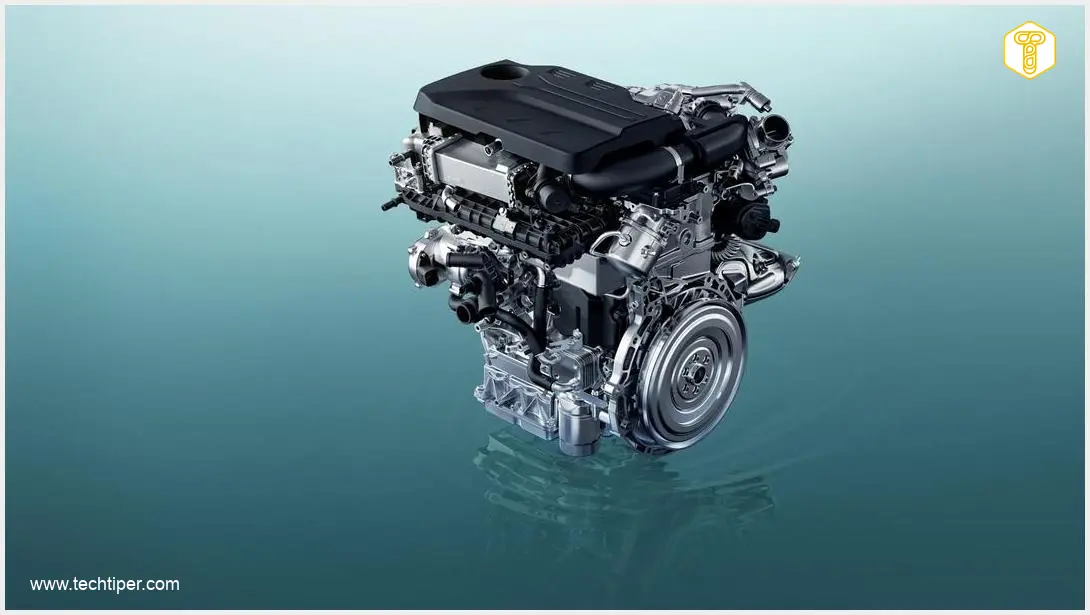
For years, manufacturers primarily focused on increasing battery capacity. Today, however, energy management has become increasingly important. An excellent example of this approach is the Chery Super Hybrid (CSH) technology, developed by the Chinese manufacturer CHERY. Instead of treating the electric motor as merely an addition to the internal combustion engine, the CSH system is designed as an integrated energy management unit.
Its sophisticated architecture includes:
- A hybrid gasoline engine with a thermal efficiency of up to 44.5%.
- A dedicated DHT (Dedicated Hybrid Transmission) with an efficiency of up to 98.5%.
- Advanced software that continuously analyzes driving conditions and determines the most efficient way to utilize energy.
For the driver, this primarily means one thing: the car automatically selects the most economical operating mode, eliminating the need for constant manual adjustments. This intelligent approach to energy utilization represents a significant leap forward in hybrid vehicle performance, moving beyond raw battery size to smarter, more integrated power systems. For more on battery innovation, see how new technologies are shaping the future of electric cars: MG Electric Cars: Semi-Solid-State Battery in MG4 Urban & MG S9.
Why 44.5% Thermal Efficiency Makes a Difference
By definition, an internal combustion engine converts only a portion of the energy contained in fuel into propulsion; the rest is lost as heat. Therefore, one of the most critical parameters for modern hybrid powertrains is thermal efficiency. The CHERY Super Hybrid system achieves a remarkable 44.5% thermal efficiency, positioning this design among the world leaders in advanced hybrid powertrains. This directly translates to lower fuel consumption, especially during non-urban driving, where traditional electric vehicles often lose one of their biggest advantages.
Addressing Range Anxiety: 1200 Kilometers Without Recharging Stops
One argument that still deters some drivers from transitioning to an electric car is the issue of range anxiety. Modern plug-in hybrid systems are designed to tackle this challenge head-on. According to manufacturer data, CHERY Super Hybrid technology allows for a combined range of up to 1200 kilometers (approximately 745 miles) under optimal conditions.
This achievement was, until a few years ago, reserved exclusively for the most fuel-efficient diesel cars. Such an extended range means drivers can undertake long journeys with confidence, blending electric power for local travel with the reliability of a gasoline engine for intercity trips. For advancements in supporting long-range electric travel, explore the development of powerful charging infrastructure: BYD Megawatt EV Charging in Europe.
Where to Find CHERY Super Hybrid Technology
CHERY Super Hybrid technology is not a singular solution developed for just one model. The manufacturer is deploying it across its TIGGO family of SUVs, adapting the system’s parameters to meet diverse user needs.
-
TIGGO 7 PHEV
In the TIGGO 7 PHEV model, the system works with an 18.3 kWh battery, enabling an electric-only range of up to approximately 90 km (about 56 miles) according to WLTP standards. The car’s total combined range reaches around 1200 km, making it suitable for both daily commutes and longer journeys.
-
TIGGO 8 PHEV
A similar solution is implemented in the larger TIGGO 8 PHEV. Here too, drivers can travel up to about 90 km without engaging the internal combustion engine, with a total range of 1100 km (approximately 683 miles). This model is designed for families requiring greater space and comfort on extended trips.
-
TIGGO 9 PHEV
The most advanced version of CHERY Super Hybrid technology is featured in the flagship TIGGO 9 PHEV. This vehicle is equipped with a 34 kWh battery, allowing it to cover up to approximately 147 km (about 91 miles) in electric mode according to WLTP. This is one of the highest electric ranges currently available in the large plug-in hybrid SUV segment.
The philosophy of efficient energy management is also present in CHERY’s conventional hybrids (HEVs) that do not require external charging. Examples include the TIGGO 4 HEV, with an average fuel consumption of approximately 5.3 liters per 100 km (about 44.3 miles per gallon) according to WLTP, and the new TIGGO 7 HEV—another model expanding the brand’s offering for drivers seeking a hybrid SUV without the need for a charging plug.
Tested from Desert to Siberia
Modern hybrid systems must perform not only in laboratories but also under extremely varied climatic conditions. CHERY emphasizes that its CSH technology has been rigorously tested in temperatures exceeding 50°C (122°F) in the Middle East, as well as in the freezing conditions found in Siberian regions. The manufacturer also conducted over 1200 hours of testing in urban traffic, focusing on system durability and predictability of operating costs. This extensive real-world testing ensures reliability and performance across diverse global environments.
PHEVs: A Bridge to Full Electromobility?
There is strong evidence that this scenario is currently playing out in the market. While electric vehicles remain a natural choice for some drivers, a large segment of users seeks a solution that combines the advantages of both worlds. Modern plug-in hybrids are increasingly meeting these needs by offering the option of daily electric driving, lower operating costs, and no range limitations during long journeys.
Therefore, manufacturers today are investing not only in larger batteries but, more importantly, in smarter energy management. The efficiency of the entire system—rather than solely the battery’s capacity—may well determine the immediate future of automotive development.
Frequently Asked Questions (FAQ)
The primary advantage of a plug-in hybrid (PHEV) is its ability to drive significant distances on electric power alone by charging its larger battery externally, much like an electric vehicle. This allows for zero-emission daily commutes. A conventional hybrid (HEV) primarily uses its electric motor to assist the gasoline engine and cannot be plugged in for extended electric-only driving.
CHERY Super Hybrid (CSH) technology improves fuel efficiency through a highly integrated system that includes a high-efficiency gasoline engine (up to 44.5% thermal efficiency), an efficient DHT transmission, and intelligent software. This software constantly optimizes energy use, automatically selecting the most economical driving mode based on conditions. This holistic approach ensures minimal energy waste and maximizes both electric and combined fuel economy.
PHEVs are increasingly seen as a crucial “bridge technology” to full electromobility. They offer an ideal solution for drivers who want to reduce their carbon footprint and fuel consumption for daily driving but still require the flexibility and long-distance range of a gasoline engine without range anxiety or reliance on extensive charging infrastructure. While pure electric vehicles are the ultimate goal for many, PHEVs offer a practical and efficient step in that direction for a wide range of consumers.
WLTP stands for Worldwide Harmonized Light Vehicles Test Procedure. It is a global standard for measuring fuel consumption, CO2 emissions, and electric vehicle range. WLTP provides more realistic figures compared to older testing cycles because it uses more dynamic driving conditions, higher speeds, and more aggressive acceleration and braking. Therefore, a WLTP range figure for an electric or hybrid vehicle gives a more accurate representation of what drivers can expect in real-world driving.
Source: CHERY / Press materials
Opening photo: CHERY / Press materials
About Post Author
