

Contents
Understanding Fiber Optic Internet: FTTH vs. FTTB Explained
In today’s digital age, “fiber optic internet” is a ubiquitous term in internet service provider (ISP) offerings. However, what lies beneath this popular phrase can vary significantly, directly impacting the actual quality of your connection and the capabilities of your home network. Not all fiber optic connections are created equal, and understanding the nuances is crucial for making an informed decision.Fiber Optic to the Home (FTTH) vs. Fiber to the Building (FTTB): What’s the Difference?
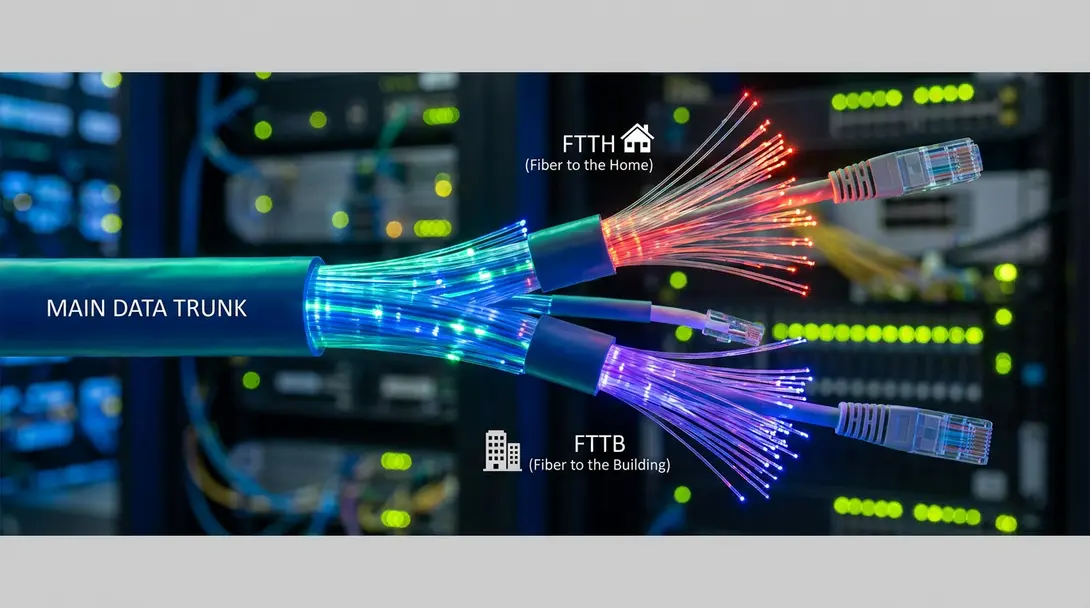
While most internet providers simply advertise “fiber optic,” this umbrella term often covers two distinct technologies: Fiber to the Building (FTTB) and Fiber to the Home (FTTH). For many consumers, this distinction might seem like a minor technical detail. Yet, it’s precisely this difference that shapes the performance, stability, and future-proofing of your entire internet connection.- FTTB (Fiber to the Building): With FTTB technology, the fiber optic cable extends to a central point within a building, such as a basement or communications room. From there, the connection to individual apartments or units relies on different infrastructure, most commonly traditional coaxial cables or Ethernet wiring.
- FTTH (Fiber to the Home): In contrast, FTTH delivers the fiber optic cable directly to your living space, connecting it straight to your internet router. This ensures an end-to-end fiber connection from the ISP’s network to your devices.
Why the “Last Few Meters” Matter More Than You Think
It might seem negligible – just a few dozen feet of cable between a building’s basement and your apartment. However, this seemingly short distance often dictates the true capabilities of your entire internet link. With FTTH, the optical signal travels uninterrupted over fiber optic cables all the way to the terminal device in your home. This direct, pure fiber connection offers several critical advantages:- Very High Throughput: Enables incredibly fast download and upload speeds, crucial for large file transfers, 4K streaming, and cloud applications.
- Low Latency: Reduces delays in data transmission, making activities like online gaming, video conferencing, and real-time trading smoother and more responsive.
- High Connection Stability: Fiber optic cables are less susceptible to electromagnetic interference and signal degradation over distance compared to traditional copper-based wiring, leading to a more consistent and reliable connection.
The Strategic Advantage of FTTH Development
Many leading internet providers are actively expanding their fiber optic infrastructure using FTTH technology. This strategic choice involves extending fiber directly into subscribers’ homes, eliminating the need for older technologies in the final segment of the connection. This approach leverages cutting-edge solutions to deliver very high bandwidth services, often with symmetrical speeds. Symmetrical connections mean your upload speeds are as fast as your download speeds – a critical factor for:- Remote Work and Study: Seamless video calls, quick document uploads, and efficient collaboration.
- Content Creation: Rapid uploading of large video files, photos, and creative projects to cloud storage or online platforms.
- Cloud Backups: Fast and reliable data synchronization with cloud services.
- Live Streaming: Stable and high-quality broadcasts without buffering issues.
FTTH: An Investment in Tomorrow’s Internet
It’s important to note that not every FTTB network delivers poor service quality. Modern hybrid networks can also provide impressive speeds, especially in less demanding scenarios. However, their underlying architecture fundamentally differs from full FTTH. This is why a growing number of operators are investing heavily in expanding fiber optic infrastructure directly to residences. An FTTH solution offers greater potential for long-term growth, easier scalability of bandwidth, and better preparation for future generations of digital services and applications. It represents a forward-thinking modernization of the network, designed to meet the increasing demands of contemporary households and businesses.Before You Choose: Ask the Right Question
The advertised internet speed is just one parameter to consider. Equally important is how the internet is delivered to your home. Before signing a contract, it’s wise to confirm whether the fiber optic cable truly reaches directly into your premises. Choosing a provider that offers genuine FTTH technology ensures you can harness the full potential of fiber optics – from the provider’s core network all the way to your devices at home. This difference may not be apparent in a catchy advertising slogan, but you will certainly feel its impact every day, whether you’re working, streaming, gaming, or simply enjoying the increasingly demanding services of the digital world.Frequently Asked Questions (FAQ)
FTTH stands for Fiber to the Home. It’s important because it means the fiber optic cable runs directly into your living space, ensuring the highest possible speeds, lowest latency, and greatest connection stability. This full fiber connection prevents performance bottlenecks that can occur with older copper-based wiring found in other fiber variants.
FTTB, or Fiber to the Building, brings fiber optic cable only as far as a central point in a building (e.g., basement or equipment room). From there, the connection to individual apartments or offices typically uses traditional copper wiring, such as coaxial cables or Ethernet. While still fast, this ‘last mile’ of copper can limit the full potential speed and stability compared to a direct FTTH connection.
Upgrading from FTTB to FTTH often requires significant infrastructure changes within your building and potentially your home. It depends on whether your internet service provider (ISP) has plans to extend fiber directly to individual units in your area or building. It’s best to contact your current or prospective ISP to inquire about FTTH availability and upgrade options for your specific address.
While FTTH provides the fastest and most stable internet connection to your router, your in-home Wi-Fi performance depends on your router’s capabilities, your home’s layout, and potential interference. A high-speed FTTH connection paired with a modern Wi-Fi 6 router will certainly provide the best foundation for a fast wireless network. However, factors like router placement, mesh systems, and Wi-Fi extenders can also play a crucial role in maximizing your wireless coverage and speed throughout your home. For tips on maximizing your Wi-Fi, you might find our guide on how to turn an old phone into a Wi-Fi hotspot extender helpful.
About Post Author
