

Contents
The Future of Energy: Small Modular Reactors (SMRs)
With the global demand for electricity continuously rising, there’s a growing interest in stable, low-emission power generation sources. Among the most promising contenders are Small Modular Reactors (SMRs). These innovative nuclear reactors can operate independently of atmospheric conditions and, thanks to their modular design, are expected to be easier to transport and deploy.
The Quest for a Stable Energy Source: Why SMRs?
While solar and wind energy are experiencing unprecedented growth, both sources share a fundamental limitation: their reliance on weather conditions. Meanwhile, the world’s energy needs are escalating at an alarming rate.
According to forecasts by the International Energy Agency (IEA), data centers alone could consume up to 945 terawatt-hours of energy annually by 2030. This figure is roughly twice the current annual electricity consumption of a country like Germany.
Consequently, an increasing number of nations are revisiting discussions about nuclear power. However, the focus has shifted from constructing massive power plants that take decades to build to significantly smaller, faster-to-deploy reactors.
Understanding Small Modular Reactors: Factory-Built Nuclear Power
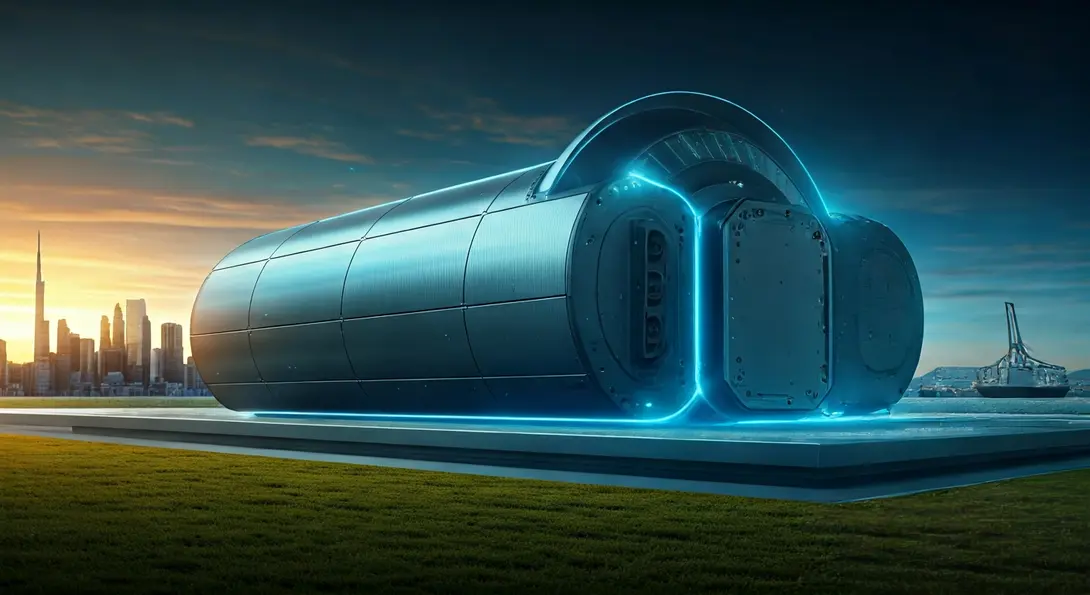
SMRs are designed to function similarly to traditional nuclear power plants. In both cases, energy is generated through the fission of uranium atoms, and the resulting heat is used to produce electricity.
The primary difference lies in scale:
- Traditional nuclear reactors typically have capacities ranging from 500 to 1,500 megawatts (MW).
- SMRs are significantly smaller, with individual units usually offering capacities from a few tens of megawatts up to approximately 300 MW.
Their greatest advantage is their modular construction. SMRs can be manufactured in factories, then transported to their installation sites via trucks, trains, or ships. This approach is expected to dramatically reduce construction times and lower overall investment costs.
Safety and Waste Management
Historically, nuclear energy has faced public image challenges, primarily concerning safety and the disposal of radioactive waste. Proponents of SMRs argue that this new generation of reactors can help address some of these issues. Their smaller size and advanced designs are often cited as inherently safer, featuring passive safety systems that rely on natural forces like gravity rather than active components.
Regarding waste, while SMRs still produce radioactive waste, their designs are often optimized for more efficient fuel use and potentially reduced waste volume compared to larger reactors. Research and development are also ongoing for advanced fuel cycles and waste reprocessing technologies that could further mitigate these concerns, ensuring a stable energy supply for economies increasingly reliant on artificial intelligence and data centers.

Global Race for SMR Development
The race to develop and deploy this new technology is well underway, with several countries making significant strides.
- Russia has been operating the Akademik Lomonosov, a floating nuclear power plant, since 2019. This facility is equipped with two reactors, boasting a combined capacity of 70 MW, and supplies energy to the residents of the Arctic city of Pevek.
- China is actively developing its Linglong One project. This reactor was installed in 2023 and is projected to begin supplying power to the grid by 2026. With a capacity of 125 MW, it is expected to power over half a million households.
Companies in Europe and the United States are also working on their own SMR solutions. One of the most advanced projects is a reactor developed by the American company NuScale Power. A single NuScale module stands 23 meters tall, has a diameter of 4.5 meters, and generates 77 MW of power.
The NuScale system allows for multiple modules to be combined into a single power complex, enabling power plants to expand their capacity as energy demand grows, offering unparalleled flexibility.
The Resurgence of Nuclear Energy: Over 70 SMR Projects Worldwide
Nuclear energy has long grappled with public perception issues, primarily concerning safety and radioactive waste disposal. However, SMR advocates contend that this new generation of reactors could help resolve some of these challenges, providing a stable, reliable power source for an economy increasingly driven by artificial intelligence and data centers.
Currently, there are approximately 70 SMR projects under development globally. Many of these are expected to commence commercial operation before the end of this decade. If this technology lives up to its promise, small modular reactors could become a pivotal component of the future global energy mix, offering a path towards cleaner, more resilient power grids.
For additional insights into energy-saving solutions and smart home technology, you might also find these articles interesting: Lidl Solar Panels UK: Energy Savings and EZVIZ EB8 Pro Solar 4G Camera Review.
Frequently Asked Questions (FAQ)
Small Modular Reactors (SMRs) are advanced nuclear reactors that are significantly smaller than conventional nuclear power plants. They are designed to be manufactured in factories and then transported to sites for assembly, offering benefits like reduced construction times, lower costs, and increased deployment flexibility. They typically have an electrical output of up to 300 MW.
The main differences are size, modularity, and capacity. Traditional reactors are large, custom-built facilities with capacities often exceeding 1000 MW. SMRs are smaller (under 300 MW), factory-built modules that can be combined for scalable power generation, leading to faster deployment and potentially lower capital costs per unit.
Many SMR designs incorporate advanced passive safety features that rely on natural forces (like gravity or convection) rather than active systems, making them potentially more resilient to accidents and requiring less operator intervention in emergencies. Their smaller core size also reduces the total amount of radioactive material, potentially simplifying safety measures.
SMRs produce virtually no greenhouse gas emissions during operation, making them a crucial tool in combating climate change. They offer a stable, carbon-free baseload power source that can complement intermittent renewable energy sources like solar and wind, helping to decarbonize electricity grids and industrial processes.
Source: Illvid. Opening photo: Gemini
About Post Author
