

Contents
Volvo Report Uncovers Polish Drivers’ Faults: Phone Use and Speeding on the List
Many drivers exhibit a profound sense of self-confidence on the road, often vastly disconnected from their actual driving habits. A recent report commissioned by Volvo sheds light on the everyday practices of drivers, revealing concerning trends that impact overall road safety.
Unsettling Findings from the Volvo Road Safety Report
The public opinion survey, conducted on behalf of Volvo, presents troubling conclusions regarding driver behavior. A striking 75% of drivers believe they are safer behind the wheel than other road users. This perception of superior driving ability is particularly prevalent among older individuals and those who drive regularly.
However, this high self-assessment does not align with adherence to fundamental traffic regulations. The report’s findings expose a significant gap between perception and reality:
- Nearly half of those surveyed, 47%, admitted to exceeding the speed limit by more than 20 km/h (approximately 12 mph) outside urban areas within just one month.
- A concerning 57% of respondents intentionally accelerate at intersections to pass through a yellow light before it turns red.
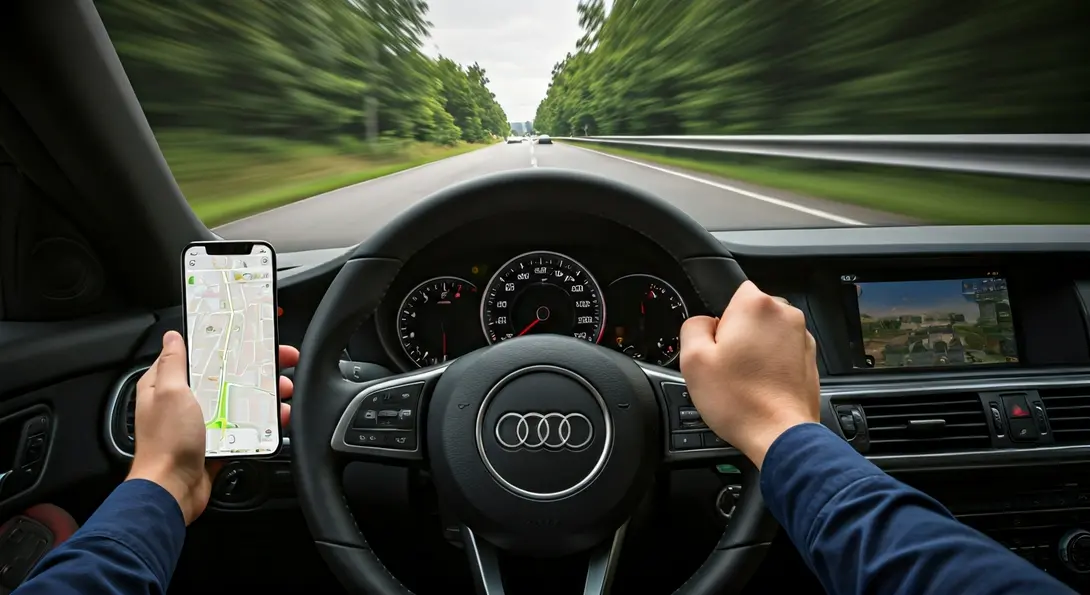
- Distracted driving due to modern technology remains a serious problem. Over one-third of drivers operate their mobile phones and take their eyes off the road, with 23% openly admitting to texting while driving.
- The report also indicates ongoing instances of driving without fastened seatbelts and failing to yield right-of-way to pedestrians.
As a direct consequence of these behaviors, only 52% of the population feels genuinely safe on the nation’s roads, with women expressing significantly greater anxiety than men. These statistics underscore a global challenge: the disparity between drivers’ self-perception and their actual adherence to safety protocols, a problem not unique to any single region but reflective of universal human tendencies on the road.
The Perils of Distracted Driving
The prevalence of mobile phone use while driving is a critical safety issue. Engaging with a phone, whether for calls, navigation, or texting, diverts attention from the road, increasing reaction times and the risk of accidents. Modern in-car systems like Android Auto aim to reduce such distractions by integrating navigation and communication safely. Learn more about optimizing your EV route with Google Maps on Android Auto here. Moreover, addressing persistent connectivity issues, as Google recently did, is crucial for seamless and safe use of these technologies. Read about the fix for Android Auto connectivity here.
Volvo’s Commitment to Safer Roads
For years, Volvo has been at the forefront of designing advanced driver-assistance systems (ADAS), incorporating sophisticated radars and autonomous braking technologies. Yet, the brand’s engineers deeply understand the limitations of technology alone. As Dawid Korszeń, spokesperson for Volvo Car Poland, states:
“For decades, we have been developing technologies that protect drivers, passengers, and other road users, and our cars are among the safest in the world. However, education and building awareness are equally important.”
No algorithm or active safety system can fully eliminate risk if a driver disregards the laws of physics and traffic regulations. Recognizing this, the Swedish manufacturer launched the “Volvo For Safety” educational program. As part of this initiative, brand experts traveled to numerous cities, engaging in direct education and data analysis to influence and improve driving habits and overall road culture.
Frequently Asked Questions (FAQ)
Drivers frequently overestimate their abilities due to cognitive biases such as “illusory superiority” or the “better-than-average” effect. They tend to rate themselves more favorably than others, especially in common tasks like driving, leading to a false sense of security and a disregard for risky behaviors.
The report highlights several dangerous behaviors including significant speeding (over 20 km/h above the limit), intentionally accelerating at intersections to beat yellow lights, extensive mobile phone use (including texting) while driving, not wearing seatbelts, and failing to yield to pedestrians.

While driver behavior is crucial, ADAS (Advanced Driver-Assistance Systems) acts as a vital safety net. Technologies such as autonomous emergency braking, lane-keeping assist, and blind-spot monitoring help mitigate human error, alert drivers to potential dangers, and can even intervene to prevent or lessen the severity of collisions, thereby enhancing overall road safety.
The “Volvo For Safety” program is an educational initiative launched by Volvo. It involves safety experts engaging directly with communities in various cities to educate drivers and analyze driving data, with the goal of fostering safer driving habits and improving general road safety awareness.
Source: Volvo
Opening photo: Gemini
About Post Author
