Xiaomi 17T Review
-
Display Quality
-
Battery Life
-
Performance
-
Daylight Camera
-
Night Camera
-
Build & Design
Flagship Features at an Accessible Price
The Xiaomi 17T impresses with its stunning AMOLED display, exceptional battery life, and surprisingly versatile camera system, especially in daylight. While it makes minor compromises like a plastic frame and lacks wireless charging, it delivers robust performance and a premium feel for its price point, making it a strong contender in the upper-midrange market.
Advantages
- Excellent AMOLED display (high resolution, 120Hz, 3500 nits peak brightness)
- Exceptional battery life (6500 mAh, easily lasts 2 days with standard use)
- Solid performance for daily tasks and demanding games (MediaTek Dimensity 8500-Ultra)
- Very capable main and telephoto cameras in good lighting
- Fast 67W wired charging
- Near-flagship build quality and attractive design (IP68 rated)
- Adaptable and customizable HyperOS 3 software
Disadvantages
- Plastic frame instead of metal
- No wireless charging
- Inconveniently placed optical fingerprint reader
- Ultrawide camera performs poorly in low light
- Basic speaker audio with uneven stereo effect
- Excessive pre-installed apps (bloatware)
- Heats up noticeably under heavy load
- Value proposition decreases without promotional offers due to strong competition
Contents
Xiaomi 17T Review: Flagship Aspirations at an Accessible Price
Large batteries, cameras co-engineered with Leica, and high-quality AMOLED displays have historically been features reserved for expensive flagship smartphones. This review of the Xiaomi 17T aims to determine if this new, and notably more affordable, entry in the 17 series is a model worth considering. We’ll explore what the smartphone excels at and where compromises were made to achieve its competitive price point.
The Xiaomi 17T Experience
The Xiaomi 17T positions itself as a robust smartphone, typically retailing for around $750. It offers near-flagship build quality, solid performance, and surprisingly capable photography. Let’s delve into the details:
Package Contents
The device arrives in a rather sizable box. The smartphone itself is the main attraction, accompanied by accessories housed in a separate compartment. Inside, you’ll find a SIM tray ejector tool, a USB-A to USB-C cable, and a set of instruction manuals.
Completing the package is a simple, monochrome protective case. This inclusion is fairly standard for Chinese smartphones, though recent reviews, such as the OPPO Find X9 Ultra, indicate that not all manufacturers from the region consistently provide a protective case.
Design and Build Quality
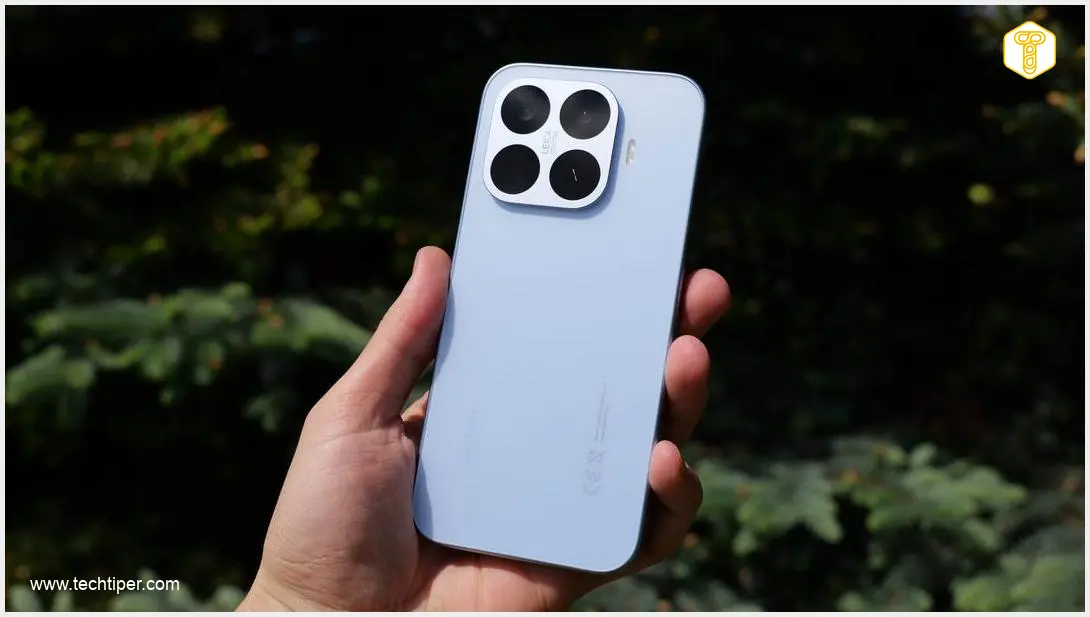
The Xiaomi 17T is available in black, purple, and blue. The blue variant, which we tested, looks striking in person. While the Google Pixel 8 Pro’s blue finish left a strong impression, the Xiaomi 17T’s blue also stands out among more conventional black smartphones. The blue hue appears deep in shade and brightens considerably with a silvery sheen when exposed to sunlight.
Visually, the device doesn’t deviate significantly from the Xiaomi 17, which debuted in Europe before MWC 2026. Personally, I find it regrettable that the T-series has adopted a design so similar to the flagship line. However, it’s undeniable that the smartphone is attractive, especially in its more vibrant color options.
The back of the smartphone is quite understated. The prominent camera island, featuring Leica branding, stands out in the upper left corner. Its photographic capabilities are impressive, as we’ll discuss later. The island’s width and flatness ensure the phone rests quite stably on flat surfaces. A flash LED is located next to it. The lower portion of the back panel features the manufacturer’s glossy logo, along with somewhat unsightly model markings and certification labels. It’s a shame Xiaomi didn’t integrate these into the frame instead.

The build quality is high. The rear panel is likely tempered glass, and the camera island is crafted from metal. The only compromise here is the plastic frame. The smartphone weighs exactly 200 grams.
The device feels very secure in hand. Its construction is sealed, evidenced by an IP68 certification. While this level of water and dust resistance is good, some more affordable alternatives like the realme 16 5G offer an even higher IP69 rating.
The edges have an unusual appearance, with the top and right sides being “smooth” and devoid of any elements or even antenna lines (which are unnecessary in a plastic frame). The right side houses the volume rocker and power button.
On the bottom, you’ll find the SIM card tray, a microphone hole, the USB-C charging port, and the speaker grille. The device, of course, features dual speakers, which deliver simply acceptable audio. They might lack depth and bass. The upper speaker is also noticeably quieter than the lower one, resulting in a less-than-perfect stereo effect. However, watching short videos or even TV series is quite pleasant due to the clear sound.
The front of the device is covered by a flat pane of Corning Gorilla Glass 7i. The screen is surrounded by slim bezels, giving the Xiaomi 17T a modern look. As is typical, there’s a punch-hole cutout for the front camera at the top.
Near the bottom edge, the manufacturer has placed an optical fingerprint reader. While it functions efficiently, its placement is inconvenient. Unlocking the phone requires reaching your finger quite low. This is a surprising choice, as devices like the much more affordable POCO X8 Pro Max feature a more modern and comfortable ultrasonic reader.
Display
I have absolutely no complaints about the display. Xiaomi has opted for a rather compact yet comfortable-to-use 6.59-inch AMOLED panel. It boasts a high resolution of 2756 × 1268 pixels and a refresh rate of up to 120 Hz.
As expected from a high-quality AMOLED, the display offers brilliant colors, deep blacks, and impeccable viewing angles. Consuming content on the Xiaomi 17T is a premium experience.
Peak brightness reaches 3500 nits (UHBM). In practice, readability remains excellent even in challenging conditions. I took the Xiaomi 17T out for photos in direct sunlight and had no trouble operating the device. The minimum brightness is also very well-calibrated, preventing eye strain when checking the time in the middle of the night.
Battery Life
The manufacturer has equipped this compact model with a substantial 6500 mAh battery. This means the Xiaomi 17T has 1500 mAh more capacity than the much larger Samsung Galaxy S26 Ultra (5000 mAh). In real-world use, this translates to excellent performance on a single charge.
Even with intensive use, I couldn’t fully discharge the smartphone in a single day. I typically had at least 20-30% remaining by evening. With slightly less demanding, more standard usage, the Xiaomi 17T only needed charging every two days. The least demanding users might find themselves reaching for the charger only once every three days.
While 67W charging power may not sound groundbreaking, the Xiaomi 17T charges quite rapidly. In my test, using a 90W Power Delivery adapter, the first 50% charge was achieved in 29 minutes. A full charge took 63 minutes, which is a very respectable result. The device lacks wireless charging, but it does offer reverse wired charging.
Cameras
Xiaomi markets the 17T as a photography-focused device. While the company offers more advanced camera systems, such as in the Xiaomi 17 Ultra, the camera setup on the 17T is far from disappointing.
The 50 MP main camera is quite bright (f/1.7) and offers a standard 23mm equivalent focal length for a full-frame sensor, providing a reasonably wide field of view. Even wider is the 12 MP ultrawide camera (f/2.2, 15mm equivalent). The camera island also includes a telephoto lens: a 50 MP unit (f/3.0) offering 5x optical zoom (115mm equivalent).
The Xiaomi camera app is excellent, featuring a thoughtful and ergonomic interface. All key modes are readily accessible, and each option is easy to find. The software allows for photos with various filters, including my favorite black-and-white option. Pro mode offers three customizable presets for advanced users. Videography enthusiasts can utilize Pro recording, which, in addition to 4K at 60 frames per second, also supports recording in a flat log color profile and the ability to apply ready-made LUTs.
Image Quality
In daylight, the image quality is very good. Colors appear natural, and there’s no shortage of contrast or detail. With good lighting, high-quality photos can be captured with every available lens. I noticed that portraits taken with the telephoto lens exhibit interesting, rectangular bokeh, likely due to the relatively narrow periscope design.
- Ultrawide Angle
- Main Camera
- Telephoto Lens
Daytime 10x and 20x zoom shots are quite decent. The presence of algorithms is evident, and the effect isn’t as natural as in ultra-flagships like the Vivo X300 Ultra, but such photos are perfectly suitable for social media sharing.
- 10x Zoom
- 20x Zoom
The most challenging test, of course, is nighttime photography, characterized by deep shadows and bright, pinpoint light sources. After dark, the camera capabilities can be surprisingly good. The main camera is virtually flawless, with 1x and 2x shots looking excellent.
- Ultrawide Angle (Night)
- Main Camera (Night)
- Telephoto Lens (Night)
Results from the telephoto lens are also positively rated, although 10x zoom photos lack some detail. The ultrawide camera, unfortunately, lags behind. Photos taken with it appear blurry, and details like bricks on a castle are indistinguishable, appearing as a large, smeared patch. Overall, it’s good, but I wouldn’t recommend using the ultrawide angle in low light.
Daytime selfies are positive, with both standard photo and portrait modes performing well in various scenarios. After dark, the Xiaomi 17T automatically uses screen illumination, but the resulting photos often lack sharpness.
- Standard Photo Mode (Selfie)
- Portrait Mode (Selfie)
The smartphone records video at a maximum resolution of 4K at 60 frames per second. While 8K might be missing compared to some flagships, 4K remains a sufficient resolution in 2026. In daylight, there’s truly nothing to complain about. Stabilization is effective, the smartphone quickly adjusts focus, and the colors and detail are excellent. Unfortunately, at night, details start to diminish, and recordings suffer from significant noise.
Software and Performance
The tested device runs on Android 16 with the HyperOS 3 overlay. While I still don’t consider it the absolute best system available, it’s certainly adaptable. My experience with three Xiaomi smartphones over the past three months has confirmed this.
HyperOS 3 can be appreciated for its customization options, speed, and useful AI tools. The interface itself is vibrant and cohesive. Its weakest point is the excessive pre-installation of Xiaomi and third-party applications. On the Xiaomi 17T, however, it’s not a severe issue, and you can tidy up the interface within minutes of initial setup.
The device is powered by the MediaTek Dimensity 8500-Ultra processor. In our test unit, this was paired with 12 GB of RAM and 512 GB of storage. While this processor may not match the raw power of the Snapdragon 8 Elite Gen 5 or Dimensity 9500 found in full-fledged flagships, the 8500 series chips are generally very capable.
The chip delivers excellent performance in everyday tasks. The Xiaomi 17T operates swiftly and handles demanding applications and games without any issues. If you’re looking for a device that offers even higher performance at a lower price point, it’s worth considering another offering from the manufacturer, such as the POCO X8 Pro Max.
When browsing the internet and social media, the smartphone remains cool. During gaming, more demanding applications, or while taking photos, the casing can become warm, even hot, but it generally doesn’t exceed 40 degrees Celsius (104 Fahrenheit) in the hottest spot.
Under full load in the AnTuTu stress test, the smartphone heats up quickly due to its relatively small surface area. After 10 minutes, the hottest spot on the casing measured 45 degrees Celsius (113 Fahrenheit).
Specifications and Pricing
The Xiaomi 17T 256 GB starts at approximately $750. The tested version of the smartphone costs around $850. At launch, promotional offers might include a scooter or a vacuum cleaner, making it a very attractive deal.
Once the promotion ends, the Xiaomi 17T at its current price point may lose some of its appeal, as for just an additional $75-$100, one could acquire the Xiaomi 17, which features a metal body, a top-tier Snapdragon processor, and wireless charging.
KEY SPECIFICATIONS:
- System: Android 16, HyperOS 3
- Display: 6.59” AMOLED, up to 120 Hz refresh rate, 2756 × 1268 pixels, peak brightness up to 3500 nits (UHBM), Corning Gorilla Glass 7i
- Processor: MediaTek Dimensity 8500-Ultra
- RAM: 12 GB LPDDR5X 9600 Mbps
- Internal Storage: 256 GB / 512 GB UFS 4.1
- Cameras:
- Rear Cameras:
- 50 MP main (f/1.7, 23mm equivalent)
- 50 MP telephoto (f/3.0, 115mm equivalent)
- 12 MP ultrawide (f/2.2, 15mm equivalent)
- Front Camera: 32 MP (ƒ/2.2, 21mm equivalent)
- Rear Cameras:
- Connectivity: 5G + Wi-Fi 6E + Bluetooth 6.0
- Other: IP68 rating
- Battery: 6500 mAh, 67W wired charging
- Dimensions: 157.6 × 75.2 × 8.17 mm
- Weight: 200 g
Conclusion and Our Opinion
The Xiaomi 17T is undoubtedly a successful model. The device boasts an attractive design, an excellent screen, a capacious battery, and performance that easily keeps pace with more powerful devices in everyday use. Furthermore, Xiaomi has equipped it with a surprisingly comprehensive camera system, making photography a genuine pleasure.
While the smartphone has minor imperfections, such as the slightly inconvenient fingerprint reader placement, the absence of wireless charging, or the plastic frame, these small details should not deter many potential buyers.
However, pricing is key. Currently, with promotional offers, it presents great value. But in the near future, the Xiaomi 17T at a similar price will face stiff competition from more refined devices like the Xiaomi 17, POCO F8 Ultra, or Motorola Signature. The 17T is a commendable device, but it’s advisable to compare its price with its main competitors before making a purchase.
Frequently Asked Questions (FAQ)
Yes, the MediaTek Dimensity 8500-Ultra processor and 12GB of RAM provide excellent performance for demanding games and applications, ensuring a smooth gaming experience. While it can get warm under heavy load, performance remains strong.
Absolutely. With its large 6500 mAh battery, the Xiaomi 17T offers impressive endurance, often lasting two days or more on a single charge with standard usage, and even a full day under intense conditions.
The primary drawbacks include the lack of wireless charging, a plastic frame (instead of metal), a slightly inconveniently placed optical fingerprint reader, and the ultrawide camera’s performance noticeably drops in low-light conditions compared to other lenses.
The main camera performs exceptionally well at night, delivering high-quality photos. The telephoto lens also produces good results. However, the ultrawide camera struggles significantly in low light, often resulting in blurry and less detailed images.
Source: Own elaboration. Opening photo: Krzysztof Wilamowski
About Post Author