

Contents
Europe’s Green Energy Shift: A New Dependency?
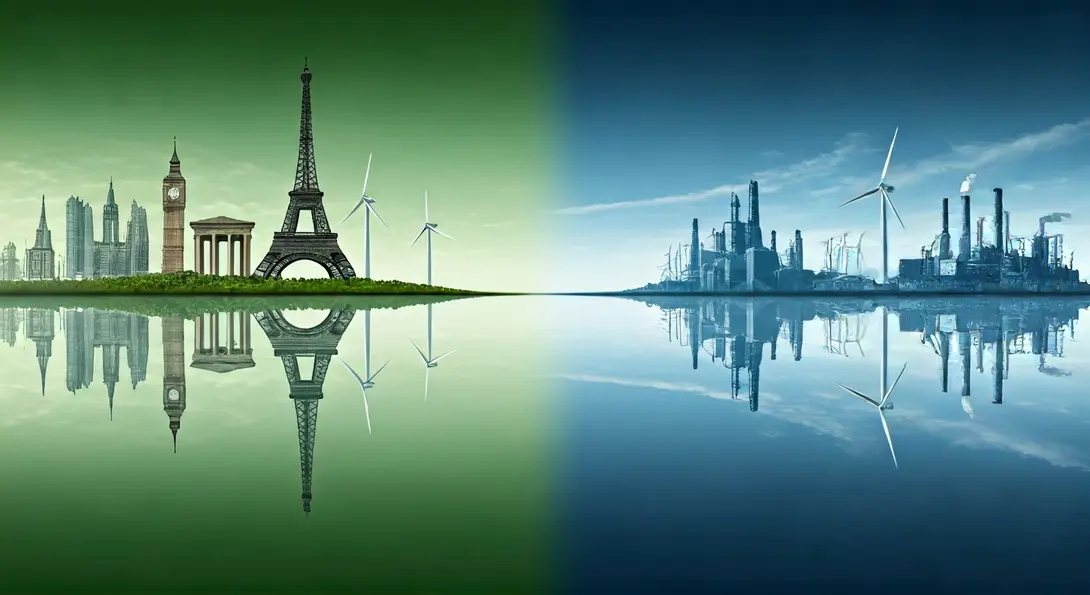
Europe’s ambitious pursuit of green energy independence, aimed at shedding its reliance on imported fossil fuels, faces an unexpected and critical hurdle: a growing dependence on external suppliers for renewable energy components. While the continent has invested billions into transitioning away from oil, gas, and coal, the very technology meant to liberate it—wind turbines, solar panels, and energy storage systems—is largely manufactured outside its borders, primarily in China.
This situation presents a paradox: by striving to replace one form of energy dependency, Europe risks creating another.
The European Green Ambition
For decades, Europe has been acutely aware of its vulnerability due to insufficient domestic production of fossil fuels. This reliance on imports, particularly from politically volatile regions, became a significant geopolitical liability, starkly highlighted by events in 2021 and 2022 when gas, oil, and coal supplies were used as strategic leverage.
In response, the European Union has poured substantial resources into a transformative energy agenda. The goal is clear: pivot from hydrocarbon-based energy generation to renewable sources. This transition is codified in directives like RED III, which mandates that renewable energy sources account for at least 42.5 percent of the EU’s final energy consumption by 2030. The promise was not just environmental sustainability, but also true energy autonomy.
China’s Dominance in Renewable Manufacturing
As Europe meticulously planned its renewable energy revolution, a different narrative unfolded simultaneously in China. Over the same period, China strategically developed its technological prowess and manufacturing capacity in renewable energy components, positioning itself as the undisputed global leader.
Michał Sołowow, a prominent Polish entrepreneur and investor with deep insights into the renewable energy market, underscores this reality: “While I might be speaking against my own commercial interests as a distributor of photovoltaics and a manufacturer of energy storage solutions, the truth is, if we purchase solar panels today, approximately 80 percent of their components originated in China.”
Indeed, when a project requires wind turbines, solar photovoltaic panels, or advanced energy storage systems, the attention of buyers—and their budgets—often turns directly to industrial hubs in Chinese provinces such as Jiangsu, Guangdong, and Fujian.
Data from the International Energy Agency’s (IEA) “Energy Technology Perspectives 2026” report corroborates this market dominance. China is responsible for an estimated:
- Around 80 percent of photovoltaic modules and batteries.
- Approximately 70 percent of wind turbine nacelles (the housing that contains a wind turbine’s generating components).
The report further indicates that manufacturing comparable wind turbine nacelles within the EU could be as much as 75 percent more expensive. This cost disparity significantly impacts the feasibility of localized production.

Looking at the foundational elements, China’s lead is even more pronounced. Chinese conglomerates supply roughly 95 percent of the world’s polysilicon and nearly 100 percent of the silicon wafers—critical raw materials for solar photovoltaics. For consumers and businesses considering solar installations, understanding the global supply chain is key to making informed decisions about energy savings. For example, exploring options like Lidl solar panels in the UK can be a starting point for assessing domestic availability and benefits.
Moreover, the broader push for electrification, including advanced EV charging infrastructure, such as BYD’s megawatt EV charging solutions in Europe, also relies heavily on globally sourced components, many of which stem from this concentrated manufacturing base.
The Path to True Energy Independence
If Europe genuinely seeks to achieve energy independence rather than merely shifting its dependencies, a strategic reorientation is imperative. The continent must prioritize and invest aggressively in its own domestic manufacturing capabilities for renewable energy components. This might entail tolerating higher initial production costs compared to Asian imports, but it is a necessary step towards robust energy security and economic resilience.
Without such a decisive shift, Europe risks trading its long-standing reliance on fossil fuels for an equally significant—and potentially equally vulnerable—dependency on external technological suppliers. The goal must be not just green energy, but truly autonomous green energy.
Frequently Asked Questions (FAQ)
Europe is rapidly transitioning to renewable energy to reduce its reliance on volatile fossil fuel imports and meet climate goals. However, while Europe focused on deploying renewables, China invested heavily in manufacturing capabilities for critical components like solar panels, wind turbine parts, and batteries. This has led to Europe sourcing a significant portion of its renewable technology from China, effectively substituting one external dependency for another.
China holds a dominant position across several key renewable energy component sectors. According to reports from the International Energy Agency, China accounts for approximately 80% of global photovoltaic (solar) module and battery production, and about 70% of wind turbine nacelles. Furthermore, Chinese companies produce roughly 95% of the world’s polysilicon and nearly 100% of the silicon wafers essential for solar panel manufacturing.
This dependency poses several risks to Europe. Firstly, it undermines the goal of true energy independence, as the continent remains vulnerable to potential supply chain disruptions or geopolitical pressures from a dominant supplier. Economically, it means a significant outflow of capital and missed opportunities for job creation and technological leadership within Europe’s own borders. Strategically, it could limit Europe’s ability to dictate its own green energy future without external influence.
To mitigate this dependency, Europe needs to implement a robust strategy for fostering domestic manufacturing of renewable energy components. This includes significant public and private investment in research and development, incentivizing local production through subsidies and favorable policies, and streamlining regulatory processes. Developing a circular economy for these components and ensuring access to raw materials are also crucial. While European-made components might initially be more expensive, the long-term benefits of enhanced energy security, job creation, and technological sovereignty outweigh the immediate cost considerations.
Source: International Energy Agency (IEA), Biznes Enter, Michał Sołowow
Opening photo: Gemini
About Post Author
