

The year 2026 saw record-breaking temperatures in many parts of the world, including Europe. With climate change making 40°C (104°F) readings on our thermometers an increasingly common sight, it’s no surprise that people are seeking innovative ways to cool their homes. Among the numerous online tips, one suggestion stands out: hanging a thermal emergency blanket on your window. As TechBusters, we felt it was our duty to investigate whether this popular hack truly delivers.
Contents
Can a Thermal Blanket Really Keep Your Home Cool? We Investigated.
Intense heatwaves can be incredibly challenging, especially for those living on higher floors of buildings or directly under the roof. Such scorching temperatures often lead to a rapid sell-out of fans in appliance stores, and securing an air conditioning installation can involve waiting periods of several weeks or even months.
Given these challenges, the idea of using a thermal blanket – also known as an emergency or space blanket – as a cooling solution sounds incredibly appealing. Its low cost further enhances its attractiveness. For instance, a bulk pack of 10 emergency blankets can often be found online for as little as 8-10 US dollars (approximately 7-9 Euros or 6-8 British Pounds).
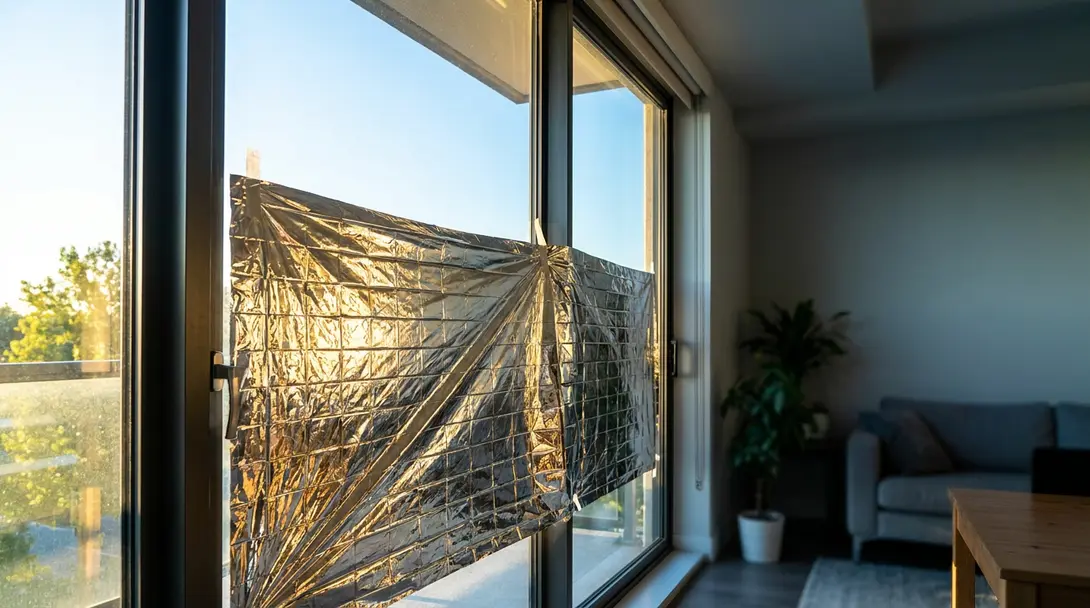
So, how should you use one of these blankets for maximum cooling? The method is straightforward: simply attach it to your window with the golden (or often copper-colored) side facing into your room. Our dedicated tester followed this exact procedure, then utilized a thermal camera to measure the temperatures on both the inner and outer sides of the window. The results were quite compelling: inside the apartment, a noticeable temperature drop of over 6°C (approximately 11°F) was recorded.
Indeed, even as the outdoor temperature dramatically increased, causing the blanket’s exterior to heat up significantly, the interior of the apartment began to cool down effectively.
The Science Behind Thermal Blanket Effectiveness
The positive outcome of our thermal blanket test isn’t surprising when you understand the fundamental principles behind its operation. The orientation of an emergency blanket is crucially important, not just for cooling but also when used in medical emergencies (for instance, to prevent hypothermia or overheating).
When aiming to cool a space, positioning the blanket so the golden side faces inwards (and the silver side faces outwards) is key. This configuration works by reflecting radiant heat away from the interior. The blanket is essentially a metallized polypropylene film, engineered to reflect up to 80% of the infrared radiation that typically passes through windows and contributes to significant heat gain during hot weather. This reflection prevents a substantial amount of solar energy from entering your home.
Conversely, if the blanket is applied with the golden side facing outwards, it would help to retain heat, preventing it from escaping. While useful for keeping a person warm in cold conditions, this setup would be counterproductive for cooling an apartment.
Potential Downsides? Not if You Opt for an Upgrade.
While highly effective and budget-friendly, the golden dye on some cheaper thermal blankets can, unfortunately, degrade over prolonged exposure to intense solar energy. This degradation might leave behind residue or marks on your windows. Although this is a minor issue considering the low cost of the solution, cleaning these stains can be cumbersome, especially for renters who need to maintain their property.

However, this minor inconvenience can be bypassed with a slightly larger investment. Many home improvement stores offer specialized thermal insulation films designed for windows. These films typically boast claims of “blocking 90% of ultraviolet rays and 50% of heat.” While these dedicated films are more expensive, usually retailing for around 15-20 US dollars (approximately 14-19 Euros or 12-16 British Pounds) per piece (for smaller, non-balcony windows), they offer a more durable and cleaner solution. This is still a significantly more affordable alternative than installing a full air conditioning system.
As TechBusters, we’ve explored and debunked many other common myths and tested various hacks. You might also find these articles interesting:
- Can Aluminum Foil Really Protect Against Keyless Car Theft?
- Is Antivirus Software Still Necessary in 2026?
Frequently Asked Questions (FAQ)
When using a thermal blanket to cool your home, the gold (or copper) side should face inwards, with the silver side facing outwards. This configuration is crucial because the metallized film is designed to reflect up to 80% of infrared radiation away from your living space, preventing external heat from penetrating through the window. If the gold side faced outwards, it would trap heat inside, working against your cooling efforts.
A primary drawback of using cheaper thermal blankets for extended periods is that the golden dye can degrade due to prolonged exposure to sunlight. This degradation might leave residue or stains on your windows, which can be inconvenient to clean, especially for individuals renting their homes. For a more durable and mess-free solution, specialized thermal insulation films designed for windows are available, though at a slightly higher cost.
A thermal blanket offers a highly affordable and immediate solution for blocking radiant heat through windows. While effective for its low cost, it may not be as durable or aesthetically pleasing as dedicated window insulation films. These specialized films provide better longevity and aesthetics, blocking more UV rays and heat without leaving residue. For more permanent and comprehensive cooling, external shades, blinds, or high-efficiency windows are options, albeit at significantly higher price points.
Source: Internal research.
Opening photo: Gemini
About Post Author
