

Contents
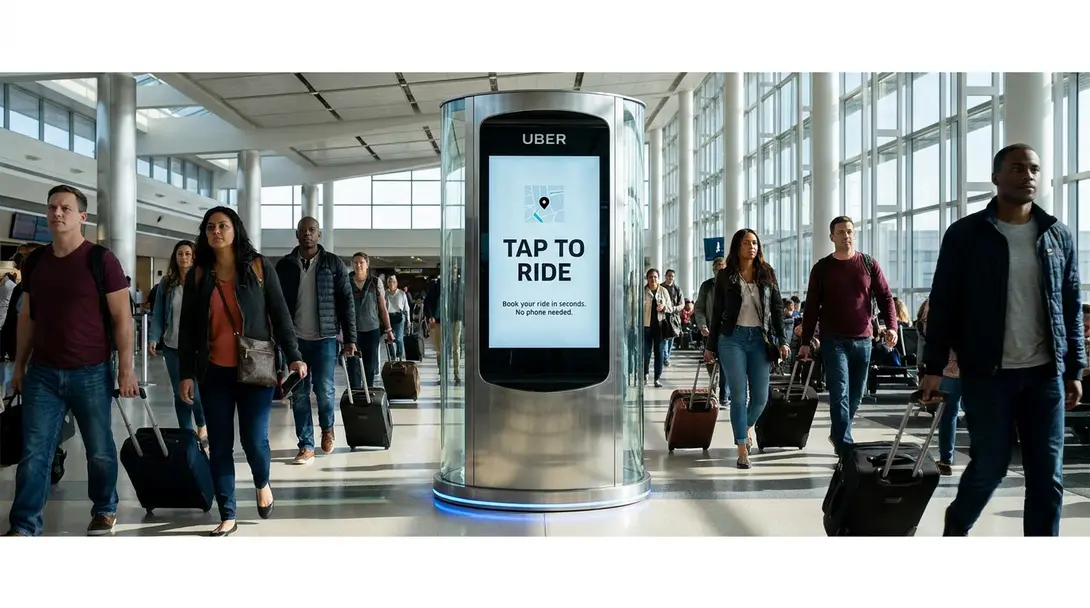
Uber Introduces “Tap to Ride” Kiosks: A Seamless Airport Experience Without the App
Traditionally, ordering an Uber requires a smartphone, the Uber application installed, and a stable internet connection. However, this is rapidly changing at major international airports globally, where Uber is introducing a groundbreaking new service. Soon, passengers will be able to book and pay for their rides directly from a touchscreen kiosk using a payment card, receiving a unique PIN to board their vehicle.Transforming Airport Transportation with “Tap to Ride” Kiosks
Starting this summer, innovative “Tap to Ride” kiosks are set to launch at a prominent European capital’s main international airport, aiming to revolutionize how passengers access ride-sharing services. The primary goal of these kiosks is to enable travelers to order and pay for a ride directly on-site, eliminating the need for a personal smartphone application or mobile data.How the Kiosks Work: A Simple Step-by-Step Process
The Uber “Tap to Ride” kiosks feature intuitive touchscreen interfaces, making the ordering process straightforward and user-friendly:- Select Your Destination: Passengers begin by choosing their desired drop-off location from the on-screen options.
- Choose Your Ride: Next, they select their preferred ride category (e.g., UberX, Uber Comfort, etc.).
- Effortless Payment: Payment is made by simply tapping a credit or debit card onto the integrated terminal.
- Receive Your Details: After successful payment, the system provides a printed confirmation. Additionally, if a phone number is provided, an SMS message containing driver details and a unique PIN code will be sent.
Who Benefits Most from “Tap to Ride”?
While the traditional app-based booking method remains fully operational, these kiosks are designed to address specific traveler needs:- International Tourists: Ideal for visitors who may not have access to a local SIM card, mobile internet, or the Uber app installed on their devices.
- Tech-Averse Users: A convenient option for individuals, such as seniors, who prefer not to use or are less familiar with mobile applications.
- Device-Free Travelers: Caters to anyone who prefers to travel light without relying on their personal electronic devices for booking.
Strategic Deployment in Key Global Hubs
The selection of this major European airport for the “Tap to Ride” rollout is highly strategic. This particular airport serves millions of passengers annually, with recent data showing a significant surge in ride-sharing demand to and from its terminals. Projections indicate a record-breaking holiday season in terms of passenger traffic and Uber ride volumes at this location. Iwona Kruk, a spokesperson for Uber in the region, highlighted the company’s philosophy: “Innovations hold the greatest value when they effectively address real user needs. This is why we are consistently introducing solutions that enhance access to mobility in diverse situations. The launch of ‘Tap to Ride’ kiosks at this prominent airport serves as another prime example of this user-centric approach.”A Global Footprint for Groundbreaking Technology
Prior to this European expansion, Uber kiosks had been successfully implemented at a select group of international airports worldwide, including bustling hubs like LaGuardia in New York, London Heathrow, Sydney, Budapest, and Prague. The introduction of this technology at a major Central European airport marks a significant milestone, as it becomes the first market in Europe to deploy this specific iteration of the technology, which was custom-built by Uber engineers in collaboration with Ayden. This deployment not only showcases the importance of this regional market in the development of Uber’s global innovations but also directly responds to the increasing number of travelers utilizing this airport and their expectation for quick, convenient ride-booking upon arrival. The future of travel technology, like the discussions at CES 2026 Tech Trends, continues to prioritize user experience and accessibility.Frequently Asked Questions (FAQ)
The “Tap to Ride” kiosks significantly benefit international visitors by allowing them to book and pay for an Uber ride without requiring a local SIM card, mobile internet, or even the Uber app on their personal device. This removes common barriers for tourists arriving in a new country, offering a seamless and direct way to arrange transportation from the airport.
No, the “Tap to Ride” kiosks are not replacing the traditional Uber app. They are an additional service designed to offer an alternative booking method for specific user groups, such as international travelers, individuals who prefer not to use mobile apps, or those without access to a smartphone or mobile data. The familiar app-based booking remains fully available for all users.
This deployment marks a significant milestone as it’s the first market in Europe to receive this specific, custom-built iteration of the “Tap to Ride” technology developed by Uber engineers and Ayden. It highlights the strategic importance of this major European airport and the local market in Uber’s global innovation strategy, showcasing a tailored response to local demand and traveler expectations.
About Post Author
