

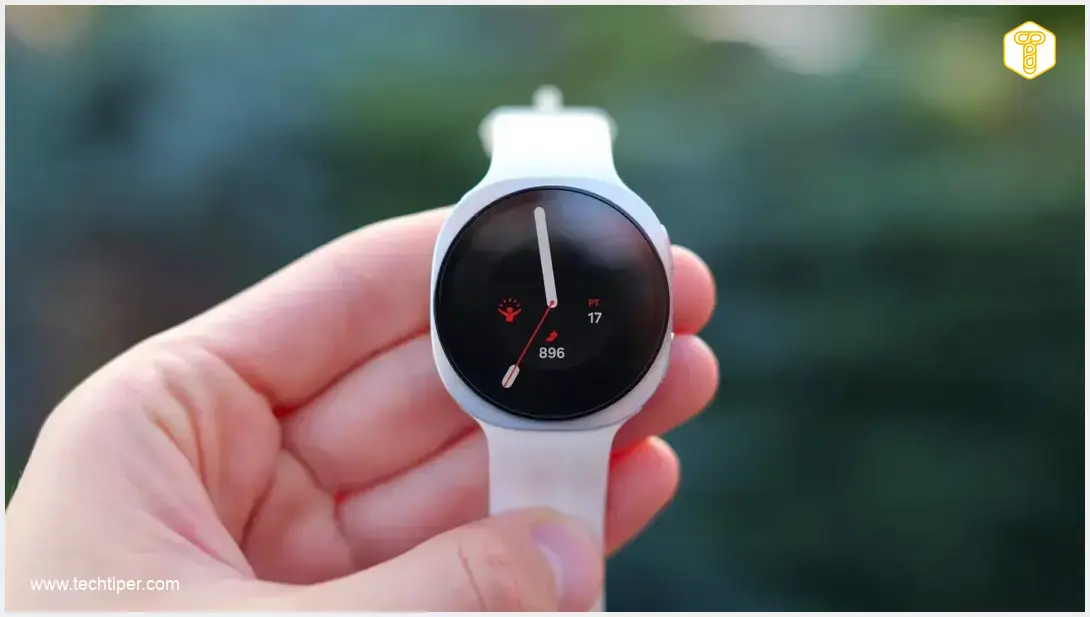
Samsung Galaxy Watch9 Review
-
Design and Display
-
Battery Performance
-
Overall Performance
-
Watch Faces
-
Activity Tracking
-
Advanced Health Features
First Impressions: A Promising Leap in Smartwatch Technology
The Samsung Galaxy Watch9 offers a significant refresh with its stunning display, seamless performance, and advanced health tracking capabilities. While initial battery life under demanding conditions was noted, the overall user experience and detailed health insights make it a compelling choice for tech enthusiasts.
Advantages
- Attractive and minimalist design.
- Exceptional display brightness (3000 nits) and outdoor readability.
- Seamless and fluid performance with quick app launches.
- Impressively accurate and reliable activity tracking.
- Sophisticated advanced health tracking features, including a new “Fitness Index” and detailed sleep metrics.
- Strong ecosystem integration with Galaxy smartphones.
- Functional new watch faces, especially the “Radial Dashboard”.
Disadvantages
- Initial battery performance (approx. 22 hours with all sensors/AOD enabled) was not immediately impressive.
- Some advanced health features require a minimum of seven nights of data collection to be fully functional.
- Default “Analog Balance” watch face can be challenging to read at a glance.
Contents
Unveiling the Samsung Galaxy Watch9: First Impressions and Advanced Features
At the recent Galaxy Unpacked event, the Korean manufacturer showcased a plethora of new products. Among the notable introductions is the Samsung Galaxy Watch9, and I’ve had the opportunity to test the 40mm version for several days. This article delves into what the device has revealed about me during its initial hours of use and whether this smartwatch truly warrants your attention.
A Significant Refresh in Smartwatch Technology
While recent launches saw considerable attention directed towards the new, wider Galaxy Z Fold8 and the flagship Galaxy Watch Ultra2, innovation didn’t stop there. Almost a week before its official release, I received the smallest member of the Galaxy Watch9 series for testing. My wrist has been adorned with the elegant white 40mm variant, seamlessly paired with a Galaxy S26.
Design and Display Excellence
In person, the smartwatch presents a remarkably attractive and minimalist aesthetic. The silicone strap, now devoid of visible stitching, is a subtle yet positive improvement. The casing maintains its familiar shape, enveloping a pristine flat display. The screen itself is nothing short of phenomenal. With a peak brightness of 3000 nits, visibility even under direct sunlight is impeccable. Just minutes after unboxing, I took the watch on a bike ride and experienced no difficulty whatsoever in reading the recorded metrics.
Initial Battery Performance Insights
According to the manufacturer, the new Galaxy Watch9 boasts an enhanced battery cell. However, my initial experience after the first full charge didn’t immediately impress. For the purpose of these preliminary tests, I enabled nearly every conceivable sensor, and the screen operated in Always-On Display mode. Under this rather demanding scenario, the new device depleted its battery in approximately 22 hours. It’s important to note that wearable devices often exhibit higher power consumption during their initial setup and configuration. I will conduct more extensive measurements, and the definitive results will be shared in a full review in the coming days.
Seamless Performance and User Experience
Samsung has maintained the same processor, yet there’s no discernible lack in performance. The device runs on Wear OS 7.0, overlaid with One UI Watch 9.0, providing a remarkably smooth and fluid user experience. Applications launch swiftly, and reports following workouts or morning wake-ups are generated almost instantaneously.
New Watch Faces
The Galaxy Watch9 introduces a selection of new watch faces:
- The default, minimalist “Analog Balance” watch face complements the device’s aesthetic but can be somewhat challenging to read at a glance.
- In contrast, the “Radial Dashboard” watch face proved to be excellent. While initially appearing busy, it efficiently presents a wealth of information, making it highly functional.
What the Galaxy Watch9 Learned About Me in 48 Hours
The most significant advancement in this generation of smartwatches is purported to be its sophisticated ability to record and analyze user parameters. As mentioned, immediately after configuring the device, I embarked on a bike ride. I covered a distance of approximately 41 kilometers (about 25.5 miles), and the activity tracking was impressively accurate and reliable.

Over the subsequent hours with the Galaxy Watch9 on my wrist, I accumulated over 20,000 steps, performed various measurements, and, crucially, wore it continuously through the night. It’s worth noting that certain new features, such as “Heart Health” and “Health Status,” along with the already existing “Sleep Animal” function, require the watch to be worn for a minimum of seven nights to collect sufficient data for analysis. For users looking to optimize their device’s longevity and security, keeping its software up-to-date is crucial, much like ensuring important security updates are installed on older models like the Galaxy Watch4.
The “Vascular Load” metric also demands a period of consistent data collection for thorough analysis. However, the presentation of energy levels, sleep data, and workout summaries is exceptionally well-executed. Beyond the watch display and the Galaxy Health app, these insights are also prominently showcased in Now Brief, exclusively on Galaxy smartphones. This seamless integration fosters a palpable sense of a meticulously crafted ecosystem. Similarly, owners of other models might be interested in knowing about the latest security updates, such as the Samsung Galaxy Watch6 Classic’s February security update for 2024.
Introducing the Fitness Index
A new addition to the Galaxy Watch9 series is the “Fitness Index.” This feature provides an overall wellness score for your body, broken down into five distinct characteristics, including body composition, strength, and endurance. During sleep, the device now meticulously records heart rate, heart rate variability, blood oxygen saturation, and skin temperature. The sheer number of detailed graphs and data points available is quite impressive.
For individuals accustomed to devices like the Pixel Watch, unique indicators such as the “Antioxidant Ratio” and “AGEs Index” present intriguing new data points. A more in-depth analysis of these collected metrics will be available in the full review, which is expected to be published shortly.
Pricing and Availability
The Samsung Galaxy Watch9 is expected to start at a competitive price point, roughly equivalent to €400 (EUR) or $430 (USD), varying by region and specific model. Prospective buyers should explore the official manufacturer’s website or authorized retailers for current pricing and any available promotions.
Frequently Asked Questions (FAQ)
The Galaxy Watch9 introduces advanced health tracking, including an improved “Fitness Index” that covers body composition, strength, and endurance. It also enhances sleep tracking with heart rate variability and skin temperature monitoring, and adds unique metrics like “Antioxidant Ratio” and “AGEs Index.”
Under demanding conditions, such as all sensors enabled and Always-On Display active, the Galaxy Watch9 lasted approximately 22 hours in initial tests. However, battery performance often stabilizes after the initial setup period, and more comprehensive testing will provide definitive results.
During sleep, the Galaxy Watch9 records a comprehensive set of metrics including heart rate, heart rate variability, blood oxygen saturation, and skin temperature. These data points contribute to a more detailed understanding of sleep quality and overall health.
Source: Developed by the author. Opening photo: Krzysztof Wilamowski
About Post Author
