

Contents
Samsung Unpacked London: A Deep Dive into Foldables and Wearables
Samsung’s Unpacked events often manage to generate immense excitement, even if the announcements aren’t always groundbreaking. The recent event in London was no exception, successfully building an atmosphere of “the most important event in foldable device history.” The consistent narrative of a “new shape” permeated the entire presentation, with Samsung proudly unveiling three new foldable smartphones and refreshed smartwatches.
Galaxy Z Fold8 Ultra: The Uncompromising Foldable Flagship We’ve Waited For
The device that truly stole the show for me was the Galaxy Z Fold8 Ultra – and this likely comes as no surprise. Early leaks had already hinted that this would be the model to finally shed the “foldable experiment” label and emerge as a fully-fledged, uncompromising flagship. The most frustrating aspect is realizing that this significant leap only arrives with its eighth iteration. This is the Galaxy Fold Samsung should have delivered two years ago.
Crucially, the Z Fold8 Ultra finally features a larger 5000 mAh battery, faster 45 W wired charging, and 20 W wireless charging. It’s astonishing that a device designed for extensive multitasking on a larger screen is only now receiving a “normal” power cell. It’s about time!
Furthermore, I’m pleased with the noticeably improved internal display construction. Samsung boasts a less visible crease, achieved through a double layer of ultra-thin glass. The prominent crease was a significant drawback of previous foldable iterations that previously deterred me from fully embracing these devices.
Another positive development is the presentation of One UI 9, which will be deeply integrated with artificial intelligence. Previously, I wasn’t a fan of Galaxy AI, as Samsung often showcased features that felt more like marketing gimmicks than genuinely useful tools. With the Galaxy Z Fold8 Ultra, however, this perception is set to change. It introduces an enhanced “Now Nudge” feature, which intelligently understands on-screen content and proactively suggests relevant actions, making multitasking more intuitive. To understand more about the potential impact of these advancements, you can read about earlier Galaxy Z Fold8 specifications leaks and how Samsung is preparing for foldable competition.
However, no product is without its flaws. For an “Ultra” version, I would have expected a top-tier camera setup, one that goes beyond a mere “copy-paste from the previous generation.” While the main sensor boasts 200 MP and the ultra-wide lens has been upgraded from 12 MP to 50 MP, it still includes a telephoto lens offering 3x optical zoom. The absence of a periscope zoom up to 5x, which would truly set it apart, remains a baffling omission.
Despite this, I must admit that the Galaxy Z Fold8 Ultra is the first Samsung foldable device I would genuinely consider owning as my primary phone. This is a feeling I haven’t experienced in a long time.
Galaxy Z Fold8: A Concept That Still Leaves Me Perplexed
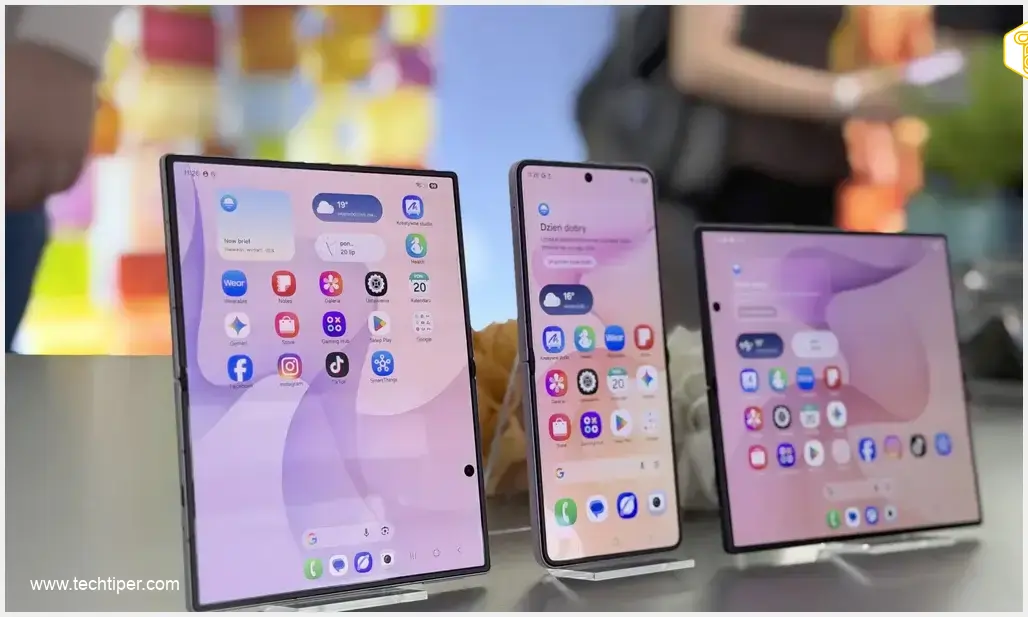
Samsung dedicated a surprisingly significant amount of time to the standard Galaxy Z Fold8, a form factor described as new to the company’s lineup. While the manufacturer attempted to market it as a “new shape” and a fresh philosophy, I still struggle to understand its target audience.
This isn’t a cheaper alternative to the Ultra model, nor is it designed for users seeking a compact foldable device. It’s… something in between. And this “in-between” positioning is its biggest problem.

The Fold8 features a new, wider format that, when unfolded, presents a 4:3 aspect ratio on its 7.6-inch screen. The outer display is shorter than on the Ultra, making the device look like a hybrid between a Flip and a Fold. It’s a phone that’s too large to be truly compact, yet not “flagship” enough to genuinely compete with the Ultra.
In practice, it feels as if Samsung wanted three foldable models in its portfolio but lacked a clear vision for the third. While I understand the company’s expectation of high sales for this variant (leaks suggest more Fold8 units are being produced than Ultra), I still don’t see a compelling advantage that would persuade me. The inclusion of only two cameras and the absence of a telephoto lens are significant drawbacks that are hard to justify at its premium price point.
I perceive no clear vision here, only a need to fill out a product catalog.
Galaxy Z Flip8: Evolution, Not Revolution
If I had to pinpoint the moment during the conference when the excitement deflated like a burst balloon, it would be the presentation of the Galaxy Z Flip8. This device has consistently played the same role for years: to be attractive, compact, and fashionable.
While the new version looks decent – especially in the Mint color, showcased by Samsung as an online exclusive variant – it’s challenging to describe it as a breakthrough of any kind.
The Flip8 is simply another iteration of the Flip. It offers a better processor, slightly improved cameras, and a marginally better battery. It’s a device purchased for its aesthetic appeal and compact form factor rather than its bleeding-edge specifications. While I understand its place in the product lineup, it’s not a phone that will impress those seeking flagship-level experiences and technological innovations.
Galaxy Watch9 and Galaxy Watch Ultra 2: Familiar Features in Two Sizes
Samsung also introduced new smartwatches: the Galaxy Watch9 and Galaxy Watch Ultra 2. Unfortunately, they failed to impress me, as I couldn’t discern any major changes. This was another segment of the conference where I felt the manufacturer was simply checking off a mandatory item on their agenda.
The watches look like previous generations, perform like previous generations, and offer features we’ve already seen. Yes, the Ultra 2 is slightly larger, more robust, and more “sporty,” while the Watch9 is more elegant – but these are familiar distinctions. Even press materials that leaked before the launch hinted at no revolution, and the presentation merely confirmed this. For those interested in potential future upgrades, explore discussions on Samsung Galaxy Watch Ultra 2 5G and satellite connectivity rumors.
Samsung talks about “new experiences,” but in practice, it’s hard to identify anything that fundamentally alters how one uses a smartwatch. This is a safe update that brings nothing new to convince me to upgrade my current Galaxy Watch Ultra.
A Glimpse into the Future: Smart Glasses
Samsung also previewed smart glasses, designed to be enhanced by artificial intelligence. The company developed this new hardware in collaboration with two brands: Gentle Monster, a South Korean fashion brand, and Warby Parker, an American company renowned for its eyewear.
The glasses are expected to offer a 9-hour battery life and will be available in the autumn. Regrettably, limited details were provided regarding the actual functionality of these glasses, making it difficult to form a comprehensive opinion on this new product.
Frequently Asked Questions (FAQ)
The Galaxy Z Fold8 Ultra features a larger 5000 mAh battery, faster 45W wired charging, 20W wireless charging, and a significantly improved internal display with a less visible crease. It also boasts enhanced AI capabilities through One UI 9’s “Now Nudge” feature.
The author views the Galaxy Z Fold8 as an “in-between” device that isn’t compact enough to be a Flip nor flagship-level enough to compete with the Ultra. Its new wider format and limited camera setup (lacking a telephoto lens) for its price point leave its target audience and compelling advantage unclear.
According to the review, the Galaxy Watch9 and Galaxy Watch Ultra 2 offer only minor iterative updates. They largely maintain the design and functionality of previous generations, lacking any major breakthroughs or features that would fundamentally change the user experience or compel an upgrade from recent models.
Source: Original content, Samsung & Opening photo: Jolanta Szczepaniak
About Post Author
