Nothing Phone (4b) Review
-
Design and Build Quality
-
Display and Visual Experience
-
Battery Performance and Charging Speed
-
Camera System
-
Software Experience and Performance
-
Value Proposition
A Distinctive Budget Phone with Value Concerns
The Nothing Phone (4b) stands out with its unique design, signature Glyph interface, and clean, long-supported software. While its display, battery, and main camera are generally adequate for its price segment, the performance is entry-level, and its pricing is currently uncompetitive compared to other Nothing models and rivals, making its value proposition questionable without price adjustments.
Advantages
- Unique and distinctive design with matte finish
- Solid build quality and unified feel
- Useful Glyph interface and ‘Essential button’
- Clean, optimized NothingOS with genuinely useful features
- Good software support (3 years OS updates, 6 years security)
- Commendable AMOLED display for the price segment
- Good battery life, up to two days of moderate use
- Main camera performs adequately in daylight
- Includes protective case and pre-applied screen protector
Disadvantages
- Uncompetitive pricing compared to other Nothing models and rivals
- Noticeable and asymmetrical display bezels
- Limited 120Hz refresh rate use (capped in games)
- No HDR support in popular streaming services
- Advertised peak brightness not achievable in daily use
- Only adequate charging speed, lags rivals
- Basic wide-angle camera with limited detail
- Entry-level performance with occasional slowdowns
Contents
Nothing Phone (4b) Review: A Distinctive Budget-Friendly Smartphone
This is a review of the Nothing Phone (4b), the first model from the company to feature the letter ‘b’ in its name. This designation signifies that we are looking at the most affordable smartphone in their 4th generation lineup. In doing so, Nothing is partly moving away from the ‘Lite’ model concept and even the entire CMF sub-brand, though the long-term plans for CMF are not yet entirely settled.
Let’s delve into what Nothing has prepared for a segment where compromises are inevitable. One thing is certain: the company hasn’t abandoned its key distinguishing features. So, let’s explore what the Nothing Phone (4b) truly offers in practice. I invite you to read this review to discover the advantages and disadvantages of this model.
Design and Build Quality
Unboxing Experience and Inclusions
Typical for Nothing, the packaging of the Phone (4b) immediately reveals if it has been tampered with, as you must physically tear open a seal to access the contents. Once opened, you’ll find a basic set of accessories: alongside the paperwork and a SIM tray ejector tool, there’s a 1-meter USB-C to USB-C cable, a protective case, and a pre-applied screen protector.
The included case is a classic rubber accessory that fits the Nothing Phone (4b) quite well. It fully covers the side buttons, prevents the camera lenses from protruding, and provides a slight millimeter lip around the front screen. As expected with this type of material, it will likely show fingerprints and other smudges.
Craftsmanship and Materials
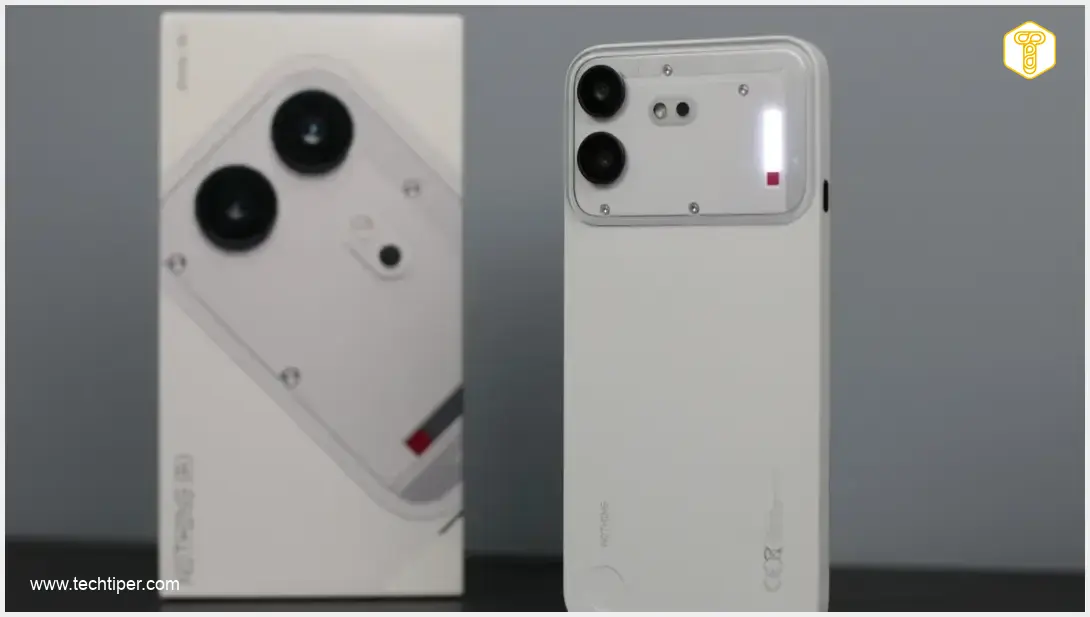
Nothing has primarily utilized plastic for the Phone (4b), with only the front being made of glass. Apart from the camera module, the entire device features a matte finish. This means you won’t struggle with visible dirt or fingerprints. Despite the plastic construction, the phone feels solidly built and surprisingly unified, which stands out compared to some of the manufacturer’s other models. The distinctive design remains a key highlight, ensuring the Phone (4b) stands out from the crowd.
Front Panel and Display Aesthetics
The front, with its factory-applied screen protector, features noticeable bezels that are not entirely symmetrical; the bottom bezel is slightly thicker. However, these aren’t overly thick bezels, though they are more prominent than those found on the Phone (4a) series. At the top of the Phone (4b), you’ll find a speaker grille and the selfie camera. The quality of images from the front-facing camera is acceptable, though the level of detail could be slightly better. On the other hand, the in-display fingerprint reader works flawlessly.
Rear Design and the Glyph Interface
Looking at the back of the Nothing Phone (4b), it’s immediately recognizable as a Nothing device, even though its overall aesthetic is relatively subdued for the brand. The camera island is the main distinguishing feature, with the lenses not protruding enough to cause irritation during daily use. Naturally, the iconic Glyph light system is present on the back. This implementation is borrowed from the Nothing Phone (4a), featuring four white LEDs and one red LED. The red LED is primarily used to indicate video recording, while the white LEDs mainly serve for notifications and countdown timers, making the Glyph a genuinely useful everyday addition rather than a mere novelty.

Edges and Controls
The plastic edges offer a comfortable grip, despite their flat design. The slightly rough texture helps prevent the device from slipping. The various edges house the following elements:
- Top: Secondary microphone, speaker grille.
- Bottom: SIM card tray, main microphone, USB-C port, main speaker.
- Left: Essential button.
- Right: Power button, volume controls.
The ‘Essential button’ is another unique feature, alongside the Glyph interface, that sets Nothing models apart. It primarily serves for quick notes—both voice and text—with the option to include screenshots. The stereo speakers provide simply adequate sound quality. While you shouldn’t expect deep bass, the overall frequency range is clear. Both the top and bottom speakers are well-balanced, and the maximum volume is quite loud.
Display and Visual Experience
Screen Quality
The display on the Nothing Phone (4b) is commendable for its price segment. The AMOLED panel delivers good color reproduction with basic configuration options available in the settings. In no critical aspect does the screen of this smartphone fall short of expectations for its class.
Brightness and HDR Support
The advertised peak brightness of 2000 nits is not achievable in everyday use. Furthermore, the Phone (4b) does not support HDR in popular streaming services. Nevertheless, you shouldn’t find the screen to be too dim, as it offers a typical brightness of 550 nits indoors and approximately 1000 nits under strong ambient lighting.
Refresh Rate
While the Nothing Phone (4b) is technically capable of displaying at 120 Hz, this isn’t a dynamically adjusted parameter. Moreover, the maximum refresh rate is mainly limited to the NothingOS interface. In games, the refresh rate is immediately capped at 60 Hz, while some selected applications may reach 90 Hz.
Battery Performance and Charging Speed
Nothing proudly claims that the Phone (4b) is their best smartphone in terms of battery performance. It houses the largest battery among Nothing’s models, though it still lags behind some competitors in capacity. Nevertheless, the 5200 mAh cell, combined with optimized software, allows for up to two days of moderate use.
For more intensive usage, daily charging will be necessary. In such scenarios, expect around 5 hours of screen-on time. In extreme cases, continuously utilizing the full computing power might reduce this to just over 2 hours. The charging speed is simply adequate; Nothing doesn’t break new ground here. Using a compatible 33W charger, the first 30 minutes will yield just over 50% battery charge, while a full recharge takes 1 hour and 20 minutes. While its battery life is decent, it does fall short when compared to some of its rivals.
Camera System: Capabilities and Quality
Camera Interface
The camera application on the Nothing Phone (4b) is familiar from other Nothing models. It’s straightforward to use, transparent, and includes interesting features. A key highlight is the ability to share predefined settings within the community. The basic customization options for arranging shooting modes are also appreciated.
Video Recording Options
The Nothing Phone (4b) records videos at the following resolutions:
- 1080p at 30 and 60 frames per second (fps)
- 4K at 30 fps
The wide-angle lens can only be used with the basic video settings.
Main Camera vs. Wide-Angle: A Closer Look
The fact that the Nothing Phone (4b) is a budget-friendly offering is evident in its limited number of cameras. On the positive side, it avoids including entirely unnecessary sensors. However, don’t expect miracles from the available setup. The main camera performs adequately, while the wide-angle lens is more of a curiosity.
Let’s start with the wide-angle lens, which features an 8-megapixel GalaxyCore sensor without any additional functions. In daylight, the quality is acceptable, though it’s fundamentally basic. Upon closer inspection, you’ll notice that the level of detail isn’t exceptional. However, color reproduction is decent. For night shots, a good night mode partially redeems the situation, but noise is inevitable. Furthermore, holding the device very steadily during photography is crucial, as I frequently had to retake shots to avoid blurriness.
The main camera, featuring a 50-megapixel Samsung sensor that outputs 12.5-megapixel images (via pixel-binning), benefits from both optical (OIS) and electronic (EIS) image stabilization. Nothing’s camera app suggests a 2x zoom, but this is digital. The resulting image quality is well-suited for this price range. Colors, detail, and overall contrast are accurately reproduced. Occasionally, you might notice the software boosting colors, which can be partially adjusted through individual settings. Textures only begin to lose definition in night shots. The main camera handles scenes with extreme lighting well, with HDR doing a commendable job.
For videos, the image stabilization and decent colors are appreciated, but the level of detail suffers somewhat, especially at night. In summary, the cameras on the Nothing Phone (4b) are simply adequate, with the software playing a significant role in achieving more interesting results.
Software Experience and Performance
NothingOS and Android Integration
One of the most compelling reasons to consider the Nothing Phone (4b) is its software. NothingOS 4.1, based on Android 16 on this model, strikes an ideal balance, offering genuinely useful features (like Glyph and Essential) within an uncluttered interface. The styling naturally complements the device’s design. Nothing’s philosophy is clearly to provide only what is useful, focusing on quality over quantity.
Software Support and Longevity
Android 16 marks the debut version of the OS for the Nothing Phone (4b), with software support guaranteed for three years, extending to Android 19. This is a good commitment for its price class. Additionally, the manufacturer promises security updates for a total of six years.
Performance and Hardware
The Nothing Phone (4b) is powered by the Snapdragon 6 Gen 4, one of Qualcomm’s entry-level chipsets. It is paired with UFS 2.2 storage and LPDDR4X RAM, indicating that Nothing is not pushing boundaries with its component choices. This is noticeable at times, as the smartphone occasionally exhibited slight slowdowns, though these were infrequent. For daily use, I didn’t feel a significant lack of computing power. While the Snapdragon 6 Gen 4 is sufficient for basic tasks, it may not satisfy users looking for robust performance or demanding gaming capabilities.
Value Proposition and Market Positioning
My primary concern with the Nothing Phone (4b) is its price. For only slightly more, you can purchase another smartphone from Nothing with significantly better specifications across the board (performance, display, cameras). Therefore, Nothing should undoubtedly consider promotions to improve the profitability and competitiveness of this model, which, in a way, replaces their budget-friendly CMF series. Its price point feels somewhat uncompetitive, especially when compared to the slightly more expensive Nothing Phone (4a), which offers significantly better specifications. Competing models such as the Motorola Moto G86 Power, Redmi Note 15 Pro, OPPO Reno15F, Honor Magic8 Lite, Samsung Galaxy A37, and POCO M8 Pro also offer strong alternatives in this segment, potentially delivering more for a similar investment. For those considering a step up in performance within the Nothing ecosystem, exploring options like the Nothing Phone (4a) Pro might be beneficial.
Conclusion and Final Verdict
We’ve concluded our review of the Nothing Phone (4b), a smartphone that, true to this manufacturer, is truly one-of-a-kind if you value a unique design and an unburdened software experience with relatively long-term support. These are the key features that should draw your interest to this particular model.
The Nothing Phone (4b) distinguishes itself with its unique aesthetic and optimized software, offering a refreshing alternative in the smartphone market. However, its pricing strategy, placing it close to more capable Nothing models, somewhat detracts from its overall value. While its individual components like the display, battery, and cameras are generally decent, they don’t necessarily stand out from the competition. For this model to truly shine, a more aggressive pricing strategy or promotional offers would make it a much more compelling choice against its rivals.
Technical Specifications: Nothing Phone (4b)
| Component | Details |
|---|---|
| Display | 6.77-inch OLED, FullHD+ (2344×1260, 19.5:9, 381 ppi), 87.4% screen-to-body ratio, Brightness up to 2000 nits (HBM: 1200 nits, typical: 600 nits), 120 Hz refresh rate, 8-bit color depth (16.7 million colors) |
| Processor | Qualcomm Snapdragon 6 Gen 4, 4 nm lithography, CPU: 1x Cortex-720s (2.3 GHz) + 3x Cortex-720s (2.2 GHz) + 4x Cortex-520s (1.8 GHz), GPU: Adreno 810 |
| RAM | 8 GB LPDDR4X RAM |
| Storage | 128 GB UFS 2.2 |
| Cameras | Front: 16 MP (f/2.4, GalaxyCore GC16B3C) Rear: 50 MP (f/1.8, PDAF, OIS, Samsung S5KJNS) + 8 MP (f/2.2, wide-angle, GalaxyCore GC08A8) |
| Battery | 5200 mAh, 33 W wired charging (USB PD3.0, PPS, UFCS) |
| Connectivity | Dual SIM (5G, 2x Nano SIM), Wi-Fi 6 (802.11ax), Bluetooth 6.0, NFC, USB-C (2.0) |
| Other Features | In-display fingerprint reader, IP64 certification, Stereo speakers, Glyph interface |
| Operating System | Android 16 (Nothing OS 4.1) |
| Dimensions | 164.4 × 78.2 × 8.6 mm |
| Weight | 210 g |
| Construction | Front: Dragontail Pro glass, Body and back: Plastic |
| Color Options | White, Black, Blue |
Frequently Asked Questions (FAQ)
The ‘b’ in Nothing Phone (4b) indicates that it is the most budget-friendly smartphone in Nothing’s 4th-generation lineup, positioning it as an entry-level option within their ecosystem.
The Nothing Phone (4b) is positioned as the most affordable 4th-gen Nothing smartphone. However, its price is considered to be quite close to that of the Nothing Phone (4a), which offers significantly better specifications for only a slightly higher investment, making the (4b)’s value proposition debatable without promotions.
The Nothing Phone (4b) launches with Android 16 and is guaranteed to receive three years of OS updates (up to Android 19). Additionally, Nothing pledges six years of security updates, which is a commendable commitment for a device in this price segment.
Yes, the Nothing Phone (4b) features a simplified Glyph interface, similar to the Nothing Phone (4a). It includes four white LEDs and one red LED, used for notifications, countdowns, and indicating video recording, making it a functional and distinguishing feature rather than just a gimmick.
Source: Review based on original content
Opening photo: Łukasz Pająk
About Post Author