Contents
Pixel 11 Pro XL’s “Extreme Charging” Mode: Minor Gains, Major Heat Concerns
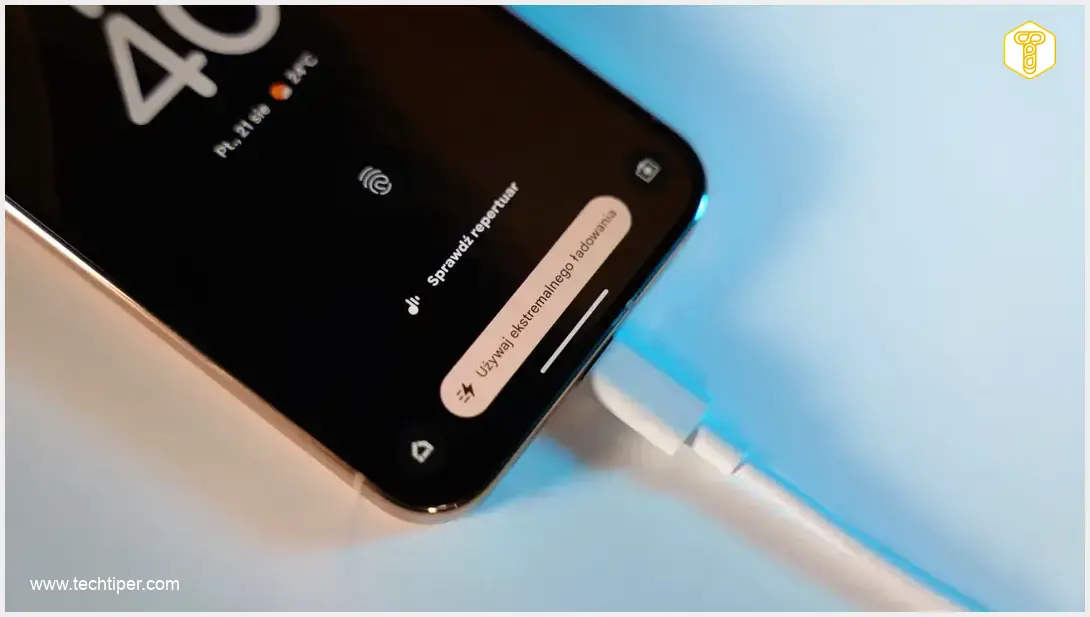
Google recently introduced an “Extreme Charging” mode for its Pixel 11 Pro XL, promising to significantly reduce charging times. While the feature does offer a slight improvement in speed, recent tests indicate that these gains are relatively minor, coming at the cost of substantially increased battery temperatures. This raises questions about the long-term health of the device’s battery and the overall competitiveness of Google’s charging technology against leading rivals.
When stacked against flagship smartphones like the Samsung Galaxy S26 Ultra and the OnePlus 15, the Pixel 11 Pro XL’s new charging mode appears to be a compromise, with competitors not only charging faster but also maintaining cooler operating temperatures.
How Extreme Charging Works (and Doesn’t)
The Pixel 11 Pro XL utilizes USB Power Delivery (PD) with Programmable Power Supply (PPS) for its charging capabilities. To achieve its advertised performance, users need a 45W charger that supports 21V output. Additionally, the “Extreme Charging” function must be enabled, though it’s not always immediately available after the phone powers on.
During testing, the peak charging power remained consistent across both standard and Extreme Charging modes, hovering around 41W. The primary difference observed was how long the phone sustained this high power output:
- Standard Mode: Maintained high power for approximately 10 minutes.
- Extreme Charging: Maintained high power for about 16 minutes.
This extended period of high-power delivery translated into some tangible, albeit modest, reductions in charging time:
- 50% Charge: Achieved in 18 minutes with Extreme Charging, compared to 21 minutes in standard mode.
- 75% Charge: Reached in 28 minutes with Extreme Charging, down from 35 minutes.
- Full Charge (100%): Completed in 64 minutes, a mere five minutes faster than the 69 minutes required in standard mode.
While any reduction in charging time is welcome, these numbers suggest that “Extreme Charging” offers a relatively small advantage for everyday use. For more details on the Pixel 11 Pro XL, you might be interested in Google Pixel 11 Leaks, Specifications, and Release Date.
The Heat Problem: A Costly Trade-Off for Speed
The most significant drawback of Extreme Charging mode is its impact on battery temperature. Higher temperatures are a known factor in accelerating the degradation of a battery’s lifespan over time.
Test results showed a notable increase in thermal output:
- Standard Mode: Smartphone temperature peaked at around 39°C (102.2°F).
- Extreme Charging: Temperature surged to 42.9°C (109.2°F).
Alarmingly, under Extreme Charging, the device sustained temperatures above 40°C (104°F) for approximately 20 minutes. The average temperature throughout the entire charging cycle also increased from 35.4°C (95.7°F) in standard mode to 38.3°C (100.9°F) with Extreme Charging activated.

As noted by tech observers like SamMobile, consistently exposing a smartphone battery to higher temperatures can significantly shorten its long-term lifespan and capacity. Therefore, “Extreme Charging” should ideally be viewed as an emergency solution rather than a default charging method to preserve battery health.
Pixel 11 Pro XL vs. The Competition: Falling Behind
When placed head-to-head with competitor flagships, the Pixel 11 Pro XL’s charging performance, even with Extreme Charging, trails behind. Devices like the OnePlus 15 and the Samsung Galaxy S26 Ultra not only charge considerably faster but also maintain cooler operating temperatures.
Consider the following comparison for a full charge:
- Pixel 11 Pro XL (Extreme Charging): 64 minutes for a full charge.
- OnePlus 15 & Galaxy S26 Ultra: Approximately 42 minutes for a full charge, while consistently staying below 40°C (104°F).
The disparity is also evident in short charging bursts. After just 10 minutes plugged in:
- OnePlus 15 & Galaxy S26 Ultra: Reached approximately 37% battery capacity.
- Pixel 11 Pro XL (Standard Mode): Charged to about 27%.
- Pixel 11 Pro XL (Extreme Charging): Reached approximately 31%.
These comparisons highlight a key issue: while Google’s new feature does offer some speed improvement, it doesn’t resolve the Pixel’s underlying competitive disadvantage in charging technology. The aggressive charging comes at the demonstrable cost of increased battery temperature, which could impact user experience and device longevity.
Frequently Asked Questions (FAQ)
Extreme Charging is a mode introduced by Google for the Pixel 11 Pro XL designed to shorten battery charging times. It achieves this by sustaining higher power delivery for a longer duration compared to standard charging.
Tests showed that Extreme Charging can get the Pixel 11 Pro XL to 50% in 18 minutes (vs. 21 standard), 75% in 28 minutes (vs. 35 standard), and a full 100% charge in 64 minutes (vs. 69 standard). The time savings are relatively modest.
Yes, tests revealed that Extreme Charging significantly increases battery temperatures, reaching peaks of 42.9°C (109.2°F) and maintaining above 40°C (104°F) for extended periods. Sustained higher temperatures can accelerate the long-term degradation of lithium-ion batteries, potentially shortening the battery’s overall lifespan. It is generally recommended for occasional use rather than as a primary charging method.
The Pixel 11 Pro XL, even with Extreme Charging, charges slower and operates at higher temperatures compared to competitors like the OnePlus 15 and Samsung Galaxy S26 Ultra. These rival devices can achieve a full charge in approximately 42 minutes while staying below 40°C, whereas the Pixel takes 64 minutes and runs much hotter.
Source: SamMobile. Opening photo: Krzysztof Wilamowski
About Post Author