

Contents
Your Smartphone Can Get a Second Life and Turn into a Robot: UCLA Researchers Propose PhoneBot
The Dawn of PhoneBot: Repurposing Your Smartphone for Robotics
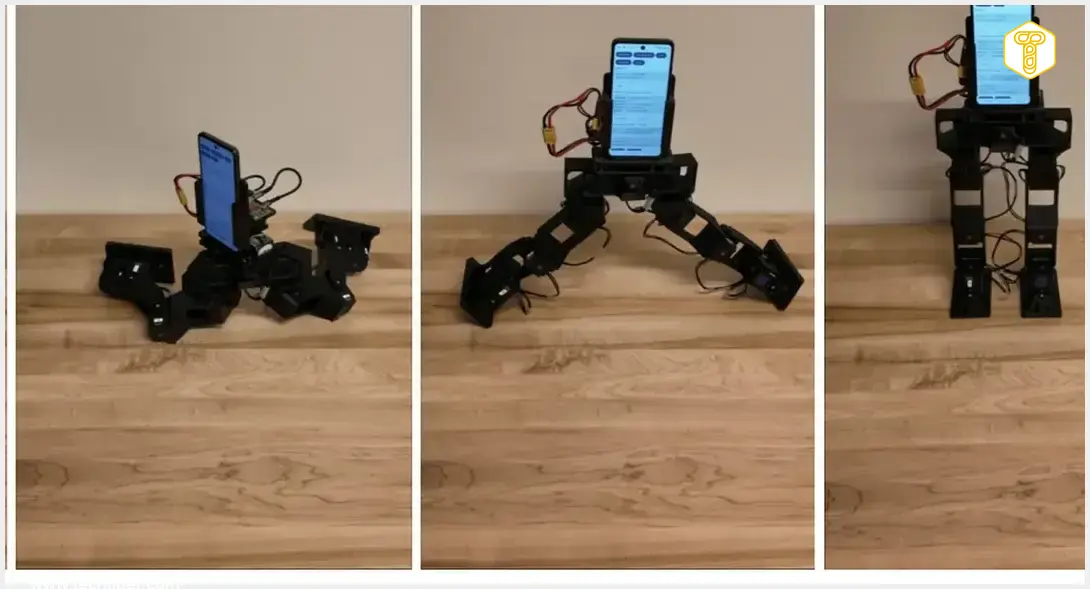
A device that might be collecting dust in your drawer could soon be central to the next wave of robotic innovation. Researchers at the University of California, Los Angeles (UCLA) are spearheading a groundbreaking project called PhoneBot, a compact humanoid robot that cleverly integrates a standard Android smartphone as its primary control unit. This initiative aims to bridge the gap between widely accessible consumer electronics and complex experimental robotics, offering an affordable and open-source platform for innovation, education, and rapid prototyping in the field of humanoid robotics.A Smartphone as the Robot’s Brain
The PhoneBot project, detailed in a paper published on arXiv, reimagines the conventional robot architecture. Instead of relying on a suite of specialized and often costly components for imaging, motion sensing, and computation, PhoneBot harnesses the integrated capabilities of an Android smartphone. Here’s how a smartphone becomes the central intelligence for PhoneBot:- Vision and Recognition: The phone’s camera serves as the robot’s “eyes,” enabling it to recognize and track humans and objects in its environment.
- Motion Sensing: Built-in accelerometers and gyroscopes provide crucial data on the robot’s orientation and movement, vital for maintaining balance and navigation.
- Processing Power: The smartphone performs a significant portion of the control computations. Commands are then transmitted wirelessly via Wi-Fi to a small onboard microcontroller that directly interfaces with the robot’s motors.
Inside the PhoneBot’s Engineering
PhoneBot stands approximately 19 inches (48 cm) tall and weighs around 4 pounds (1.8 kg), including the smartphone. Its robust construction features 13 individual motors: six in each leg for intricate bipedal movement and an additional motor that rotates the torso where the smartphone is mounted. This unique design allows the camera to change its field of view without requiring the entire robot to reorient itself, enhancing its observational capabilities. The estimated hardware cost for PhoneBot is approximately $400, excluding the smartphone itself, making it an exceptionally cost-effective platform for research and development. In its current demonstrations, PhoneBot has successfully showcased basic locomotion, human tracking, and the ability to self-right from a prone position on its belly. It’s important to note that PhoneBot is not yet designed for complex everyday tasks. Its current iteration lacks arms for manipulation and is primarily designed for walking on flat, stable surfaces. Nevertheless, the project demonstrates significant strides in making sophisticated robotic control accessible. For context on other specialized robotic developments, you might be interested in how Amazon invests in child-sized robots for new era homes.Older Phones: Still Capable Robotics Brains
A crucial finding from the UCLA researchers is that the latest, most expensive smartphones aren’t necessarily required for PhoneBot’s core functions. They tested the platform with four different Android phones: a 2017 Honor 9, a Moto G 2025, a Samsung Galaxy A16 5G, and a Moto G 2024. All these devices successfully handled the fundamental tasks of sensor data acquisition, control, and computer vision. This suggests that even an older, mid-range smartphone gathering dust in your drawer could be repurposed as the intelligent core of a PhoneBot, further enhancing the platform’s affordability and accessibility. One notable exception identified during testing was the Honor 9, which could not support ARCore-based mapping functionalities due to the absence of required Google services on the specific test unit. This highlights the importance of specific software compatibility, even if raw processing power isn’t a primary barrier.Evolving from Wheeled to Bipedal Robots
The concept of using a smartphone as a robot’s “brain” isn’t entirely new. Previous initiatives, such as the OpenBot project developed by researchers associated with Intel Labs, paired a smartphone with an inexpensive, wheeled robotic chassis. This roughly $50 platform could perform functions like human following and autonomous navigation. PhoneBot takes this concept a significant step further by applying it to the more complex domain of bipedal robotics. Developing a two-legged robot presents unique challenges, particularly in maintaining balance and coordinating intricate walking gaits. PhoneBot’s success in this area demonstrates the robust capabilities of modern smartphones in handling these computational demands. This advancement opens new avenues for exploring agile and dynamic bipedal systems, much like the secret agile robots making cat-like landings.PhoneBot’s Vision: An Open-Source Future
Fundamentally, PhoneBot is conceived as a research and educational platform, not a commercial consumer product. To foster widespread innovation and collaboration, the project has been released as open-source. This means that researchers, educators, and hobbyists worldwide can replicate the design, modify it, and utilize it in laboratories or educational settings. The PhoneBot project underscores a powerful message: even an older, more affordable smartphone possesses the integrated capabilities—camera, motion sensors, and processing power—to serve as the sophisticated brain for a small humanoid robot. This initiative has the potential to significantly lower the barrier to entry for robotics development, empowering a new generation of innovators.Frequently Asked Questions (FAQ)
Utilizing a smartphone as a robot’s brain offers several key advantages, including cost-effectiveness due to readily available components, integrated advanced sensors (cameras, accelerometers, gyroscopes), powerful processing capabilities, and existing wireless communication modules (Wi-Fi, Bluetooth). This eliminates the need for separate, expensive specialized modules, simplifying design and reducing overall project costs.
In its current stage of development, PhoneBot can successfully demonstrate basic bipedal locomotion (walking), human tracking using its integrated smartphone camera, and the ability to self-right itself from a prone position. It is designed to operate on flat surfaces and currently lacks manipulators (arms) for complex interaction with objects.
PhoneBot is primarily intended as an open-source platform for research, education, and rapid prototyping. It is not designed or marketed as a commercial consumer product. Its open-source nature encourages academic institutions, independent researchers, and robotics enthusiasts to build upon, modify, and innovate using the platform.
Beyond the smartphone, PhoneBot’s hardware includes a physical frame, 13 individual servo motors (six in each leg and one for torso rotation), and a small onboard microcontroller. The microcontroller communicates with the motors and receives commands wirelessly from the smartphone, which acts as the central processing unit and sensor hub.
While PhoneBot successfully utilizes older and mid-range smartphones for core functionalities like sensor data, control, and basic computer vision, there can be limitations. For instance, specific software features that rely on newer hardware or proprietary services (like ARCore-based mapping requiring specific Google services) might not function on all older devices. However, for the fundamental operations of PhoneBot, a high-end, brand-new smartphone is generally not necessary.
Source: Techxplore, Phonebot, Openbot, arXiv
Opening photo: Graphic from the arXiv article / screenshot
About Post Author
