
Contents
Adaptive Cruise Control: Your Guide to Smarter Driving
Cruise control has become a ubiquitous feature in vehicles in the 21st century, found in everything from luxury sedans to compact city cars. While not a new invention of this millennium, recent years have seen manufacturers continually expand its capabilities, bringing us ever closer to the reality of autonomous driving. Cruise control significantly contributes to driving comfort, especially on long journeys, and its potential also extends to enhancing road safety.
Understanding the Basics: What is Cruise Control?
The concept of cruise control (also known as speed control or autocruise) in automobiles can be traced back to the very early days of motoring, around the late 19th and early 20th centuries. However, similar speed-governing solutions were employed much earlier in other forms of transport, notably in steam-powered trains. Focusing on automobiles, cruise control in its modern form debuted shortly after World War II. At that time, some manufacturers even began to label it as an “autopilot” feature.
In its simplest terms, cruise control is a system designed to maintain a speed set by the driver. Basic versions operated as a “manual throttle lock,” essentially holding the throttle in a set position. However, it’s the more sophisticated iterations that truly capture our interest.
These advanced systems limit acceleration once a specific speed is reached and appropriately increase power to accelerate. Initially, these systems operated mechanically, often relying on vacuum pressure and speedometer readings. However, more precise electronic variants of cruise control emerged in American cars as early as the 1970s.
The United States played a significant role in the popularization and early development of cruise control. This was a natural progression given the highly developed automotive market with vast, often straight intercity routes. The 1970s fuel crisis further contributed to its adoption, as cruise control was promoted as a solution to reduce fuel consumption by maintaining a constant speed.
Even today, the simplest forms of cruise control are found in almost every new car, and their fundamental operating principle remains unchanged: you set a speed, the car maintains it, and the system disengages when the brake pedal is pressed. While there are exceptions to the disengagement rule, this is generally how it works. However, this is just the beginning of the capabilities, which become far more extensive depending on how much one is willing to invest in vehicle configuration.
How to Activate Cruise Control
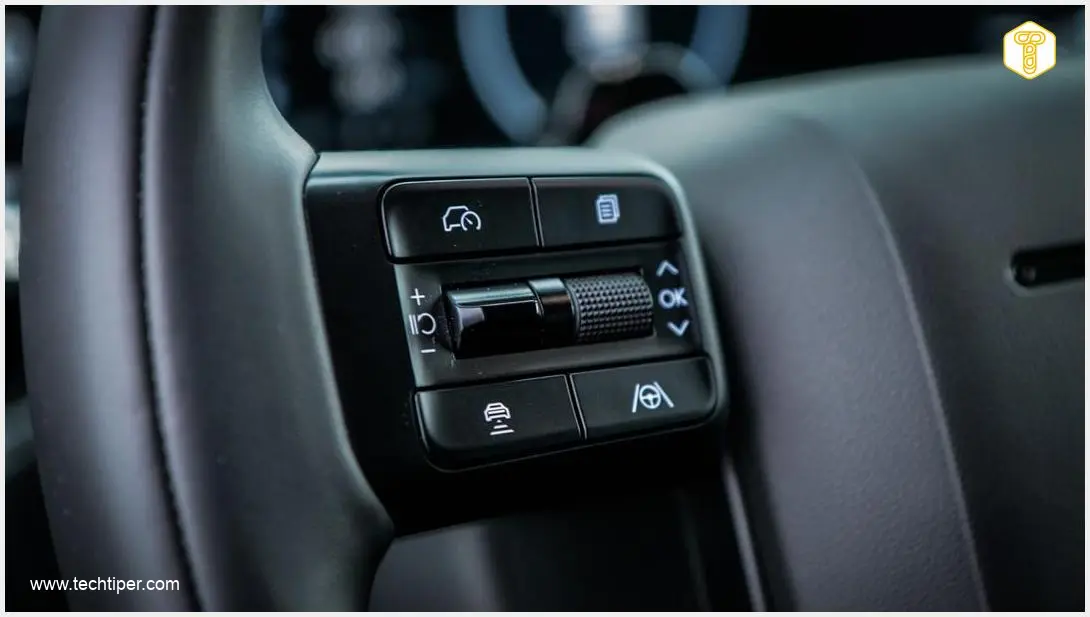
In the vast majority of vehicles, engaging cruise control involves using buttons located on or around the steering wheel. First, you typically need to activate the system itself, often with a dedicated button that may also select the operating mode. Then, simply press a “SET” button for the cruise control to take over throttle management.
By default, the system will begin maintaining the speed you are currently driving. You can then smoothly adjust this speed up or down using the “+/-” buttons, without needing to use the accelerator pedal. To deactivate, simply press the “Cancel” button, or press the brake or clutch pedal. Another important button is often “RES” (Resume), which allows you to reactivate cruise control at its last set speed.
How Adaptive Cruise Control Works
Moving fully into the modern era, subsequent generations of cruise control have come to dominate the automotive landscape. We’re now talking about Adaptive Cruise Control (ACC) or Active Cruise Control. This time, our focus shifts from the USA to Japan, where the first cars featuring this type of solution emerged. ACC not only maintains a set speed but also adjusts it in response to other vehicles ahead.
Early iterations of adaptive cruise control in Japan, though not quite in the form we know today, were showcased in luxury models like the Mitsubishi Debonair (1992) and Diamante (1995), and the Toyota Celsior (1997). These systems could warn drivers of potential collision risks due to speed differences, though they didn’t actively intervene with the braking system. Depending on the implementation, they could, however, reduce throttle to slow the vehicle.
It was Mercedes-Benz that is widely credited with introducing a fully functional adaptive cruise control system to the consumer market. Their S-Class (W220) in 1999 debuted the “Distronic” system. The German manufacturer was the first to utilize radar technology to monitor the distance to the vehicle ahead, allowing for adjustable following distances and active braking capabilities.
The implementation of radars enables the vehicle’s electronics to assess almost in real-time whether you are too close to, or approaching too quickly, other road users. It then dynamically adjusts speed without exceeding the driver’s initial settings. While various sensors can be used, radio wave-based radars are predominant. Increasingly, LiDAR systems are being incorporated, though some manufacturers opt for more cost-effective camera-based solutions that analyze visual data.
As an interesting note, the presence of adaptive cruise control in a vehicle signifies that it meets Level 1 autonomous driving capabilities. This means the driver is responsible for steering and speed, but receives support from an Advanced Driver-Assistance System (ADAS), which includes ACC.
Cruise Control Increasingly Integrates Additional Features
The introduction of basic cruise control, and later its adaptive variant, represent significant milestones in automotive technology. However, its evolution continues, especially with the electrification and overall advancement of the automotive industry, regularly bringing new enhancements. It’s often said, not without reason, that car manufacturers are increasingly becoming technology companies.
Active Stop&Go Cruise Control: Stopping for You
The adaptive cruise control mentioned earlier typically operated within a specific speed range (e.g., 30-180 km/h or 20-110 mph). This standard remains in most cars today. However, a significant advancement is the Stop&Go variant. As its name suggests, this implementation allows the system to manage acceleration and braking across the full speed range, including bringing the vehicle to a complete stop and then resuming motion, making it ideal for traffic jams.
Predictive Cruise Control (PACC): Looking Ahead
While active cruise control primarily focuses on the vehicle immediately ahead and adjusts speed accordingly, this isn’t the only data point influencing your journey. Various forms of predictive cruise control (PACC) are emerging, though each manufacturer may use a different name, the core principle remains largely the same.
Oprogramowanie uwzględnia chociażby odczytane ograniczenia prędkości ze znaków, a także zwalnia przed zakrętami i skrzyżowaniami, gdy zauważy je na trasie na podstawie danych z map. Nawigacja wcale nie musi być włączona.
These advanced systems can dynamically alter the maximum target speed set by the driver. The software incorporates data such as speed limits read from road signs and will also slow down for curves and intersections detected along the route using map data, even if the navigation system isn’t actively engaged.
Another often-linked, though not always present, enhancement in this advanced cruise control is the ability to limit overtaking on the right. Generally, radars not only monitor what’s directly ahead but also scan panoramically. If vehicles are detected in an adjacent, parallel lane (traveling in the same direction), the software may adjust your speed to match them.
Naturally, with predictive cruise control, more questions arise regarding its operational quality. While most adaptive cruise control systems perform flawlessly, predictive counterparts can sometimes exhibit unexpected behavior, such as misinterpreting signs from side roads or incorrectly assessing the sharpness of a curve. Fortunately, drivers can typically deactivate this module permanently if desired.
Lane Keeping Assist: A Step Towards Autonomous Driving
A crucial enhancement to adaptive cruise control is the lane-keeping assist system, sometimes called highway driving assist by different manufacturers. This represents another step towards fully autonomous vehicles (Level 2), as the car not only manages the throttle but also provides steering assistance. However, drivers are still required to keep their hands on the wheel and remain ready to take full control at all times.
In this system, operation is often augmented by cameras, typically mounted on the vehicle’s windshield. Algorithms analyze the visual data to identify the lane markings. The effectiveness varies by implementation. In some cases, the software might unnecessarily correct your driving path, which often occurs on suburban roads where lane line quality or shoulder definitions are poor.
Therefore, lane-keeping assist should be treated as a supportive feature rather than an infallible system during driving. Implementations that clearly communicate their limitations to the driver when unable to determine the driving path are particularly commendable. Unfortunately, some systems may aggressively try to steer the vehicle to one side.
This system is integrated with cruise control in the vast majority of cars, meaning the vehicle simultaneously manages speed and stays within its lane. This works exceptionally well on highways and expressways. However, there are exceptions where the driver can activate both solutions independently. Hyundai (and Kia) notably offer HDA (Highway Driving Assist) with two independent buttons. Audi also employs a similar approach.
A further development, predominantly found in the premium segment (e.g., BMW, Mercedes), linked to highway driving assist, is automatic lane change functionality. Simply activating the turn signal informs the software of your intention, and the car will autonomously move from one lane to another, provided all necessary conditions are met. This includes verifying that no other vehicles are nearby and that no one is approaching at a higher speed.
Cruise Control: A Convenience to Be Used Consciously
We’ve explored what cruise control is, how it works, and its evolving capabilities. This is undoubtedly a topic that will continue to expand in the coming years, and we will revisit it. It’s crucial to remember that all driver-assistance systems should be viewed as comfortable aids, not as full replacements for the driver’s attention and control.
To learn more about cutting-edge automotive technologies, explore:
- Toyota Corolla Cross GR Sport: A Facelift Responding to Customer Needs
- Digital rearview mirrors
- Digital side mirrors
- Remote parking assist
- Electric vehicle charging technologies
- Revolution in Transport: Commercial Robotaxis Arrive in Europe
Frequently Asked Questions (FAQ)
What is the main difference between standard cruise control and adaptive cruise control (ACC)?
Standard cruise control maintains a set speed chosen by the driver. It does not react to other vehicles. Adaptive Cruise Control (ACC), on the other hand, not only maintains a set speed but also automatically adjusts it to keep a safe following distance from the vehicle ahead, accelerating or braking as needed.
How does predictive adaptive cruise control (PACC) enhance safety and efficiency?
PACC goes beyond reacting to the immediate vehicle ahead by incorporating external data such as speed limits from road signs and topographical information from navigation maps. It can proactively adjust speed before curves, junctions, or changes in speed limits, optimizing fuel efficiency and reducing driver workload by anticipating road conditions.
Can I fully rely on adaptive cruise control and lane-keeping assist for autonomous driving?
No. While adaptive cruise control and lane-keeping assist are key components of advanced driver-assistance systems (ADAS) that bring us closer to autonomous driving (often classified as Level 1 or 2 autonomy), they are not fully autonomous systems. Drivers must remain attentive, keep their hands on the steering wheel, and be prepared to take full control of the vehicle at all times. These systems are designed to assist, not replace, the driver.
Are there specific driving conditions where using cruise control, especially advanced versions, is not recommended?
Yes, it’s generally not recommended to use cruise control (especially standard cruise control) in adverse weather conditions like heavy rain, snow, or ice, as it can reduce traction control. It’s also less suitable for winding roads, heavy traffic (unless it’s an advanced Stop&Go system), or steep, hilly terrain where frequent speed adjustments are necessary. Even with advanced systems, driver judgment is paramount.
Source: Original content. Opening photo: Lukasz Pajak
About Post Author
