
Contents
Apple’s Silent AI Fortune: Profiting from the Revolution It Didn’t Start
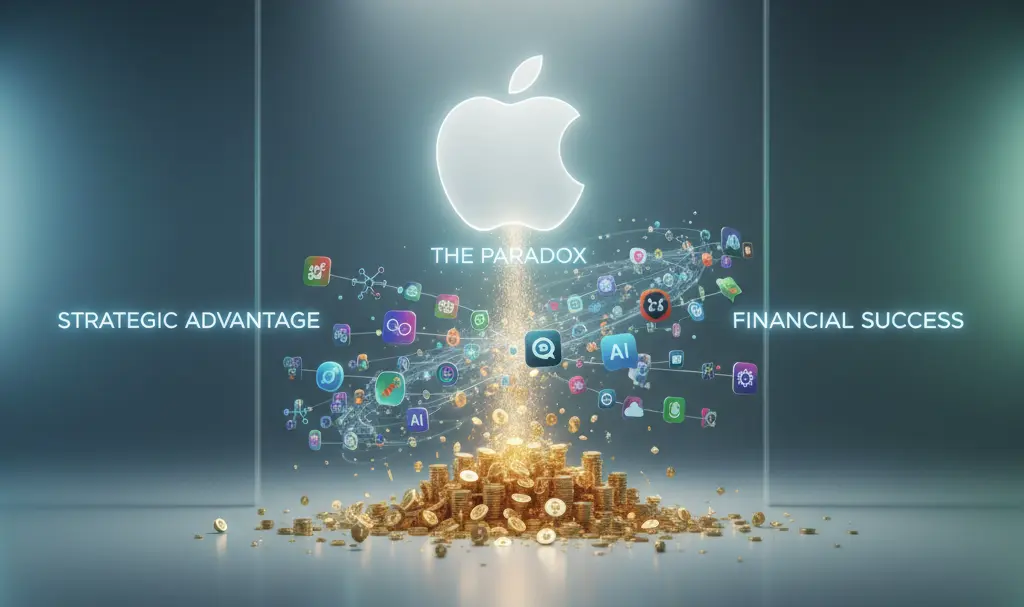
While the world often debates Apple’s perceived lag in the artificial intelligence race, the Cupertino-based tech giant is, in fact, quietly raking in record profits from the very same sector. Thanks to the unparalleled strategic position of its App Store, Apple has become an unwitting, yet highly lucrative, partner to some of the biggest players in modern AI technology.
This raises a crucial question: How exactly is Apple monetizing an AI revolution that it didn’t initiate?
The App Store Advantage: Apple’s Unique Position in the AI Boom
Analysis published by The Wall Street Journal reveals that Apple has found a remarkably effective way to capitalize on the soaring popularity of artificial intelligence without necessarily being a technological leader in the field itself. Despite the fact that Apple’s proprietary AI solutions are often evaluated as less advanced compared to those offered by its market rivals, the company still maintains an indispensable gateway through which these innovations reach a mass audience.
This mechanism is built upon what is widely known as the "App Store tax" – a commission typically set at 30% for an application’s first year of subscription revenue, which then reduces to 15% in subsequent years. This strategic fee structure applies to a vast array of digital transactions made within apps downloaded from the App Store, including subscriptions to AI services.
The scale of this phenomenon is truly impressive. It is estimated that throughout 2025 alone, creators of generative artificial intelligence applications are projected to transfer nearly $900 million to Apple’s accounts solely from these App Store fees.
Key AI Applications Fueling Apple’s Revenue Stream
The primary driver of these substantial earnings is, unsurprisingly, ChatGPT. This leading AI chatbot accounts for a staggering three-quarters of the total revenue generated by the entire category of AI tools within the iOS ecosystem. While its share is considerably smaller, Grok, developed by xAI, also contributes a noticeable amount, generating approximately 5% of the revenue within this product group.
Why the App Store is Crucial for Apple’s Long-Term Strategy
For those closely observing Apple’s trajectory, these figures offer a clear insight: the company possesses an exceptionally stable foundation for continued growth. While nearly a billion dollars from AI application commissions represents only a fraction of Apple’s colossal overall budget, it is precisely this type of business activity that generates the greatest optimism among financial experts and analysts.
Selling digital services and collecting fees from other developers is significantly more profitable for Apple than merely manufacturing and selling hardware like iPhones or MacBooks. This strategic shift allows Apple to maintain a degree of tranquility and control.
The company avoids the pressure of participating in the frantic technological arms race, where competitors might rush to release unrefined innovations simply to demonstrate they are not falling behind. Instead of undertaking high-risk development ventures, the iPhone manufacturer relies on its proven ecosystem model, where it profits from every successful entity operating within its platform. Consequently, each new and popular application launched by a competitor ultimately becomes another source of revenue for Apple, reinforcing its powerful market position.
Frequently Asked Questions (FAQ)
How does Apple profit from AI without being a leader in its development?
Apple profits significantly from AI by controlling the primary distribution channel for most mobile applications: the App Store. By charging a commission (the “App Store tax”) on in-app purchases and subscriptions, Apple earns revenue from every successful AI application, regardless of whether it developed the underlying AI technology itself.
What is the “App Store tax” and how does it apply to AI applications?
The “App Store tax” refers to the commission Apple charges developers for transactions made within their apps. Typically, this is 30% of revenue for the first year of a subscription and 15% for subsequent years. For AI applications offering premium features or subscriptions, a portion of their earnings is automatically shared with Apple through this mechanism.
Which AI applications contribute most to Apple’s revenue?
ChatGPT is the dominant contributor, accounting for approximately 75% of the revenue generated by AI tools within the iOS ecosystem. Grok by xAI also makes a noticeable contribution, generating about 5% of the revenue in this category.
Why is Apple’s App Store strategy considered more profitable than focusing solely on hardware?
Apple’s App Store strategy is highly profitable because digital services and commissions from other developers typically have higher profit margins than hardware sales. This approach allows Apple to generate recurring revenue without the significant research, development, and manufacturing costs associated with leading the charge in every technological innovation, enabling a more stable and less risky business model.
Source: The Wall Street Journal, internal analysis.
Opening photo: Gemini
About Post Author
