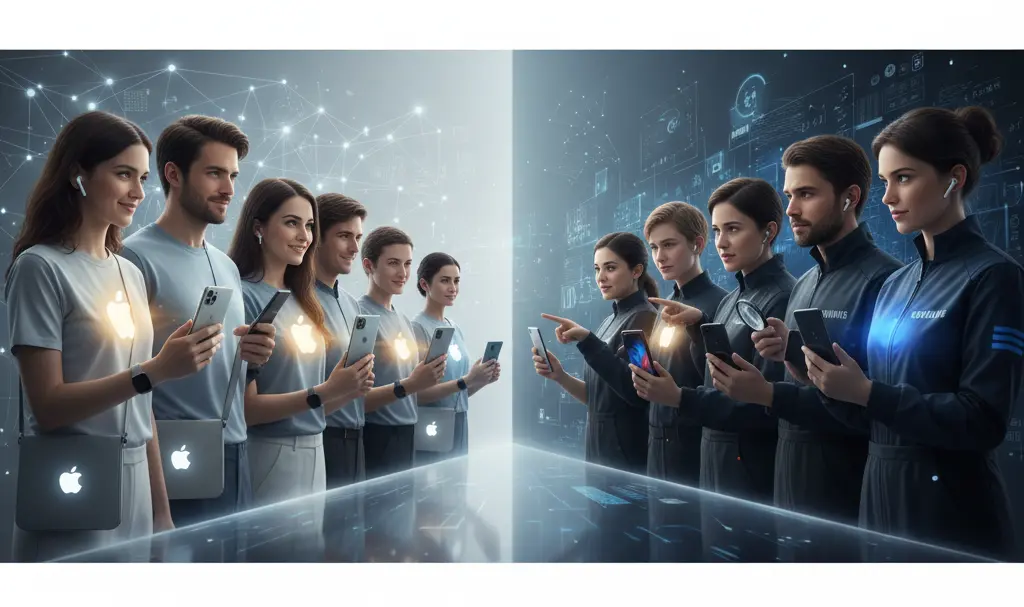
Unpacking the Apple vs. Samsung Rivalry: A Battle of Philosophies, Not Just Phones
For years, the technology world has observed the ongoing “war” between Apple and Samsung, each cultivating a massive, dedicated following. However, new research reveals that this conflict isn’t just about competing products; it’s a fundamental clash of brand philosophies and consumer psychology. Surprisingly, for many Samsung users, their allegiance is less about love for Samsung and more about a pointed opposition to Apple.
Researchers Delve into Apple and Samsung User Behavior
Scientists, including those from the University of Aveiro, have meticulously analyzed the communication strategies of both brands and the intricate behaviors of their respective customer bases. Their findings challenge conventional wisdom, offering a deeper understanding of brand loyalty in the tech sphere.
Apple Users: A Cult of Loyalty and Ecosystem Immersion
The studies consistently show that Apple users exhibit significantly higher brand loyalty than Samsung fans. This isn’t based on casual forum declarations but on robust data:
- Multi-Device Ownership: iPhone owners frequently possess more than one Apple device, seamlessly integrating into the Apple ecosystem.
- Official Retail Preference: They are more inclined to make purchases from official Apple stores.
- Ecosystem Adherence: Apple users rarely switch to competing ecosystems, demonstrating a strong attachment to the brand’s integrated experience.
Researchers also observed that consumers entering the Apple ecosystem often develop a relationship akin to supporting a favorite sports team. An initial iPhone purchase frequently leads to subsequent acquisitions like a MacBook or Apple Watch, gradually building a personal, interconnected digital world centered around Apple products.
Samsung Users: Pragmatism and a Willingness to Explore
Samsung, in contrast, operates with a different strategy. The South Korean giant emphasizes a broader range of products, wider price points, and greater user flexibility. Beyond premium devices like the flagship Galaxy S series or foldable Galaxy Z models, Samsung offers more budget-friendly options, such as those in the Galaxy A series.
While theoretically, this extensive choice should appeal to consumers, the outcome is often unexpected. Samsung users tend to approach purchases with a pragmatic mindset, prioritizing factors like superior specifications and competitive pricing. If a more appealing option emerges in the market, many will readily switch without hesitation. Interestingly, fans of the South Korean giant are also more likely to own only one device from the brand and are more open to exploring alternatives.
The Core Revelation: Anti-Apple Sentiment Drives Many Samsung Fans
This distinction brings us to a critical insight: without deep attachment to a specific brand, it becomes easier to define one’s affiliation by opposing a rival. Samsung has historically leveraged this by directly challenging Apple in its marketing campaigns, frequently using comparative advertising to highlight perceived shortcomings of its competitor.
Samsung’s marketing often employs irony and subtle jabs at Apple. While these advertisements are noted by survey respondents as memorable and emotionally engaging, they don’t necessarily translate into increased affection for the Samsung brand itself. Instead, it appears that satisfaction often comes from witnessing a rival’s missteps, a phenomenon rooted in social psychology. It’s a common human tendency to derive more pleasure from the failures of an opposing group than from the successes of one’s own.
This dynamic is evident after every new iPhone launch. Should Apple make a controversial decision – like removing a charger from the box, changing a port, or increasing prices – social media platforms are inundated with negative comments. The authors of these comments frequently seem to relish the opportunity to criticize the Cupertino giant. Intriguingly, research indicates that while these discussions are pervasive, advertisements tend to have less influence on purchasing decisions than peer opinions and community sentiment, a factor that plays directly into Samsung’s hands.
Apple’s Strategy: Cultivating Exclusivity and Aspiration
Apple, meanwhile, plays an entirely different game. It meticulously crafts an “aura of exclusivity” through its premium pricing, meticulously designed retail stores, and highly anticipated annual events like WWDC.
The Cupertino giant doesn’t need to mock its competitors because it sells a compelling narrative: the experience of being part of “something bigger.” This cultural dimension is precisely why Apple fans often react more intensely to both praise and criticism directed at the brand.
The inclination of many Samsung users to criticize Apple isn’t a character flaw; it’s a byproduct of a different relationship with technology. When personal identity isn’t primarily tied to a specific brand, competition becomes more akin to a sporting event – where allegiances can shift, and one can enjoy cheering against a favorite or laughing at a rival’s stumble.
What Truly Drives Consumer Choices?
Beyond brand loyalty and rivalries, researchers highlighted another crucial point: for the majority of respondents, the most important factors when purchasing a device are the price-to-quality ratio, technical specifications, and overall performance – not advertising campaigns or influencer endorsements.
Historically, Samsung shipped more smartphones globally than Apple. However, that trend reversed last year, with Apple capturing 20% of the market share (247.8 million devices shipped) compared to Samsung’s 19% (241.2 million units).
These differences remain relatively minor, indicating that most customers aren’t interested in waging a technological war. Instead, they prioritize making a practical, sensible choice. Yet, emotions still seek an outlet, and commenting on the failures of others often provides the easiest release.
Frequently Asked Questions (FAQ)
What is the main difference in brand loyalty between Apple and Samsung users?
Apple users tend to exhibit higher loyalty, frequently owning multiple Apple devices and rarely switching ecosystems. Samsung users, conversely, are more pragmatic, prioritizing features and price, and are more open to switching brands if a better offer arises.
How do Samsung’s marketing tactics differ from Apple’s?
Samsung often employs comparative advertising, directly challenging Apple and highlighting its rival’s perceived flaws. Apple, on the other hand, focuses on building an “aura of exclusivity” through premium branding, higher prices, and emphasizing the experience of being part of a unique ecosystem.
What are the most important factors for consumers when buying a new device?
Research indicates that the majority of consumers prioritize the price-to-quality ratio, technical specifications, and the overall performance of a device over advertising or influencer recommendations.
Source: Samsung vs. Apple: How Different Communication Strategies Affect Consumers in Portugal, own study. Opening photo: Gemini
About Post Author