

Contents
NASA’s Artemis II Mission Delayed Due to Critical Helium Flow Anomaly
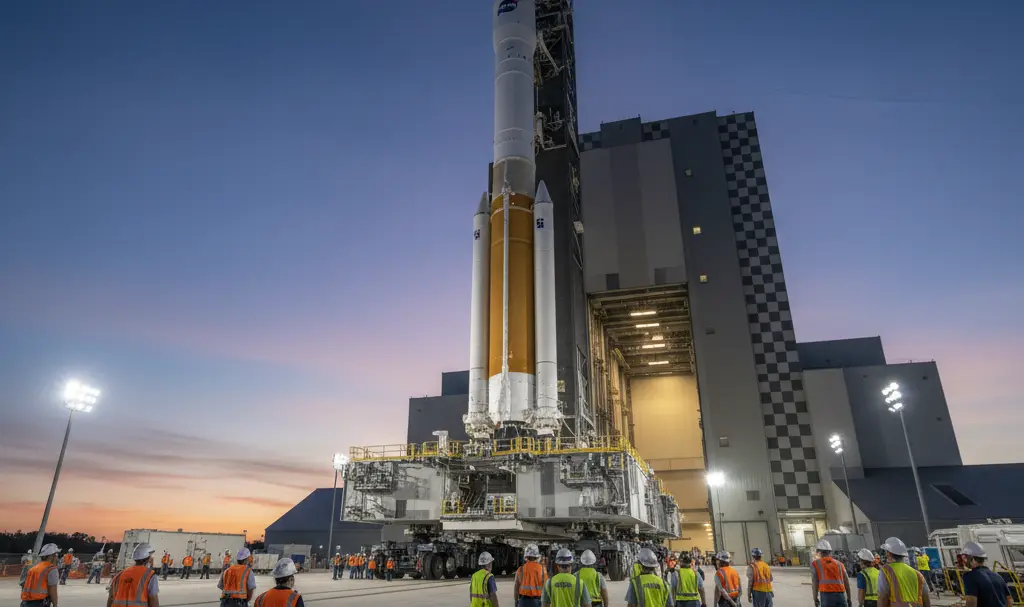
The highly anticipated first crewed mission around the Moon, Artemis II, will not launch as originally planned. NASA has announced a delay, pushing back the launch window after engineers discovered an unexpected problem with the Space Launch System (SLS) rocket. This critical helium flow issue necessitated the rollback of the colossal SLS-Orion stack from the launch pad, returning it to the iconic Vehicle Assembly Building (VAB) at Kennedy Space Center for thorough inspection and repair.
Why the Rollback? Unpacking the Helium Anomaly
During testing, engineers identified a blockage in the helium flow within the upper stage of the Artemis II SLS rocket. Helium gas is absolutely essential for the proper pressurization of the rocket’s propulsion systems. Without its reliable flow, the systems cannot operate correctly or safely, posing a significant risk to the mission and crew.
Photo: Ben Smegelsky / NASA
This anomaly came to light shortly after a seemingly successful wet dress rehearsal, where approximately 700,000 gallons of cryogenic propellant were loaded into the rocket’s tanks. While previous tests had encountered minor hurdles, including hydrogen leaks and issues with the Orion crew module hatch, it was ultimately the helium system that presented the decisive obstacle, leading to the current delay.
Consequently, both the SLS rocket and the Orion spacecraft are being transported back to the Vehicle Assembly Building at Kennedy Space Center. The rollback operation, which commenced on February 25, 2026, is a complex process expected to take up to 12 hours. Upon arrival at the VAB, teams will immediately begin installing specialized platforms to gain access to the precise area where the helium flow problem originated.
In addition to addressing the helium issue, the repair period will also be utilized for other crucial maintenance tasks:
- Replacing batteries in the flight termination system and retesting it.
- Swapping out additional batteries in the upper stage of the rocket.
Artemis II: A Historic Journey Around the Moon
The Artemis II mission marks a monumental milestone as NASA’s first crewed flight within the Artemis program. This ambitious mission will see astronauts Reid Wiseman, Victor Glover, Christina Koch, and Jeremy Hansen venture further into space than any human before them. Their journey, which involves circumnavigating the Moon and returning to Earth, is planned to last approximately 10 days.
Photo: NASA
New Launch Timeline
Initially slated for a March launch, this date is now outdated. The mission has been officially postponed until at least April 2026. The definitive launch date will hinge entirely on the speed and success of the repair work conducted in the VAB, where engineers will replace the faulty components and rigorously re-test all safety-critical systems.
It’s worth noting that similar technical challenges led to a six-month delay for the uncrewed Artemis I mission in 2022. The return of humans to the lunar vicinity after more than half a century is an endeavor of the highest risk, demanding absolute precision and leaving no room for even the slightest error. NASA’s commitment to crew safety remains the paramount consideration, ensuring every system is flawless before launch.
Frequently Asked Questions (FAQ)
What is the Artemis II mission?
Artemis II is NASA’s first crewed mission as part of the Artemis program, aiming to send four astronauts on a multi-day journey around the Moon and back to Earth. It will be the first time humans have ventured to the lunar vicinity since the Apollo era.
Why was the Artemis II mission delayed?
The Artemis II mission was delayed due to the discovery of a critical helium flow issue in the upper stage of the Space Launch System (SLS) rocket. Helium is vital for pressurizing the rocket’s propulsion systems, and the anomaly required the rocket and spacecraft to be rolled back to the Vehicle Assembly Building (VAB) for repairs.
When is the new target launch date for Artemis II?
The launch of Artemis II has been postponed until at least April 2026. The exact date will depend on the progress and successful completion of the repair work and retesting of all critical systems in the VAB.
Who are the astronauts on Artemis II?
The crew for the Artemis II mission includes NASA astronauts Reid Wiseman, Victor Glover, Christina Koch, and Canadian Space Agency (CSA) astronaut Jeremy Hansen.
Source: NASA, Space, BBC. Opening photo: Generated by Gemini
About Post Author
