
Contents
Artemis II Returns to Earth: A Historic Lunar Journey and Unexpected Photography
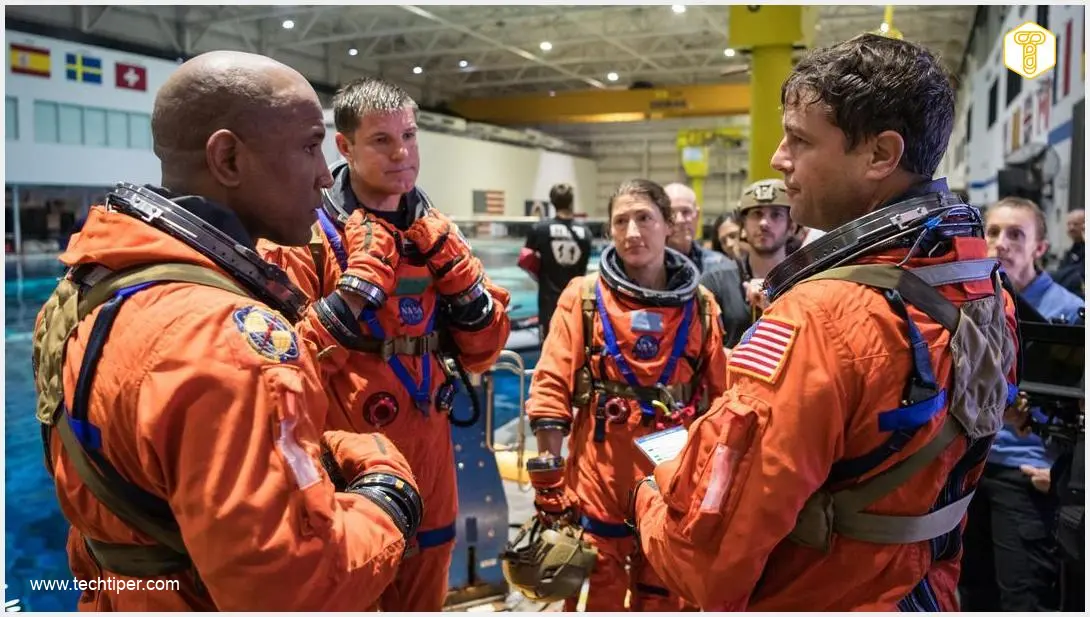
The four-person crew of NASA’s Artemis II mission has successfully completed the most dramatic phase of their journey, a historic flyby around the Moon, and is now on its way back to Earth. This monumental expedition not only brought astronauts closer to the lunar surface than anyone in over half a century but also established a new record for the farthest distance humans have ever traveled in deep space. Beyond setting new benchmarks for human exploration, the mission also provided a unique glimpse of the cosmos, with the crew capturing stunning images of the Moon and our home planet, notably some taken with an iPhone.
Artemis II Crew Begins Journey Home After Lunar Flyby
The critical lunar flyby phase saw the Artemis II spacecraft, carrying astronauts Reid Wiseman, Victor Glover, Christina Koch, and Jeremy Hansen, execute a precise maneuver around the Moon. At its closest approach, the crew module came within approximately 6,500 kilometers (about 4,000 miles) of the lunar surface. Shortly after, the capsule reached its maximum distance from Earth, soaring over 405,000 kilometers (more than 250,000 miles) away. This remarkable achievement surpassed the record set by the Apollo 13 mission in 1970, carving a new chapter in the annals of space exploration.
Launched on April 1st, the Artemis II mission was designed as a crucial test flight, paving the way for future stages of the broader Artemis program. The crew’s journey holds immense significance, serving not just as a symbolic return to lunar exploration but also as a practical evaluation of the spacecraft’s systems, operational procedures, and crew performance during an extended deep-space mission beyond low-Earth orbit. This mission represents a vital step in humanity’s ongoing endeavor to return to the Moon and eventually venture to Mars. For more context on international collaborations, explore Poland’s Contribution to the Space Industry.
A Moment of Isolation: Beyond the Lunar Far Side
One of the most profound moments of the mission involved the crew’s transit behind the far side of the Moon – a region perpetually hidden from Earth. During this period, as anticipated, communication with the astronauts was entirely cut off. This marked the first time in over 50 years that humans experienced complete isolation from our planet, a poignant reminder of the vastness of space and the challenges of deep-space communication.
The Ultimate Dress Rehearsal for Lunar Landings
Artemis II is far more than just an awe-inspiring voyage; it is an indispensable preparatory phase for the future landing of humans on the Moon. Functioning as a comprehensive test flight, it serves as a crucial dress rehearsal for subsequent missions that aim to return astronauts to the lunar surface within the coming years. Every maneuver, every system check, and every observation made by the crew contributes vital data for the ambitious goal of establishing a sustained human presence on the Moon.
During their lunar flyby, the crew performed detailed observations and captured imagery of specific lunar regions, particularly those that remain less understood from Earth’s perspective. What makes these observations even more compelling is the fact that some of these high-quality images were taken using an ordinary iPhone 17 Pro Max. This demonstrates the incredible advancements in commercial technology and its potential applications in space exploration. For insights into camera technology, you might be interested in iPhone 200MP Camera Sensor Rumors and Future Photography.
Unique Cosmic Perspectives
An added bonus for the Artemis II crew was the unparalleled opportunity to witness celestial phenomena from the unique vantage point of the Orion spacecraft. Astronauts observed a solar eclipse from a perspective unattainable from Earth, and they had the chance to photograph not only Earth and the Moon but also other planets visible along their flight path, offering truly breathtaking cosmic panoramas.
Barring any unforeseen circumstances, the Artemis II mission is scheduled to conclude with a splashdown in the Pacific Ocean on Friday, April 10th. This successful return will mark the culmination of a groundbreaking mission, bringing invaluable data and experiences back to Earth, propelling humanity closer to its lunar ambitions.
Frequently Asked Questions (FAQ)
What was the primary goal of the Artemis II mission?
The primary goal of the Artemis II mission was to serve as a crewed flight test of the Orion spacecraft and the Space Launch System (SLS) rocket, flying astronauts around the Moon and back to Earth. It was a crucial dress rehearsal for future missions aiming to land humans on the lunar surface, testing systems, procedures, and crew capabilities in deep space.
How far did the Artemis II crew travel from Earth?
During its mission, the Artemis II crew traveled over 405,000 kilometers (more than 250,000 miles) from Earth, setting a new record for the farthest distance humans have ever journeyed into space.
Why was losing communication behind the Moon significant for the Artemis II crew?
The temporary loss of communication when the spacecraft passed behind the lunar far side was a significant moment because it was the first time in over 50 years that humans experienced complete radio silence and isolation from Earth. This phase was crucial for testing autonomous operations and verifying procedures for future deep-space missions where continuous communication might not always be possible.
Source: Bloomberg, Original Article. Opening photo: NASA / Press Materials
About Post Author
