

CES 2026 marks the shift from “Generative AI” to “Agentic AI.” From Samsung’s Gauss 2 smart home to Intel’s Panther Lake chips, discover how AI is moving from creating text to taking action.
Contents
Key Takeaways (Quick Summary)
- The Shift: We are moving from Generative AI (creating text/images) to Agentic AI (executing multi-step tasks autonomously).
- The Smart Home: Samsung’s updated Gauss 2 platform connects appliances to proactively manage chores (e.g., ordering groceries, scheduling laundry).
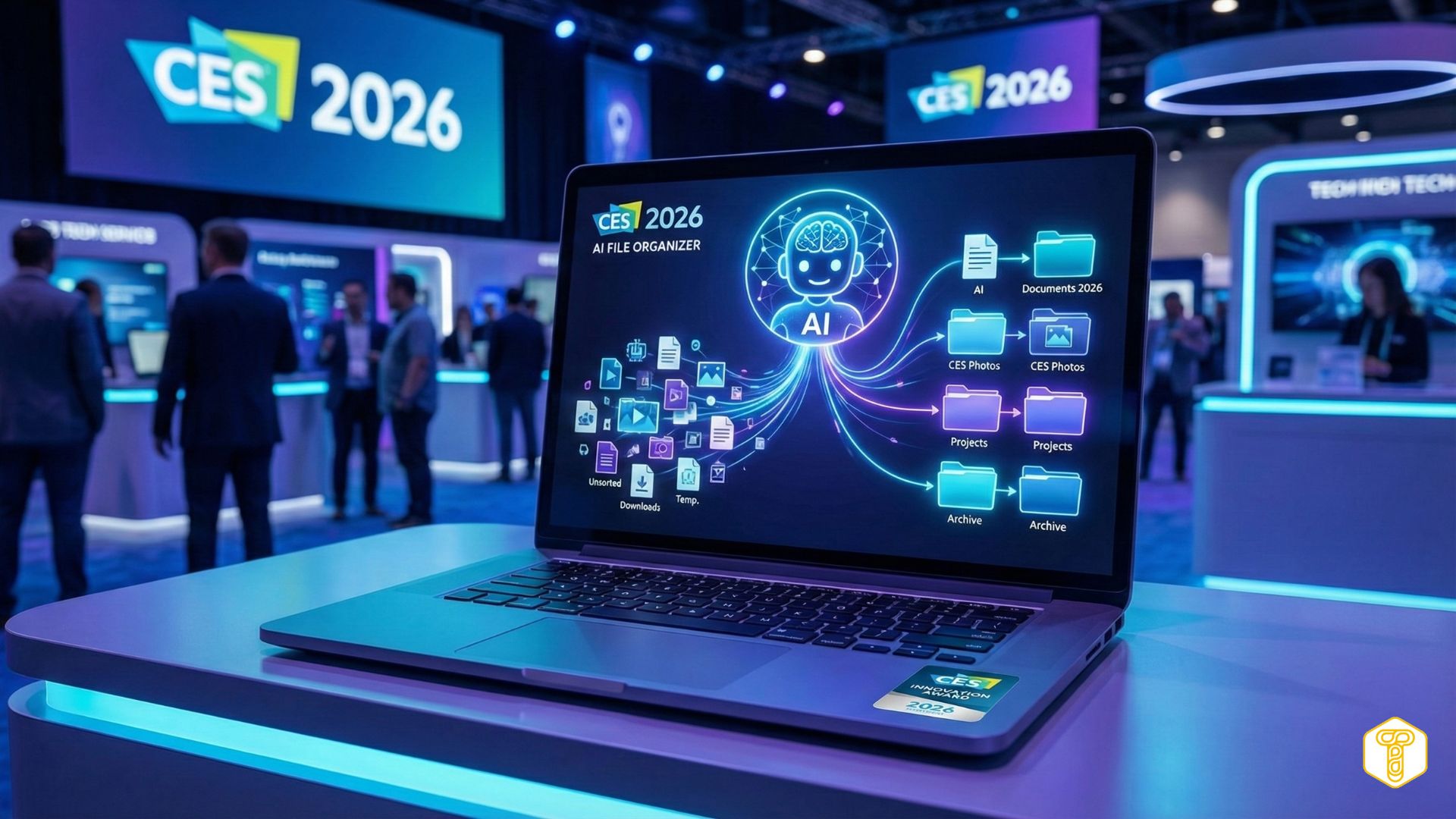
- The AI PC: Intel’s Panther Lake chips (launching Jan 5) enable laptops to run privacy-first AI agents locally, organizing files and summarizing meetings without the cloud.
- The Reality: Tech is becoming proactive—it doesn’t wait for a prompt; it anticipates the need.
For the last two years, the tech world has been obsessed with the “Chatbot.” We spent 2024 and 2025 typing prompts into text boxes, waiting for a poem, a code snippet, or an image.
As CES 2026 kicks off this week, that era is ending. We are done typing. The biggest shift in 2026 is the move to Agentic AI.
Your tech is no longer just waiting for instructions; it’s anticipating needs across different applications. This isn’t just a software update—it’s a fundamental change in how we interact with machines. This shift headlines our list of 5 Major CES 2026 Tech Trends, but it deserves a deeper dive.
Here is what you need to watch for as the “Agent” takes over.
1. The Concept: What is “Agentic AI”?
To understand CES 2026, you need to understand the difference between Generative and Agentic.
- Generative AI (The Old Way): You ask, “Write a meal plan for me.” The AI writes text.
- Agentic AI (The New Way): You say, “Handle dinner for the week.” The AI checks your calendar, sees you are home only three nights, scans your smart fridge for ingredients, orders the missing items from your preferred grocer, and syncs the delivery time to when you arrive from work.
It doesn’t just create; it acts.
2. The Proactive Home: Samsung’s “Gauss” Ecosystem
Samsung is betting the house (literally) on this shift. At CES 2026, keep your eyes peeled for the rollout of Samsung Gauss 2, their second-generation AI model designed specifically for the “Hyper-Connected” home.

Unlike generic voice assistants that just set timers, Gauss 2 is designed to be the operating system of your life.
- The Kitchen Agent: It doesn’t just tell you the milk is low. It recognizes your consumption patterns and places the order automatically, waiting only for a final “OK” notification on your phone.
- Cross-Device Intelligence: If your calendar says you have an early meeting, the AI communicates with the bedroom shades to open earlier and tells the coffee maker to start brewing 10 minutes sooner than usual.
3. The AI PC: Intel Panther Lake & Local Agents
While the smart home handles your chores, your laptop is about to handle your work.
This week, Intel officially launches its Core Ultra Series 3 processors (codenamed Panther Lake). Built on the advanced 18A process, these chips are not just faster; they are designed for On-Device AI.

PC makers like Dell, HP, and Lenovo are using these chips to build “Private Agents” directly into your laptop.
- Privacy First: Because Panther Lake has a massive NPU (Neural Processing Unit), these agents run locally. They can read your private documents, organize your messy desktop, and summarize confidential meetings without a single byte of data leaving your computer.
- The “Context” King: Imagine asking your laptop, “Find that file Bob sent me last week about the budget.” The agent understands who “Bob” is, checks your Email, Slack, and Downloads folder, and opens the correct Excel sheet instantly.
4. The Hardware Reality
Software this powerful needs a new kind of hardware ecosystem. You cannot have an “always-on” AI agent if your devices are constantly dead or cluttered with cables.
This is why we are seeing a parallel rise in Wireless Power technology this year. To see how companies are clearing the clutter to make room for these new AI hubs, check out our report on The War on Wires: LG and the Ki Standard.
The Bottom Line
CES 2026 is proving that the “AI Honeymoon” is over. We aren’t impressed by magic tricks anymore. We want utility.
By moving from “Chatbots” that talk to “Agents” that do, technology is finally fulfilling its oldest promise: giving us back our time.
Frequently Asked Questions (FAQ)
Agentic AI performs multi-step actions and makes decisions to achieve a goal (e.g., booking a flight, organizing files) with minimal human supervision.
Samsung Gauss 2 is Samsung’s generative AI model designed for its devices. At CES 2026, it is expected to power “agentic” features in smart appliances, allowing them to proactively manage tasks like laundry cycles and grocery ordering.
Yes. Intel’s Core Ultra Series 3 (Panther Lake) features a powerful NPU (Neural Processing Unit) capable of running AI agents directly on the laptop. This allows for privacy-focused, low-latency tasks like real-time summarization and file organization without using the cloud.
About Post Author
