
Contents
A Cuban Mechanic’s Ingenious Solution: Running a Car on Charcoal
In a remarkable display of resourcefulness, 56-year-old Cuban mechanic Juan Carlos Pino has found an ingenious solution to his country’s debilitating fuel crisis. Amidst severe U.S. sanctions and a chronic scarcity of petroleum products, Pino has transformed a vintage 1980 Polish Fiat 126p, affectionately known as a “Maluch,” to run entirely on charcoal. This innovative conversion, utilizing a homemade gasifier constructed from salvaged materials, not only provides him with personal mobility but also serves as a powerful symbol of Cuban resilience against adversity.
Cuba’s Severe Fuel Crisis: A Daily Struggle
The past few months have seen a dramatic escalation of Cuba’s energy crisis. Following U.S. operations that led to the ousting of Nicolás Maduro in Venezuela, Cuba was abruptly cut off from its primary source of inexpensive Venezuelan oil. Furthermore, Washington has threatened sanctions against any entity attempting to deliver even a single barrel of fuel to Havana. The repercussions of this energy blockade have been profound and widespread:
- Airline schedules have been drastically reduced.
- Many cities experience multi-hour power outages on a recurring basis.
- Gasoline stations are plagued by notoriously long queues, often stretching for hours or even days.
- Fuel is rationed, and on the black market, gasoline prices can skyrocket to approximately 8 U.S. dollars per liter (about 30 U.S. dollars per gallon). This price is six times the official rate, effectively making traditional fuel inaccessible for the average Cuban citizen.
The ‘Maluch’: A Classic Reimagined
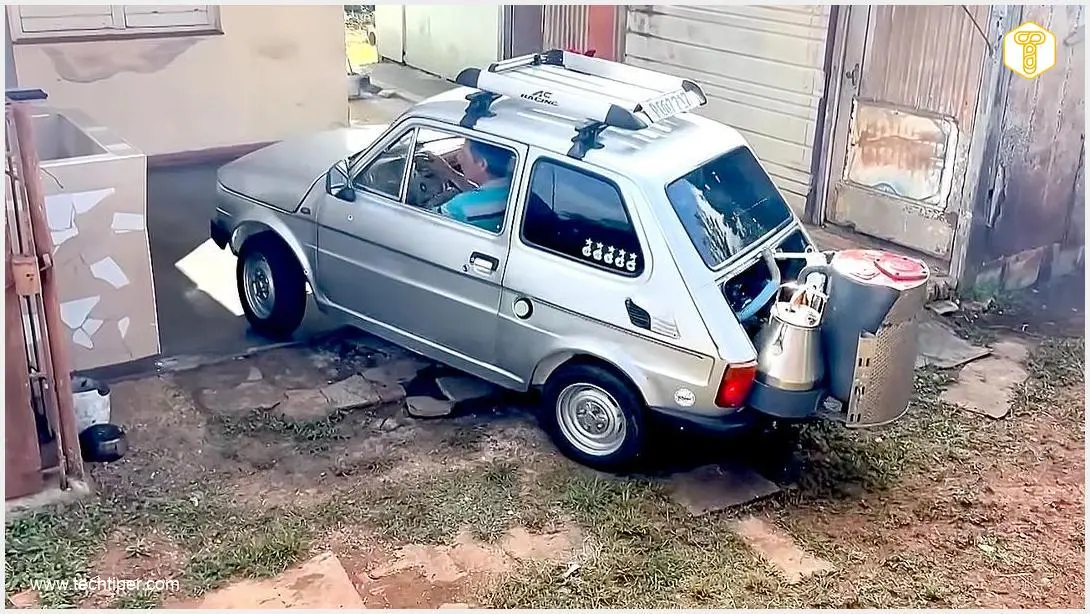
In the small town of Aguacate, located in central Cuba, Juan Carlos Pino decided to tackle the crisis on his own terms. Known affectionately as the “Maluch” (meaning “small one” in Polish), the 1980 Polish Fiat 126p is a beloved, compact car that was once common in many parts of the world, including Cuba. Pino, a skilled mechanic, meticulously rebuilt this classic vehicle to be powered by charcoal gas, utilizing only recycled and readily available materials.
How Juan Carlos Pino’s Gasifier Works
At the core of Pino’s innovation is a gasifier, a device designed to convert solid fuel into a combustible gas. His design showcases remarkable ingenuity:
- The Reactor: The heart of the system is a repurposed propane tank. Inside, charcoal is burned under conditions of limited oxygen supply, a process known as pyrolysis. This incomplete combustion produces a flammable gas mixture, primarily composed of carbon monoxide, hydrogen, and methane.
- Filtration and Cooling: The hot gas from the reactor is then directed through a filter made from a repurposed stainless steel milk can, which is packed with old clothing. Here, the gas is cooled and purified, removing soot and particulates that could damage the engine.
- Engine Integration: After filtration, the clean, cool gas travels through a flexible hose directly to the Fiat’s two-cylinder engine, effectively replacing conventional gasoline as the fuel source.
Pino’s creation stands as a testament to the fact that with basic workshop tools and readily available scrap materials, a fully functional gasifier can be built and integrated into an existing vehicle.
Understanding Gasifier Technology: A Historical Perspective
While Juan Carlos Pino’s solution seems revolutionary today, the technology behind it is far from new. It is, in essence, a modern application of gasifier technology that was widely employed in Europe during World War II when gasoline supplies were severely constrained. Simply put, it involves the gasification of biomass – materials like wood, charcoal, or agricultural waste.
The process works by heating these organic materials to high temperatures with a restricted air supply. This thermochemical process yields a blend of combustible gases, often referred to as syngas or wood gas, which includes carbon monoxide, hydrogen, and methane. After being cooled and filtered to remove impurities, this gas mixture can be fed into a conventional internal combustion engine much like traditional fuel. However, it’s important to note that syngas has a lower energy density compared to liquid fuels, which can result in reduced engine power and a shorter driving range.
Performance and Practicality: Driving on Charcoal
During its initial tests in Cuba, Juan Carlos Pino’s modified Fiat 126p demonstrated impressive practicality. The vehicle successfully traveled approximately 85 kilometers (about 53 miles) and reached speeds of up to 70 kilometers per hour (about 43 miles per hour). While the volumetric consumption of charcoal is notably higher than that of gasoline, charcoal in Cuba is significantly cheaper and far more accessible than expensive, rationed liquid fuel.
Operating a charcoal-powered vehicle does come with its unique set of challenges and demands:
- Drivers must prepare and thoroughly dry the charcoal.
- The gasifier’s combustion chamber needs to be ignited and allowed to reach the appropriate operating temperature before driving.
- Regular maintenance, such as cleaning the filter to remove soot and dust buildup, is essential for optimal performance.
For many Cubans, however, this additional effort is a small and acceptable price to pay for independence from the volatile gasoline market. As such, Pino’s ingenious “Maluch” is no longer just a local curiosity; it represents a tangible path to self-sufficiency.
A Symbol of Resilience
Juan Carlos Pino’s charcoal-powered Fiat 126p is more than just a modified car; it’s a powerful symbol of human ingenuity and resilience in the face of profound challenges. In a country constantly navigating economic hardship and external pressures, his innovation highlights the remarkable ability of individuals to adapt, create, and find solutions using whatever resources are at hand.
Frequently Asked Questions (FAQ)
What exactly is a “Maluch” and why is it significant in Cuba?
“Maluch” (pronounced mah-looh) is the affectionate Polish nickname for the Fiat 126p, meaning “small one.” This compact car, produced from 1973 to 2000, became widely popular in many Eastern Bloc countries, including Cuba, where it was imported. In Cuba, the Maluch represents a bygone era of accessibility and personal transportation. Its simple, robust design and ease of maintenance have made it a resilient vehicle, often passed down through generations and kept running through ingenious repairs, making it an ideal candidate for conversions like Juan Carlos Pino’s.
How does charcoal gasification compare to modern engine technology in terms of efficiency and environmental impact?
Charcoal gasification systems are generally less efficient than modern gasoline engines due to the lower energy density of syngas and energy losses during the gasification process itself. This typically results in reduced power output and a shorter driving range compared to a similar vehicle running on gasoline. From an environmental perspective, while burning charcoal gas produces fewer carbon emissions than burning gasoline directly (as biomass is considered carbon-neutral if replenished), the overall process can still generate particulate matter and other pollutants if not properly filtered and maintained. Modern engines are designed for optimal combustion of refined fuels, offering superior emissions control and fuel economy. However, in contexts of extreme fuel scarcity, gasification offers a practical, albeit less sophisticated, alternative.
What are the safety considerations for operating a charcoal gasifier in a vehicle?
Operating a charcoal gasifier in a vehicle involves several critical safety considerations. The primary concern is the production of carbon monoxide (CO), a highly toxic and odorless gas, which is a major component of syngas. Proper ventilation and leak-proof construction are paramount to prevent CO accumulation in the passenger compartment. Additionally, the high temperatures involved in the gasification process require careful insulation to prevent fire hazards. The handling and storage of charcoal, as well as the disposal of ash, must also be managed safely. Drivers need to be aware of the inherent risks and ensure their systems are built and maintained to minimize exposure to harmful gases and fire.
Source: Reuters, YouTube, CBC. Opening photo: Reuters / YouTube, screenshot
About Post Author
