

Contents
The Earth’s Crust is Tearing Apart: The Birth of a New Ocean in Africa
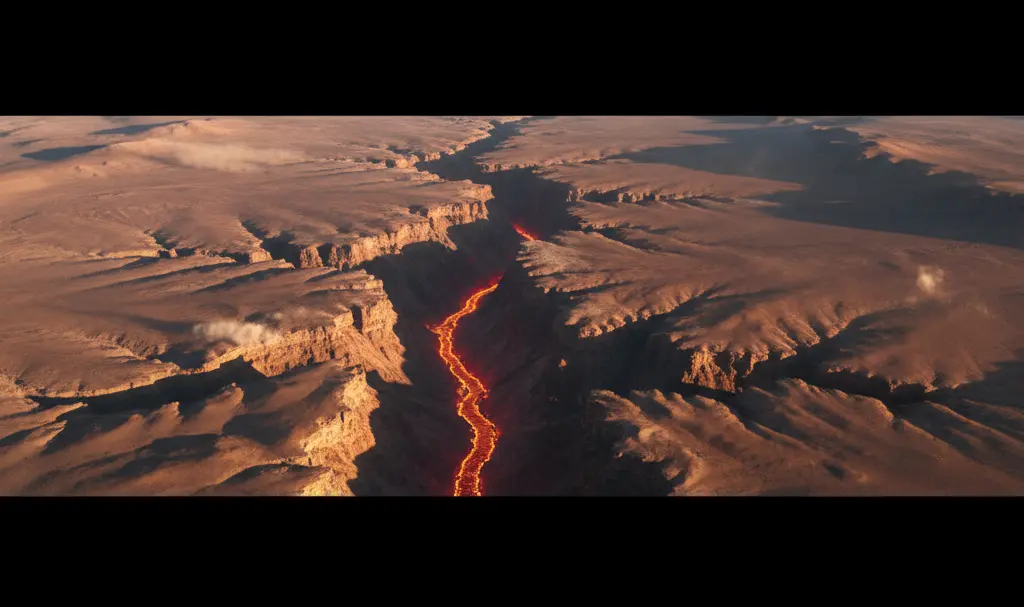
Although it might seem like science fiction today, a brand-new ocean is slowly forming on our planet. The first geological signals of this massive geographical shift are actively appearing in East Africa. While we will not see this new body of water on a map within our lifetimes, the scientific implications are profound.
A New Ocean on Earth? The Science Behind the Split
A recent report from the Columbia Climate School highlighted an impending geological-scale continental breakup occurring in East Africa, specifically within the Turkana Rift region. This area provides researchers with a rare real-time glimpse into the tectonic processes that continuously shape our world.
The primary catalyst for this phenomenon is the unusually thin Earth’s crust in this region, which scientists have discovered is much thinner than previously estimated. Within the axis of the rift, the crust is a mere 13 kilometers (about 8 miles) thick, compared to the standard 35 kilometers (roughly 22 miles) found outside the rift zone. This dramatic reduction in thickness is a clear indicator of an advanced stage of continental rifting.
The Tectonic Tug-of-War: The African and Somali Plates
Currently, the Turkana Rift is the only area on Earth undergoing active lithospheric necking—a critical crustal thinning process essential for the birth of a new ocean basin. Several fascinating dynamics are at play:
- Plate Separation: The African tectonic plate is gradually pulling away from the Somali plate at a rate of approximately 4.77 millimeters (0.19 inches) per year.
- Crustal Weakening: As the Earth’s crust stretches over millennia, it becomes progressively weaker and far more susceptible to tearing.
- Magma Intrusion: When the crust eventually fractures completely, magma from the mantle will erupt to the surface, cooling to form a brand-new oceanic seabed.
While future geographical borders will drastically change due to these tectonic shifts, our present-day coastlines are already demanding urgent attention. In fact, modern environmental research has recently pointed out significant errors in coastal threat maps regarding sea-level rise, showing how vital accurate geological data is for coastal survival.
When Will This New Ocean Form?
If you are eagerly waiting to update your world map, you will need a substantial amount of patience. Optimistic geological models suggest that the complete separation and subsequent ocean formation will not occur for several million years. This is a slow, steady, and relentless process that outpaces the entire span of human civilization.
A Hidden Ocean Beneath the Earth’s Crust
If you thought the creation of a new surface ocean was the only surprising hydrological discovery, there is more beneath the surface. Based on recent geophysical studies, scientists have confirmed the existence of a massive reservoir of water trapped deep within the Earth’s mantle.
The Unique Properties of Ringwoodite
Astonishingly, this subterranean reservoir is estimated to contain more water than all the current surface oceans combined. However, because these resources are located hundreds of miles underground, extreme heat and pressure prevent the water from existing in a standard liquid state.
Instead, the water is locked “just beneath our feet” inside a rare mineral called ringwoodite. This crystalline mineral acts similarly to a sponge, chemically absorbing and storing water molecules within its microscopic structure.

Earth’s internal geology is constantly evolving and full of violent, transformative events. This dynamic planetary behavior mirrors the extreme occurrences in the broader universe, much like when astronomers witness planetary collisions in distant solar systems.
Frequently Asked Questions (FAQ)
What exactly is continental rifting, and how does it create a new ocean?
Continental rifting is a geological process where massive tectonic plates move apart, causing the Earth’s lithosphere to stretch and thin out. Over millions of years, this stretching creates a deep valley or rift. Eventually, the crust becomes so thin that it completely ruptures, allowing magma to rise, cool, and form new oceanic crust. As the geological gap widens, water from surrounding oceans floods in, creating a new sea or ocean.
Will the formation of a new ocean in East Africa affect global sea levels or current coastal cities?
No, the formation of this new ocean operates on a massive geological timescale, meaning it will take millions of years to fully develop. Because the process is incredibly slow, it poses absolutely no immediate threat to current coastal cities, nor will it impact modern global sea levels, which are primarily influenced by climate change and melting ice caps rather than deep tectonic shifts.
How can water exist deep within the Earth’s mantle if it is not a liquid?
Deep within the Earth’s mantle, the extreme heat and immense pressure prevent water from existing as a standard liquid, solid (ice), or gas (vapor). Instead, the water is trapped inside a highly specialized mineral structure known as ringwoodite. The water essentially exists as hydroxide ions (oxygen and hydrogen) bound chemically within the mineral’s crystalline lattice, allowing the rock to act like a giant geological sponge.
Source: Columbia Climate School & Opening photo: Gemini
About Post Author
