

Contents
Keeping Your Phone Cool: A Deep Dive into Smartphone Cooling Solutions
Heat isn’t just a problem for people and pets; it’s a significant concern for electronics too. An overheating smartphone can dim its screen, slow down its performance, or even halt video recording and charging. This vulnerability has led to a surge in cooling gadgets beyond ordinary cases and holders, ranging from simple fans to advanced active heatsinks featuring Peltier elements. But do these devices genuinely work?
This article will explore the popular solutions for keeping your smartphone cool, discuss what factors to consider when choosing a cooling method, and ultimately answer whether these cooling gadgets truly live up to their claims.
Popular Solutions for Overheating Phones
Smartphone cooling gadgets generally fall into three main categories, though only one consistently proves effective. Let’s break them down:
Mobile Fans
These are the simplest form of phone cooling. Small fans are designed to increase airflow around your device’s casing. However, their effectiveness in genuinely hot conditions is often minimal. Blowing warm ambient air onto an already hot phone is unlikely to provide significant cooling. They primarily offer a placebo effect rather than tangible thermal management.
Thermal Cases and Passive Pads
This category includes thermal cases and passive pads that incorporate special layers of materials like graphene or Phase Change Materials (PCMs). These are designed to better distribute heat away from the phone. While they might extend the time it takes for your phone to overheat by a few minutes, they quickly become saturated and lose their effectiveness under sustained heavy loads. They act more as temporary buffers rather than active cooling solutions.
Active Peltier-Based Coolers
More powerful cooling devices utilize a Peltier cell, also known as a thermoelectric module. When supplied with electrical current, one side of this module becomes cold, and the other side becomes hot. In essence, it “pumps” heat from one side to the other. To be effective, the hot side of the module must be efficiently cooled, typically by a heatsink and often an additional fan. Active systems employing Peltier cells are by far the most efficient and effective, offering significant temperature reductions.
However, it’s crucial to understand that these powerful coolers require continuous power, either directly from your phone (which drains its battery faster) or from a robust power bank. They are most beneficial during prolonged, intensive activities such as gaming, 4K video recording, streaming, or charging in high ambient temperatures. For everyday tasks like casual scrolling or making calls, these gadgets are usually unnecessary. For enhanced in-car connectivity during such demanding tasks, consider exploring options like a wireless Android Auto adapter upgrade, which can also generate heat and benefit from a cooler environment.
What to Look for When Choosing a Phone Cooler
When searching for an effective phone cooling solution, focus on three critical aspects:
- Heat Dissipation from the Hot Side: How effectively does the gadget manage the heat generated by its own cooling elements (especially important for Peltier devices)?
- Contact Quality with the Phone: The better the physical contact between the cooler and your phone’s back, the more efficiently heat can be transferred away.
- Actual Power Delivery: For active coolers, ensure they receive sufficient power to operate at their advertised capacity. A weak power supply will lead to diminished performance.
Be wary of products that emphasize flashy RGB lighting and “gaming aesthetics” but fail to mention crucial technical specifications like contact surface area, cooling power, or the type of Peltier system used. Such devices are often more about appearance than performance. Speaking of enhancing device capabilities, for those interested in integrating health-focused accessories, learning about Samsung Galaxy Buds and the Hearapy app for motion sickness might be of interest, though unrelated to cooling, it highlights another aspect of mobile technology’s diverse applications.

It’s also wise to check compatibility with your phone’s case and consider the power supply method. Some coolers require a cable, which can obstruct ports or make the phone awkward to hold. For daily use, the most practical designs are those that quickly and easily attach to the back of your phone without turning it into a bulky “brick.”
Do Cooling Gadgets Actually Work?
Yes, but not all solutions are equally effective. Reviews and tests indicate that certain high-quality coolers can genuinely reduce phone temperatures under load. Brands like Razer (e.g., Razer Phone Cooler Chroma) and REDMAGIC consistently receive positive feedback for their cooling performance, helping phones maintain optimal temperatures during intensive use.
For instance, the REDMAGIC Cooler 6 claims to drop device temperatures by several degrees Celsius and features active cooling based on a thermoelectric system. Gaming-specific models, such as the Edifier Hecate C4, are marketed for effective phone cooling during extended gaming sessions and component stress.
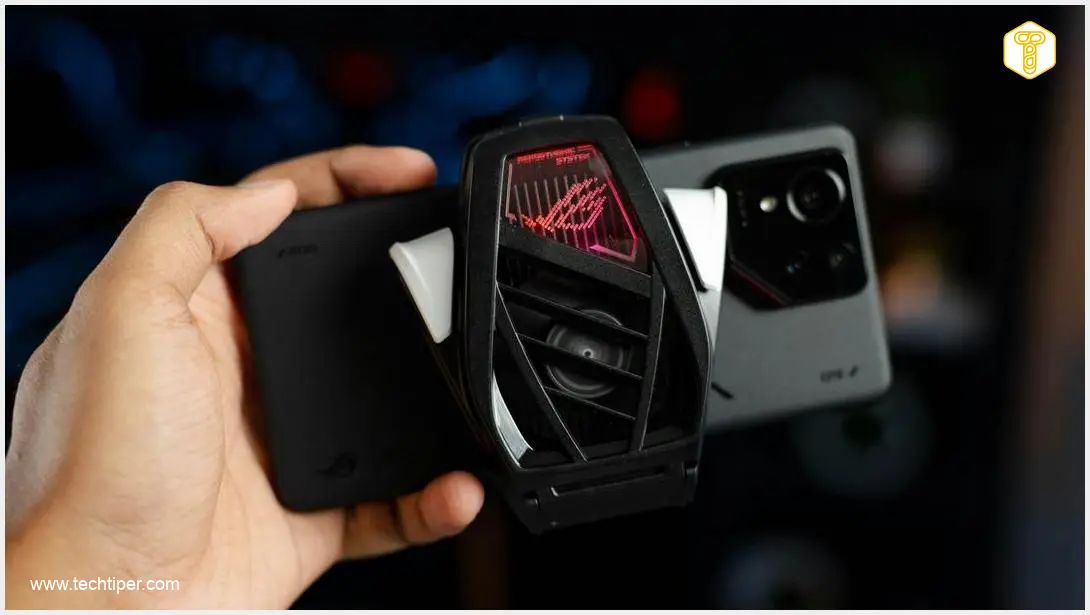
Other notable devices you might find on various online marketplaces include the OnePlus Liquid Cooler and Flydigi B9X. Another example is the ASUS AeroActive Cooler X, specifically designed for ROG Phone series. This accessory combines a fan with a thermoelectric solution, offering significantly higher cooling efficiency compared to simple fan-only attachments.
However, it’s important to recognize that even the best coolers are not a miraculous cure-all. A Peltier cell itself generates a considerable amount of heat on its “hot” side. If the accompanying heatsink and fan are inadequate, the cooling effect on your phone might be negligible or, in some cases, even counterproductive. Effective cooling requires a well-engineered system, not just a Peltier module.
Frequently Asked Questions (FAQ)
Smartphone cooling gadgets typically fall into three main categories: simple mobile fans, passive thermal cases or pads (often using graphene or Phase Change Materials), and active coolers that utilize Peltier thermoelectric modules. Active Peltier coolers are generally the most effective, while mobile fans offer minimal benefit and passive solutions provide only short-term relief.
Passive cooling solutions, such as thermal cases or pads with graphene/PCM, can slightly delay the onset of overheating by helping to distribute heat more effectively. However, they are not actively removing heat from the system. Under continuous heavy load, these solutions quickly become saturated with heat and lose their effectiveness, offering only a temporary buffer rather than a true cooling solution.
Active Peltier-based coolers are highly effective at reducing smartphone temperatures, making them ideal for demanding tasks like gaming or 4K video recording. They actively pump heat away from the device. The main disadvantages are their requirement for continuous external power (from the phone or a power bank) and the fact that they generate heat on their ‘hot’ side, which needs efficient dissipation via a heatsink and fan. A poorly designed Peltier cooler can be ineffective or even counterproductive.
A smartphone cooling gadget is most justified when your device frequently experiences significant overheating during prolonged, resource-intensive activities. This includes extended gaming sessions, recording 4K video for long durations, continuous live streaming, or charging in very hot ambient environments. For casual daily use like browsing or making calls, a cooling gadget is generally an unnecessary expense. Consider your specific usage patterns before investing.
Sources: Various online marketplaces and technology reviews. Opening photo: Gemini AI generated.
About Post Author
