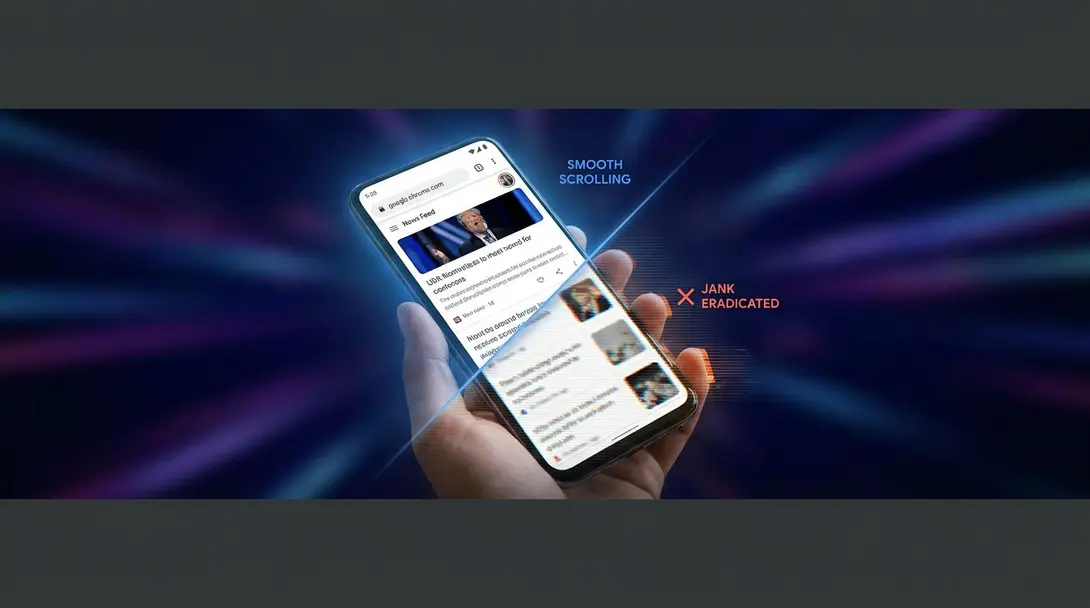
For years, users of Google Chrome on smartphones frequently encountered a frustrating phenomenon known as “scroll jank.” This issue manifested as visual hitches or stutters on the screen, where the content would lag or jump, failing to keep pace with the scrolling animation. This often led to a choppy and unsatisfying browsing experience. Reportedly, Google’s dedicated app developers embarked on a three-year mission to tackle this persistent problem, and it appears their efforts have finally paid off with a significant breakthrough.
Contents
Google Chrome’s Long Battle Against “Scroll Jank” on Smartphones Concludes with Significant Success
Understanding “Scroll Jank” on Google Chrome
“Scroll jank” is a performance anomaly that is arguably easier to witness than to describe. Imagine rapidly scrolling through a web page on your smartphone; instead of a fluid, continuous motion, the text and images momentarily freeze or skip, then abruptly catch up. This visual disruption, even on devices equipped with powerful processors, made browsing in Google Chrome feel sluggish and often led users to seek out “native” application versions of their favorite websites from app stores rather than relying on the browser.
The impact of scroll jank goes beyond mere annoyance. It can significantly detract from user experience, making content consumption less enjoyable and impacting productivity. This issue was a critical performance bottleneck that Google was determined to overcome.
Google’s Three-Year Battle: A 48% Reduction in Scroll Jank
Google has officially announced a remarkable achievement: between 2023 and 2026, they successfully reduced the frequency of “scroll jank” by an impressive 48%. This substantial improvement is the result of dedicated engineering work and a deeper understanding of mobile rendering processes.
One of the key solutions implemented involved a strategic shift in how certain browser elements are handled. Specifically, Google optimized the management of the browser’s address bar by offloading its rendering responsibilities to the device’s Graphics Processing Unit (GPU). Previously, when the main Google Chrome process on a smartphone was solely responsible for this task, it frequently contributed to scroll jank, especially when other demanding operations were occurring simultaneously. By leveraging the GPU, which is designed for parallel processing and visual rendering, Chrome can now deliver a much smoother scrolling experience.
While Google has made significant strides in optimizing Chrome’s performance, users might also consider alternatives for different priorities. For instance, some users explore browsers like Brave Browser for enhanced privacy and Web3 features, or delve into the intricacies of Chrome’s security risks, such as understanding threats like Voidstealer.
What This Means for Users and Developers
For everyday smartphone users, this optimization translates directly into a noticeably smoother and more enjoyable web browsing experience. Pages will scroll more fluidly, reducing frustration and making content consumption more seamless. This improvement reinforces Chrome’s position as a leading mobile browser.
For developers, these advancements highlight Google’s continuous commitment to browser performance. Google encourages developers to review a dedicated article on the Google blog, which provides an in-depth look at the specific technical solutions implemented in this ongoing pursuit of optimizing every millisecond for optimal browser functionality. These insights can also help developers build more performant web applications themselves.
Frequently Asked Questions (FAQ)
“Scroll jank” refers to visual hitches, stutters, or lag that occur on a smartphone screen when scrolling through web content. Instead of a smooth, continuous motion, the content appears to jump or freeze momentarily, creating a choppy browsing experience.

Google’s developers worked for three years, implementing various optimizations. A key solution involved offloading the management and rendering of the browser’s address bar to the device’s Graphics Processing Unit (GPU). This change significantly reduced the workload on the main Chrome process, leading to a 48% reduction in “scroll jank” frequency.
Reducing “scroll jank” is crucial because it directly improves the perceived speed and responsiveness of web browsing. A smooth scrolling experience enhances user satisfaction, reduces frustration, and makes content consumption more pleasant, encouraging users to spend more time within the browser rather than seeking native app alternatives.
Source: Chromium & Opening photo: Google / Press Materials
About Post Author