Contents
The Next Generation of Android Auto: AI Integration, Immersive Navigation, and Adaptive Interfaces
For quite some time, the development of Android Auto seemed to pace significantly slower than its mobile counterpart. However, the Mountain View tech giant has officially shifted gears. Announcing a massive overhaul at the recent Android Show I/O 2026, Google proved that the automotive interface is getting much more than just a fresh coat of paint.
While the broader mobile ecosystem took center stage with deep AI enhancements, the Android Auto overlay received an equally impressive, highly anticipated revitalization designed to transform the modern driving experience.
A Fresh New Look with Material Expressive 3
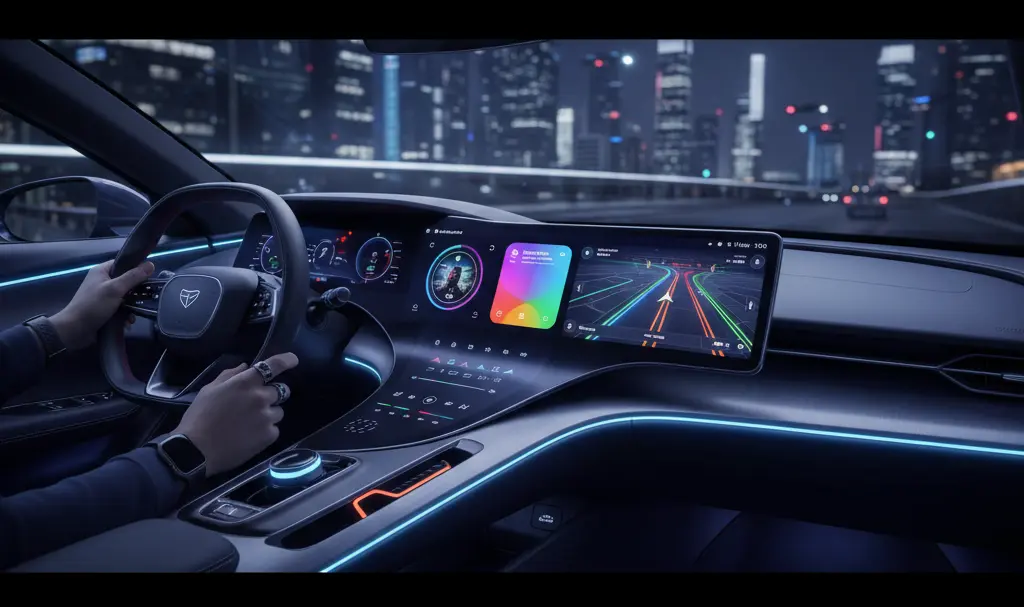
First and foremost, Google has modernized the visual foundation of the system. Keeping up with contemporary design trends, users will soon be greeted by the Material Expressive 3 design language on their car displays. This comprehensive visual update introduces a fluid, aesthetically pleasing environment.
Key UI enhancements include:
- Refined Typography: Sharper, highly readable fonts optimized for quick glances while driving.
- Fluid Animations: Smoother transitions when navigating between apps and menus.
- Dynamic Wallpapers: Customizable backgrounds to personalize the dashboard.
- Home Screen Widgets: For the very first time, interactive widgets will be available for drivers, allowing for customized layouts and instant access to crucial information.
Smarter Driving Powered by Gemini AI
The most significant leap forward comes through deep Gemini integration with Android Auto. This advanced artificial intelligence introduces unprecedented capabilities, allowing drivers to create convenient automations that effortlessly handle daily routines.
One of the standout additions is the Magic Cue feature. By analyzing the context of incoming messages—such as a friend asking for an address or an ETA—the AI cross-references data from your connected emails and calendar. It then generates highly accurate, context-aware reply suggestions that can be sent with a single tap, minimizing driver distraction.
Immersive Navigation and In-Car Entertainment
Google Maps is shedding its flat, traditional look in favor of immersive, three-dimensional navigation. The updated mapping system is designed to be visually striking while remaining highly intuitive.
Drivers will benefit from highly detailed, real-time road data, including:
- Clear lane recommendations and routing.
- Real-time traffic light status.
- Visibility of upcoming stop signs and pedestrian crossings.
For vehicles featuring Google built-in, an exclusive Live Lane Guidance function will be available. This technology utilizes the car’s forward-facing camera to analyze the road ahead in real-time, projecting dynamic driving instructions directly onto the display.

Video Playback is Finally Here
After years of user requests, Google has officially introduced video playback capabilities. The system will support FullHD video streaming at a smooth 60 frames per second. This feature is perfect for passing the time during EV charging stops or route planning breaks. For safety, the system is strictly limited to when the vehicle is parked or charging. The moment motion is detected, Android Auto instantly collapses the video window and switches seamlessly to audio-only mode.
Seamless Adaptive Displays for Modern Vehicles
Automakers are increasingly moving away from standard rectangular screens. BMW has introduced diamond-shaped displays in its latest i3 and iX3 models, while MINI has adopted striking circular screens in vehicles like the John Cooper Works E.
To accommodate this evolving hardware landscape, the latest generation of Android Auto has been engineered to be highly adaptive. The interface will now automatically scale and format itself to fit unconventional aspect ratios and entirely unique screen shapes flawlessly.
Deep Vehicle Integration and Premium Spatial Audio
Gemini AI’s intelligence extends beyond your phone—it now understands the specific car you are driving. This deep integration means the AI can assist with vehicle-specific hardware queries. For instance, you can ask Gemini where a specific physical switch is located in your cabin, or even use the AI to calculate if a specific piece of furniture will fit into your trunk dimensions.
Furthermore, Google has partnered with leading automakers—including BMW, Genesis, Mercedes-Benz, Renault, Skoda, and Volvo—to elevate the in-car audio experience. Owners of compatible vehicles will receive native access to Dolby Atmos technology, delivering an incredibly rich, high-fidelity spatial audio experience right from the dashboard.
Frequently Asked Questions (FAQ)
Can I watch videos on the new Android Auto?
Yes, the new Android Auto supports FullHD video playback at 60 frames per second. For safety reasons, this feature is only accessible while the vehicle is parked or actively charging. The system will automatically close the video and switch to audio-only mode the moment it detects vehicular movement.
Will the new interface work with unusually shaped infotainment screens?
Absolutely. Google has designed the latest update to dynamically adapt to various aspect ratios and non-standard screen shapes. This includes flawless integration with the diamond-shaped displays in the newest BMW models and the circular screens found in modern MINI vehicles.
How does Gemini AI improve the driving experience?
Gemini Intelligence brings advanced contextual awareness to your car. It powers features like Magic Cue, which suggests quick replies based on calendar and email data. Furthermore, the AI can assist with vehicle-specific queries, such as locating physical switches or verifying if a specific piece of furniture will fit inside your trunk.
Source: Google, own elaboration & Opening photo: Gemini
About Post Author