
Contents
MG Unveils Two Game-Changing Cars: The First Production Vehicle with a Semi-Solid State Battery
MG recently announced a significant leap in electric vehicle technology at an event in Frankfurt: the introduction of its first electric car equipped with a semi-solid-state battery. While this technology has been discussed for a decade, MG, a prominent Chinese manufacturer, is pioneering its mass-market implementation in Europe. This article explores the benefits of MG’s innovative SolidCore battery and provides a first-hand account of driving the new MG4 Urban, which is set to debut with this groundbreaking technology, alongside a look at the flagship MG S9 PHEV.
The New MG4 Urban: A Pivotal Moment for Electromobility
When the compact MG4 first entered the market a few years ago, few anticipated it would become a benchmark in the affordable electric vehicle segment across Europe. The MG hatchback quickly gained popularity due to its excellent price-to-performance ratio. It offered a modern platform, a respectable range, good driving dynamics, and critically, a price point that could genuinely compete with traditional internal combustion engine (ICE) vehicles.
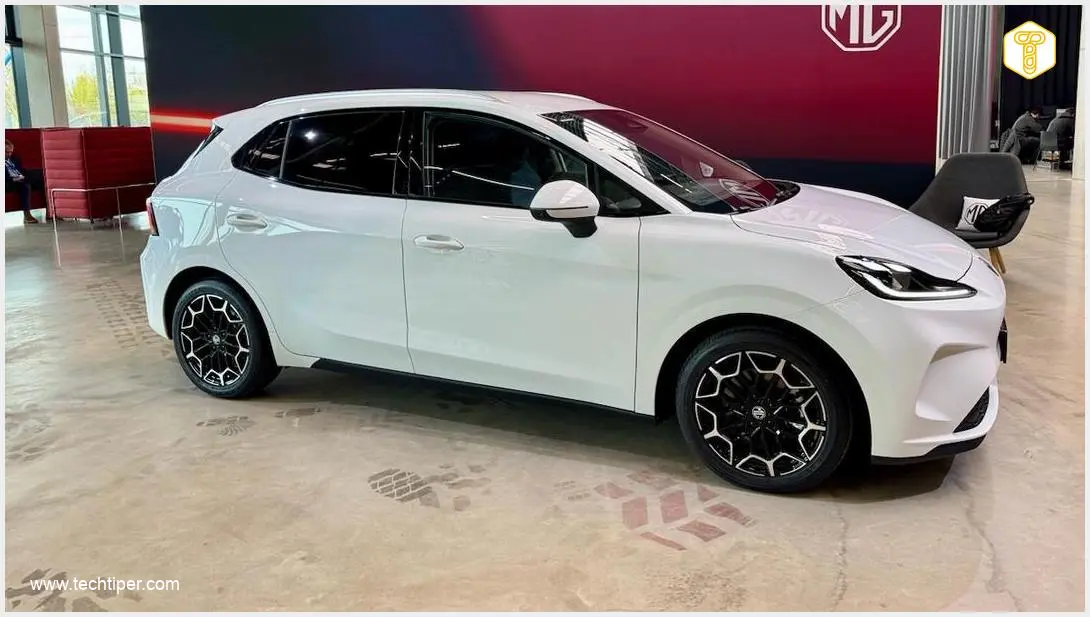
During the MG Tech Day in Frankfurt, the manufacturer unveiled its successor, the MG4 Urban. This new iteration builds upon the concept of an accessible urban electric vehicle but also serves as a platform for technology that could prove far more impactful than the car itself. Expected to launch in international markets by 2026, the MG4 Urban is poised to be one of the most compelling models in its segment, not just for its price or features, but primarily for the advanced battery technology housed beneath its floor.
The Battery: The True Star of the Show
MG officially showcased its semi-solid-state battery technology. This solution has long been heralded as a bridge between conventional lithium-ion batteries and the futuristic, fully solid-state batteries. In essence, it involves using an electrolyte with a partially solid, gel-like structure. This approach helps mitigate the drawbacks of current battery solutions without requiring a full transition to a solid-state design, which remains challenging and costly to produce on a large scale.
According to MG, this technology is now ready for widespread implementation. The company states that the new batteries can reduce charging times by approximately 15% compared to current lithium-ion batteries. Furthermore, they enhance safety by significantly lowering the risk of overheating and ignition.
A crucial improvement is expected in cold-weather performance—a major challenge for contemporary electric vehicles, particularly in colder climates. MG asserts that at -20 degrees Celsius (-4 degrees Fahrenheit), the SolidCore battery retains over 90% of its nominal capacity. If proven in real-world conditions, this could represent one of the most significant breakthroughs in EV battery technology in recent years.
Moreover, unlike traditional Lithium Iron Phosphate (LFP) batteries, MG’s SolidCore battery does not require pre-heating before rapid charging in low temperatures. Even a cold cell can immediately begin charging at nearly its maximum power output.
First Generation is Here, Future Generations Aim for 1000 km Range
From a market perspective, it’s vital to note that this isn’t a distant promise but a technology being integrated into a production vehicle. Until now, semi-solid-state batteries have largely been confined to pilot projects or very limited deployments, predominantly in Asia. Leveraging the extensive resources of the SAIC group, MG is actively working to bring this innovation into the European mainstream, focusing on the highly relevant segment of affordable compact models.
During the presentation, it was emphasized that this is merely the first phase. Subsequent generations of semi-solid-state batteries are anticipated to achieve even higher energy densities, directly translating into extended driving ranges. MG openly expresses its ambitions, aiming for a range exceeding 1000 kilometers (approximately 620 miles) on a single charge. While this sounds ambitious today, within the context of dynamic battery technology development, it is no longer as abstract as it might have seemed just a few years ago.
Driving the New MG4 Urban
I had the opportunity to test drive the MG4 Urban during a brief session. This vehicle makes no pretense of being more than it is, and that works entirely in its favor. In daily use, it proves to be a pleasant, well-tuned electric car. It handles predictably, and its suspension system feels refined and well-developed.
The interior offers a positive surprise with its ergonomics, particularly the presence of physical buttons, which are becoming increasingly rare. The build quality is also commendable. If there’s one minor critique, it’s a slight lack of excitement during acceleration—the car isn’t exceptionally dynamic (for an electric vehicle), but this is hardly a drawback given its intended urban, utilitarian character.
MG Also Showcased the Flagship MG S9 PHEV
Another significant unveiling was the MG S9, the brand’s new flagship SUV. This represents a completely different automotive approach: a large, spacious family vehicle featuring a fully functional third row of seats, genuinely suitable for everyday use rather than just emergency situations. At first glance, its refined styling, particularly the distinctive front and rear lighting, captures attention.
During the drive, the vehicle felt comfortable and sufficiently dynamic, though its size became noticeable during faster cornering, with a tendency for body roll that clearly prioritizes ride comfort. For this model, the pricing will be critical, as it will determine its competitiveness in the market. The exact prices for both the MG4 Urban and MG S9 are expected to be announced within approximately a month.
MG Poised to Disrupt the Market
Above all, MG Tech Day demonstrated that the brand is moving beyond being merely a “budget alternative.” It is now stepping into a role as one of the technological pioneers within its segment. If semi-solid-state batteries genuinely deliver on their promises and become widely available, this could be a pivotal moment that fundamentally reshapes our perception of electric vehicles. It may not be a full-blown revolution yet, but it is undeniably a significant step in that direction—and crucially, one that appears very close to realization.
Frequently Asked Questions (FAQ)
What are semi-solid-state batteries and how do they differ from traditional lithium-ion batteries?
Semi-solid-state batteries use an electrolyte that has a partially solid, gel-like structure, bridging the gap between conventional liquid electrolyte lithium-ion batteries and fully solid-state batteries. This design aims to improve safety, energy density, and performance while being more practical for mass production compared to nascent full solid-state technology.
What key benefits does MG’s SolidCore battery technology offer?
MG’s SolidCore technology promises several advantages, including approximately 15% faster charging times, enhanced safety due to a reduced risk of overheating and ignition, and significantly improved cold-weather performance, retaining over 90% capacity at -20 degrees Celsius. It also eliminates the need for battery pre-heating before rapid charging in low temperatures.
When can consumers expect to see MG vehicles featuring this new battery technology?
The MG4 Urban, equipped with the SolidCore semi-solid-state battery, is expected to debut in international markets by 2026. This indicates that the technology is moving from concept to production-ready vehicles in the near future.
How does MG’s semi-solid-state battery perform in extreme cold, and why is this significant?
MG claims its SolidCore battery retains over 90% of its nominal capacity at -20 degrees Celsius (-4 degrees Fahrenheit) and doesn’t require pre-heating for rapid charging in cold conditions. This is highly significant as cold weather performance and range degradation are major concerns for current EV owners, making this a potential game-changer for EV adoption in colder climates.
Source: Original reporting.
Opening photo: Łukasz Skałba
About Post Author
