

Contents

The Future of Space Exploration: NASA’s Lunar Nuclear Reactor Project
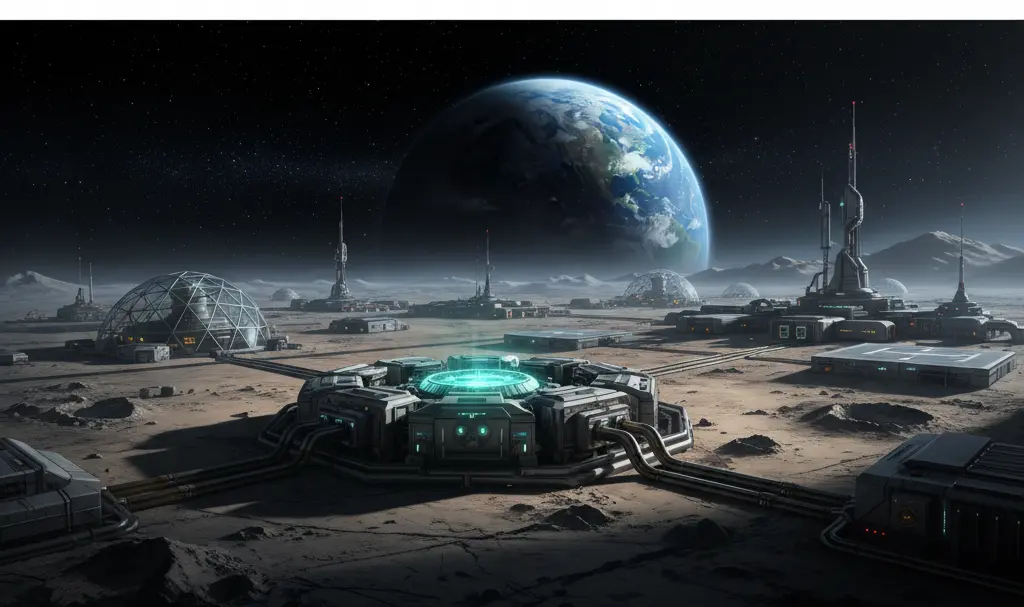
The United States is preparing for a monumental revolution in space exploration, betting heavily on the deployment of nuclear reactors in Earth’s orbit and directly on the surface of the Moon. This bold initiative is designed to pave the way for permanent human settlements on other celestial bodies and revolutionize how we power deep space missions.

The Ambitious Lunar Goals of the US Government
The White House has announced a strategic partnership bringing together NASA, the Department of Defense, and the Department of Energy. Their shared objective is to successfully place operational nuclear reactors in space by the year 2030. Following successful crewed missions and the ongoing development of the Artemis program, federal agencies are transitioning to the next critical phase: establishing advanced, reliable power systems off-world.
As international coalitions prepare for upcoming lunar missions—including crucial global contributions to the Artemis II mission—securing an uninterrupted energy source has become the most pressing hurdle. The US administration’s goal is to maintain a competitive advantage in space exploration, which heavily involves the development of modular, highly scalable fission reactors.
To accelerate technological breakthroughs, the project relies on active competition among private aerospace and defense contractors. Meanwhile, the Department of Energy will oversee the provision of nuclear fuel, necessary infrastructure, and strict safety protocols. They are actively assessing whether the private sector can handle the rapid manufacturing of these complex devices within the tight timeframe.
Why Nuclear Energy Outperforms Solar Power in Space
While traditional solar panels have been the backbone of space missions for decades, they face severe limitations when it comes to deep space exploration and permanent lunar bases. The challenges of relying solely on solar power include:
- Intermittent Sunlight: A single lunar night lasts for 14 Earth days, leaving solar-powered bases completely in the dark.
- Massive Energy Storage: Storing enough solar energy to survive the long lunar night requires enormous, excessively heavy battery banks.
- Distance from the Sun: As missions travel further from the Sun (e.g., to Mars or beyond), solar panels become drastically less effective.
Nuclear fission reactors solve these problems by providing a continuous, steady stream of electricity for years on end, eliminating the need for constant recharging. Beyond powering habitats, this technology is essential for developing nuclear-electric propulsion systems for spacecraft. This would enable longer missions capable of carrying heavier payloads, effectively removing our reliance on bulky traditional chemical rocket fuels.
Project Timeline and Technical Specifications
The current roadmap sets aggressive but achievable deadlines for the deployment of these next-generation power plants. The development of advanced automated manufacturing facilities, similar to the cutting-edge robotic and semiconductor factories emerging on Earth, will be vital to meeting these targets.
- 2028: Deployment of a medium-power nuclear reactor into Earth’s orbit for rigorous testing.
- 2030: Landing a fully operational, large-scale reactor model on the surface of the Moon.
These reactors are designed to generate a minimum of 20 kilowatts (kW) of continuous power. They are engineered to operate for at least three years in orbital space, or up to five years on the harsh lunar surface. Crucially, the designs must be scalable, with the potential to be upgraded to produce up to 100 kW. The first structural designs and prototypes are expected to be unveiled soon.
The New Space Race and Next Steps
This initiative represents the next major phase in the modern space race, particularly in competition with China, which is simultaneously developing its own advanced energy systems for lunar exploration. Aerospace experts emphasize that nuclear energy is the only viable solution to provide the electricity, heating, and propulsion necessary to sustain permanent outposts on the Moon, Mars, and the deeper solar system.
Securing a reliable off-world power grid is universally viewed as an absolutely mandatory step toward true human self-sufficiency in space, opening entirely new horizons for deep space exploration and interplanetary colonization.
Frequently Asked Questions (FAQ)
Why can’t NASA simply rely on solar panels for lunar bases?
A single night on the Moon lasts approximately 14 Earth days. During this time, solar panels generate no power, meaning a base would require massive, incredibly heavy batteries to survive the freezing darkness. Nuclear reactors bypass this issue by providing constant, reliable power regardless of the sun’s position.
Are nuclear reactors safe to launch on top of a rocket?
Yes. Space-bound nuclear reactors are specifically designed to remain completely inert (inactive) during the launch phase. The fission process is only initiated remotely once the reactor is safely landed on the Moon or deployed in its designated stable orbit, significantly reducing the risk of radioactive contamination in the event of a launch failure.
What exactly will a 20 kW to 100 kW lunar reactor power?
A power output in this range is capable of running critical life support systems, heating habitats in the extreme cold of the lunar night, charging crewed and uncrewed lunar rovers, and powering resource extraction equipment, such as machines designed to harvest water ice from permanently shadowed craters.
Source: Wired & Opening photo: Gemini
About Post Author
