
# Unseen Dangers: The Silent Threat of Microplastics in Your Meals
Most of us are careful about the quality of our food, opting for fresh vegetables and meat from trusted sources. However, we rarely consider what might seep into our food during preparation. Scientists are sounding the alarm: a common mistake could be releasing billions of microscopic plastic particles directly into our meals. This article delves into how everyday kitchen habits might be contributing to this hidden problem and what simple changes you can make to protect your health.
## The Hidden Ingredient: How Microplastics Get into Your Dinner
Microplastics and even smaller nanoplastics have become ubiquitous in modern life, silently making their way into our diets. A primary culprit is the improper use of food containers, specifically when they’re not used as intended.
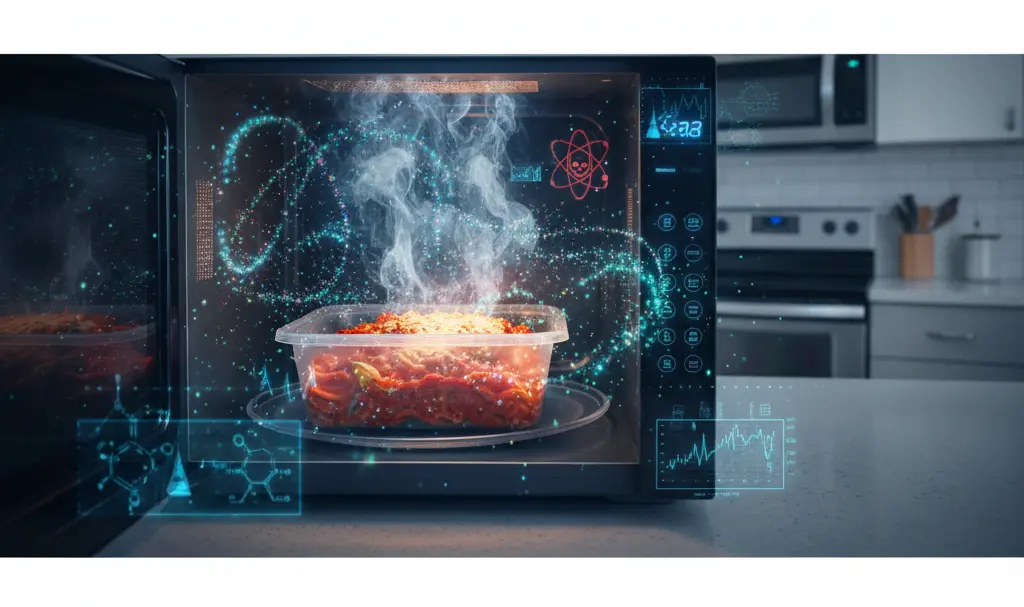
The most significant error is heating food in plastic containers in the microwave. While many products bear a “microwave safe” label, this designation often only indicates that the container won’t melt under high temperatures, not that its chemical structure remains stable. The combination of high heat and microwave radiation can rapidly degrade the polymer structure of the plastic, leading to the release of an enormous number of particles too small to see with the naked eye directly into your food.
## Not All Plastics Are Created Equal: Understanding the Risk
Research highlights the alarming rate at which we consume microplastics. A 2019 study published in *Environmental Science & Technology* estimated that humans consume between 39,000 and 52,000 microplastic particles annually, excluding inhalation. For individuals who frequently drink bottled water, this number dramatically increases by an additional 90,000 particles.
People who frequently order takeout also tend to ingest more microplastics, with packaging identified as a significant source. This was corroborated by a 2020 study from East China Normal University in Shanghai, published in the *Journal of Hazardous Materials*.
Further compelling insights emerged from a 2023 study by scientists at the University of Nebraska-Lincoln, also published in *Environmental Science & Technology*. Their findings showed that plastic containers designed for babies released millions of nanoplastics into liquids after just three minutes of microwaving. This process accelerates significantly when food contains fats, which heat to higher temperatures and act as a solvent for chemicals within the plastic. Consequently, instead of a healthy meal, we might be serving ourselves and our loved ones a cocktail of synthetic particles that can penetrate body tissues.
## Beyond Microwaves: Other Common Mistakes
It’s not just microwaving that poses a risk. The condition of our kitchen accessories also plays a crucial role. Old plastic containers, scarred with tiny scratches from forks or knives, become far more susceptible to releasing microparticles. Each crack or imperfection in the material’s structure increases the surface area where plastic contacts food, drastically elevating the risk of contamination.
Another factor often overlooked is how these containers are washed—specifically, regular use of automatic dishwashers. Harsh detergents combined with high temperatures weaken the chemical bonds within plastics, making them brittle and unstable. Therefore, merely storing warm food in a worn, dishwasher-cleaned container can be enough to facilitate the migration of harmful substances like bisphenol A (BPA) and phthalates into your meal.
## Protecting Your Health: Simple Changes for a Safer Kitchen
We’ve often discussed the consequences and impact of microplastics on the human body. Scientists suspect that their presence in tissues can trigger chronic inflammation and oxidative stress. In the long term, this can contribute to the development of lifestyle diseases and endocrine disruption. So, what changes can you make in your kitchen to protect yourself and your family?
Reducing contact with microplastics doesn’t require drastic overhauls, but rather the development of a few healthy habits related to food storage and preparation. The most effective method is to stop heating food in plastic and instead opt for glass, ceramic, or stainless steel dishes. Glass, for instance, is a chemically inert material, ensuring that no unwanted particles will transfer to your food, even at very high temperatures. For those looking for alternative cooking methods, the rise of the air fryer offers a versatile solution, often replacing microwaves and ovens for reheating and cooking. If you’re considering an upgrade, a Tefal Easy Fry Infrared Air Fryer could be a great addition to a plastic-free kitchen.
You can also replace old, scratched plastic containers with new ones, ideally made from alternative materials. If you choose to stick with plastic, use it exclusively for storing cold items and wash them by hand in lukewarm water. This practice helps extend the stability and lifespan of the plastic, reducing the likelihood of degradation and particle release.
Frequently Asked Questions (FAQ)
Is it safe to store cold food in plastic containers?
Yes, generally, storing cold food in plastic containers is safer than heating food in them. The primary concern with plastics arises from heat, which can cause chemical degradation and the release of microplastics and other harmful substances. For cold storage, the risk is significantly lower, especially if the containers are new, unscratched, and made from food-grade plastic. However, opting for glass or stainless steel is always the safest choice for long-term food storage.
How can I tell if a plastic container is truly “microwave safe”?
The “microwave safe” label typically indicates that the plastic will not melt or deform when exposed to microwave radiation. However, it does not guarantee that harmful chemicals or microplastics won’t leach into your food. To minimize risk, it’s best to avoid microwaving food in plastic altogether. If you must use plastic, look for containers specifically labeled “BPA-free” and designed for repeated microwave use, but still, transfer food to glass or ceramic when possible.
What are BPA and phthalates, and why are they a concern?
BPA (Bisphenol A) and phthalates are chemicals often used in the production of plastics. They are endocrine disruptors, meaning they can interfere with the body’s hormonal system. Exposure to these chemicals has been linked to various health issues, including reproductive problems, developmental issues, and an increased risk of certain cancers. These substances can leach from plastic into food, especially when heated or when the plastic is old and degraded.
Does handwashing plastic containers prevent microplastic release?
Handwashing plastic containers in lukewarm water is generally better than using a dishwasher. Dishwashers expose plastics to high temperatures and harsh detergents, which can accelerate the degradation of the plastic and increase the release of microplastics. Handwashing with mild soap and lukewarm water reduces this stress on the plastic, helping to maintain its integrity and reduce the risk of chemical leaching and particle release.
*Source: CNET, Facebook, Inverse*
*Opening photo: Gemini*
About Post Author
