

Contents
Optimizing Your Workflow: SanDisk Extreme Fit USB-C and Portable SSD Synergy
At first glance, purchasing both a high-capacity USB flash drive and a portable SSD might seem redundant. Both devices store files, utilize USB-C connectivity, and are compact enough to fit in your pocket. However, in practice, they address two distinctly different storage needs.
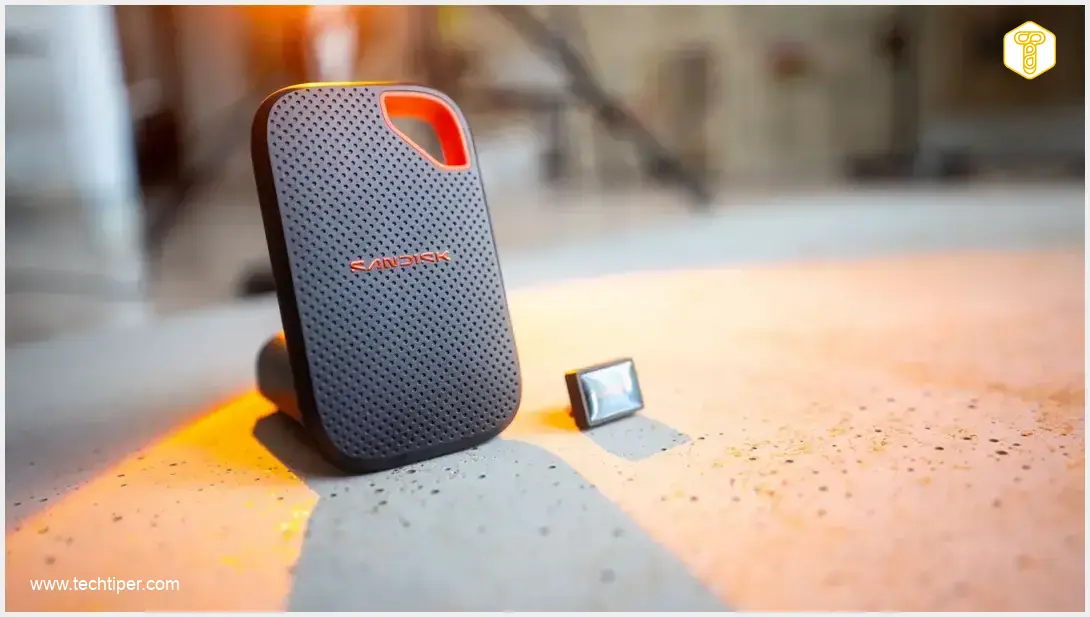
The SanDisk Extreme Fit USB-C 1TB serves as a semi-permanent storage solution, virtually disappearing into your computer’s port. Its minuscule size means it requires no cable and, once connected, it’s easily forgotten. Conversely, the SanDisk Extreme Portable SSD 2TB is designed for larger data transfers, housing demanding projects, and, in my case, facilitating seamless on-location video editing.
Together, these two drives provide a formidable 3TB of nominal storage capacity. Yet, their true value isn’t merely the combined gigabytes, but rather how each drive can be assigned a specific, optimized role within a professional workflow.
One Stays in the Laptop, the Other Travels in Your Bag
My approach to using this combination is straightforward: the SanDisk Extreme Fit USB-C plugs into a laptop’s USB-C port and largely remains there, acting as a quiet tenant. It stays out of the way but is always accessible. I store essential work materials on it that don’t need to occupy valuable internal drive space, such as photos, sound effect packs for editing, and other readily available resources.
In essence, it functions as an additional “pocket” seamlessly integrated into the laptop. While I don’t use it for files demanding maximum read speeds, it’s perfect for anything you want to keep close at hand without delving into cloud storage, tangled cables, or additional drives.
The SanDisk Extreme Portable SSD, on the other hand, handles the heavier workload. In this duo, it’s akin to the older sibling—larger, faster, and commands respect among its peers. It transports video projects, extensive RAW photo libraries, copies of important catalogs, archival materials, and files shared among team members. Thus, the SanDisk Extreme Fit USB-C is a handy pocket, while the SSD serves as a robust trunk for longer journeys and bigger tasks.
This division of labor feels incredibly natural and convenient. The flash drive is always available, whereas the SSD is connected only when its capacity and performance are truly required. There’s no need to constantly retrieve a cable just to open a few documents. Conversely, one wouldn’t expect a miniature flash drive to handle tasks best suited for a high-speed SSD.
SanDisk Extreme Fit USB-C: A Terabyte That Virtually Vanishes
The SanDisk Extreme Fit USB-C is distinctive due to its sheer compactness. The 1TB version measures approximately 18.5 × 13.7 × 16 mm (about 0.73 × 0.54 × 0.63 inches) and weighs a mere 3 grams (about 0.1 ounces). When plugged into a laptop, it resembles a small cap more than a traditional USB flash drive. It leverages USB 3.2 Gen 1 connectivity, offering declared read speeds of up to 400 MB/s.
However, its most significant feature isn’t just its transfer speed; it’s the “plug-and-leave” design. There’s no cable, no separate enclosure, and no device sliding across your desk every time you move your laptop. The flash drive sits snugly against the chassis, effectively acting as an extra “file shelf.”

With a 1TB capacity, such a “shelf” becomes genuinely useful. You can store a sizable multimedia library, an archive of materials, or files you want to offload from your computer’s internal storage.
The SanDisk Extreme Fit USB-C also makes sense for USB-C enabled tablets. It can be directly connected without an adapter, providing access to a large catalog of documents, photos, or videos. The manufacturer confirms compatibility with Windows 10 and newer, macOS 12 or newer, and iPadOS 15 and newer. It’s also an excellent tool for clearing excess photos from your smartphone; it works seamlessly with iPhones.
Small Size is Convenient, But Requires Care
The design of the SanDisk Extreme Fit USB-C mitigates the risk of accidentally snagging a long flash drive protruding from the side of your laptop. However, this doesn’t mean the drive becomes an integral part of the casing once connected.
Before placing your computer into a very tight sleeve or bag, it’s advisable to check that the material isn’t pressing against the flash drive. It’s also important to remember that the device still occupies one USB-C port. On a laptop with only two ports, where one is used for charging, this can be a significant consideration.
A second challenge arises when unplugging it: a three-gram flash drive is incredibly easy to misplace and forget. Therefore, it’s best either to leave it in a specific computer or to store it in a consistent, designated spot. Tossing it loosely into a large backpack pocket might lead to a frustrating search for something that “was just here a moment ago.”
SanDisk Extreme Portable SSD: Built for Heavier Workloads
The SanDisk Extreme Portable SSD 2TB version fulfills an entirely different role. It’s larger than the flash drive but still remarkably pocket-sized. The enclosure measures approximately 85 × 51 × 9.9 mm (about 3.35 × 2.0 × 0.39 inches), and the entire drive weighs 46.9 grams (about 1.65 ounces).
The manufacturer declares read speeds of up to 2000 MB/s. Write speeds are typically lower, and actual performance depends on factors such as the host device, interface, and operating conditions. For those needing extreme performance and capacity, exploring options like 16TB NVMe SSDs can provide further insights into high-end storage solutions.
The distinction from the SanDisk Extreme Fit USB-C is clear. The flash drive excels as a convenient, always-connected file repository. The SSD is better suited for regular copying of large directories, working with photo and video materials, and transferring data between multiple devices.
Two terabytes allow you to carry a substantial archive without needing to pre-select which files might be useful. You can transfer an entire project, including source materials, exports, and earlier versions, rather than just copying the latest “final” folder.
It’s crucial to remember that simply having a USB-C port does not automatically guarantee full utilization of the drive’s speed. SanDisk explicitly states that performance can vary depending on the host device and interface. On an older or slower port, the SSD will still function, but it may not achieve the declared 2000 MB/s.
A Drive Designed to Thrive Beyond the Drawer
Portable SSDs generally face tougher conditions than drives permanently connected to a computer. They travel in backpacks, land on various desks, sometimes sit next to a coffee cup, and inevitably, at some point, meet the floor.
The SanDisk Extreme Portable SSD is specifically engineered for such scenarios. The manufacturer claims an IP65 protection rating, meaning it’s dust-tight and protected against low-pressure water jets from any direction. It also boasts drop resistance from heights of up to 3 meters (approximately 9.8 feet). It’s important to ensure the device is clean and dry before re-connecting it after exposure to water or dust.
This level of ruggedness isn’t an invitation to leave the drive out in the rain. Rather, it significantly reduces the risk that a single accidental drop or spilled beverage will prematurely end its working life. For enhanced data security and peace of mind, consider implementing robust backup strategies like the 3-2-1 backup rule.
The SSD also features password protection utilizing 256-bit AES hardware encryption. This function is supported on computers running Windows 10 or newer and macOS 12 or newer, requiring a software download. This is a valuable addition when the drive leaves home carrying business documents, client materials, or personal archives.
USB-C: The Common Denominator
Both devices utilize USB-C, streamlining the entire setup. The Extreme Fit connects directly, while the Extreme Portable SSD includes a USB-C to USB-C cable. The standard retail package typically includes the drive, the cable, and quick-start guides with warranty information.
Thanks to USB-C, both drives can be used beyond just a laptop. The SSD is compatible with Android 10 and newer, iPadOS 15 and newer, macOS 12 and newer, Windows 10 and newer, and supports the Files app in iOS 17 and subsequent versions.
In practice, this enables a simple file workflow. Photos or recordings can be transferred from a phone or tablet to the SSD, then organized on a computer. Smaller materials or finished files can then be copied to the Extreme Fit for constant availability without continuously connecting the larger SSD.
Key Specifications at a Glance
- SanDisk Extreme Fit USB-C (1TB):
- Capacity: 1 TB
- Read Speed: Up to 400 MB/s
- Interface: USB 3.2 Gen 1
- Weight: Approximately 3 grams (0.1 oz)
- Dimensions: Approximately 18.5 × 13.7 × 16 mm (0.73 × 0.54 × 0.63 inches)
- Warranty: 5-year limited warranty
- SanDisk Extreme Portable SSD (2TB):
- Capacity: 2 TB
- Read Speed: Up to 2000 MB/s
- Weight: Approximately 46.9 grams (1.65 oz)
- Dimensions: Approximately 85 × 51 × 9.9 mm (3.35 × 2.0 × 0.39 inches)
- Protection: IP65 water and dust resistance, drop resistance up to 3 meters (9.8 feet)
- Security: Password protection with 256-bit AES hardware encryption
- Warranty: 5-year limited warranty
Combined, you get a nominal 3TB of storage, though the actual usable space after formatting will be slightly less. Manufacturers calculate capacity assuming 1TB equals one trillion bytes. In practical terms, a 1TB flash drive is incredibly convenient, but for frequently transferring large projects, a faster SSD will simply be better suited for the task.
The combination of these two devices significantly simplifies digital life. The SanDisk Extreme Fit USB-C becomes the everyday memory: small, lightweight, and always accessible. The SanDisk Extreme Portable SSD functions as a high-speed repository, an archive, and a portable drive that can be taken on the go without major stress. Both devices address very common needs: lack of space on a computer, oversized files, the necessity of data transfer, and the desire for copies of essential materials.
The flash drive offers convenience. The SSD provides capacity, speed, and greater resilience for travel. Together, they form a compact package that can streamline your files without adding another bulky device to your bag.
Frequently Asked Questions (FAQ)
The Extreme Fit USB-C is ideal for always-connected, everyday files due to its compact, “plug-and-leave” design. The Extreme Portable SSD is better suited for high-speed transfers, large projects like video editing, and portable bulk storage due to its higher capacity, speed, and ruggedness.
Yes, both drives utilize USB-C and are compatible with a range of devices. The Extreme Fit USB-C works with tablets (iPadOS 15+). The Extreme Portable SSD is compatible with Android 10+, iPadOS 15+, macOS 12+, Windows 10+, and iOS 17+ via the Files app.
The SanDisk Extreme Fit USB-C offers read speeds up to 400 MB/s and focuses on a durable, low-profile design. The SanDisk Extreme Portable SSD boasts read speeds up to 2000 MB/s, IP65 water and dust resistance, and drop protection up to 3 meters, making it ideal for rugged use.
Its extremely small size and lack of cable mean it can stay connected to a laptop or tablet without protruding significantly, acting like an extension of the device’s internal storage. This provides convenient access to files without occupying a visible port or adding clutter.
Yes, data security is crucial. The SanDisk Extreme Portable SSD offers password protection with 256-bit AES hardware encryption, requiring a software download for activation. This is vital for safeguarding sensitive information, especially when the drive is used on the go.
Source: Self-created. Opening photo: Kamil Marek
About Post Author
