
Contents
The Paradox of Sleep Trackers: Are They Stealing Your Rest?
In an era where technology promises to enhance every aspect of our lives, the market for sleep monitoring apps and gadgets is booming. These tools, designed to help us understand and improve our sleep, are increasingly popular. However, recent research casts a shadow on their benefits, suggesting that for a significant portion of users, these devices might be doing more harm than good.
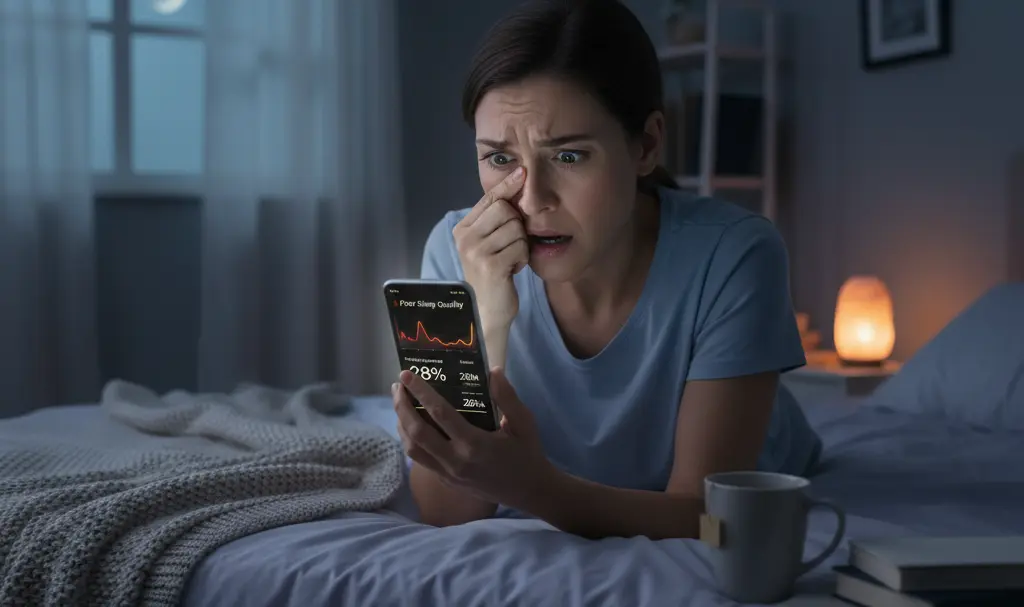
Psychologists in Norway have presented evidence that rather than aiding sleep and improving its quality, these applications can exacerbate problems. They argue that constant monitoring can elevate stress levels, heighten anxiety, and ultimately worsen the very sleep issues they aim to solve. This phenomenon raises important questions about how we interact with health technology and its true impact on our well-being.
Popular Apps May Intensify Insomnia
Researchers at the University of Bergen conducted a comprehensive study involving over a thousand adults in Norway. Participants were asked about their use of sleep monitoring apps and whether they experienced positive or negative effects from these practices. The findings revealed that nearly half of the respondents reported using such tools, either currently or in the past.
The study observed that women and younger adults were more likely to use these types of applications. Notably, the younger demographic reported more intense experiences, both in terms of perceived benefits and negative reactions. The most frequently cited benefit was a better understanding of one’s own sleep rhythm, reported by 48% of users. Conversely, a significant negative outcome was increased worry about sleep quality, affecting 17% of users.
For individuals already experiencing symptoms of insomnia, this anxiety was even more pronounced. These groups more frequently reported a deterioration in their rest quality after just one or two months of using the apps. The full results of this study are available in an article published in the esteemed journal Frontiers in Psychology.
The Side Effect of “Perfect” Sleep: Understanding Orthosomnia
Experts have identified a specific phenomenon related to this over-reliance on sleep tracking data, termed orthosomnia. This term, coined by researchers at institutions in Chicago, emerged from a 2017 case study published in the Journal of Clinical Sleep Medicine. Orthosomnia describes a state where an obsessive focus on data — such as sleep onset time, deep sleep phases, and the number of awakenings — paradoxically leads to increased stress and poorer sleep quality.
Some individuals become so fixated on their device’s metrics that they enter a doctor’s office referencing charts from their gadgets rather than their own physical sensations. Their perception of fatigue often becomes entirely dependent on the app’s score, overshadowing their body’s natural signals.
“We found that younger adults were more susceptible to feedback from sleep apps. They reported more perceived benefits, but also more worries and stress. (…) We also found that people with insomnia symptoms were more vulnerable to negative effects. In this group, feedback from sleep monitoring apps more often triggered stress and anxiety.”
— Håkon Lundekvam Berge, University of Bergen, Co-author of the Study
Studies describing orthosomnia reveal a consistent pattern. Users might extend their time in bed to “earn” better scores, activate all notifications and analyses, and simultaneously trust their own bodies less. This combination of a perfectionistic pursuit of “ideal sleep” and potentially inaccurate measurements creates a feedback loop that intensifies insomnia rather than alleviating it. For those looking to reduce their reliance on such devices and improve their sleep habits naturally, exploring methods to reduce phone usage and engage in a digital detox can be beneficial.
To Use or Not to Use? A Balanced Perspective
Despite the potential pitfalls, the Bergen researchers acknowledge that sleep monitoring apps are not detrimental to everyone. Approximately 15% of respondents stated that these apps helped them better understand their own habits and prompted them to make positive lifestyle changes. An example includes reducing screen time before bed, a practice often supported by fitness trackers like the Huawei Band 10 which can encourage mindful tech use.
In these beneficial cases, the “awareness-building” function of the apps proved advantageous, as long as it didn’t escalate into an obsession or become the sole determinant of one’s well-being. The key lies in using these tools as guides, not as infallible authorities.
To ensure a healthy relationship with sleep tracking technology, scientists suggest three core principles:
- Do not treat the app as an absolute arbiter of truth regarding your sleep.
- Do not increase the time spent in bed solely to improve statistics or achieve an “ideal” score.
- Do not ignore your own physical feelings and fatigue levels in favor of app data.
In practice, this means it’s better to go to sleep when you genuinely feel sleepy, rather than strictly adhering to an app’s suggestion that you should be in bed by 10:00 PM. Listening to your body’s natural rhythms remains paramount for truly restorative sleep.
Frequently Asked Questions (FAQ)
What is orthosomnia and how does it relate to sleep tracking apps?
Orthosomnia is a term describing an obsessive preoccupation with achieving “perfect” sleep as indicated by data from sleep tracking apps. This fixation on metrics like sleep stages and duration can ironically lead to increased stress, anxiety, and a worsening of sleep quality, rather than an improvement.
Who is most at risk of experiencing negative effects from sleep monitoring apps?
Research indicates that younger adults and individuals already experiencing symptoms of insomnia are most susceptible to the negative impacts of sleep monitoring apps. These groups are more likely to report increased worry, stress, and even a deterioration in their sleep quality after using the apps.
Can sleep monitoring apps ever be beneficial?
Yes, for some individuals, sleep monitoring apps can be beneficial. Approximately 15% of users in one study reported that these apps helped them better understand their sleep habits and prompted positive lifestyle changes, such as reducing screen time before bed. The key is to use them as a tool for awareness, not as an ultimate authority, and to avoid becoming obsessive about the data.
What are the key recommendations for using sleep tracking technology responsibly?
To use sleep tracking technology responsibly, experts recommend three main principles: do not treat the app’s data as the absolute truth, avoid increasing time in bed solely to improve app statistics, and always prioritize your own body’s feelings and signals over the app’s recommendations. Go to sleep when you feel genuinely tired, and use app data as a guide rather than a strict command.
Source: Euronews, ScienMag, Nauka w Polsce, Neurology Advisor.
Opening photo: Gemini
About Post Author
