

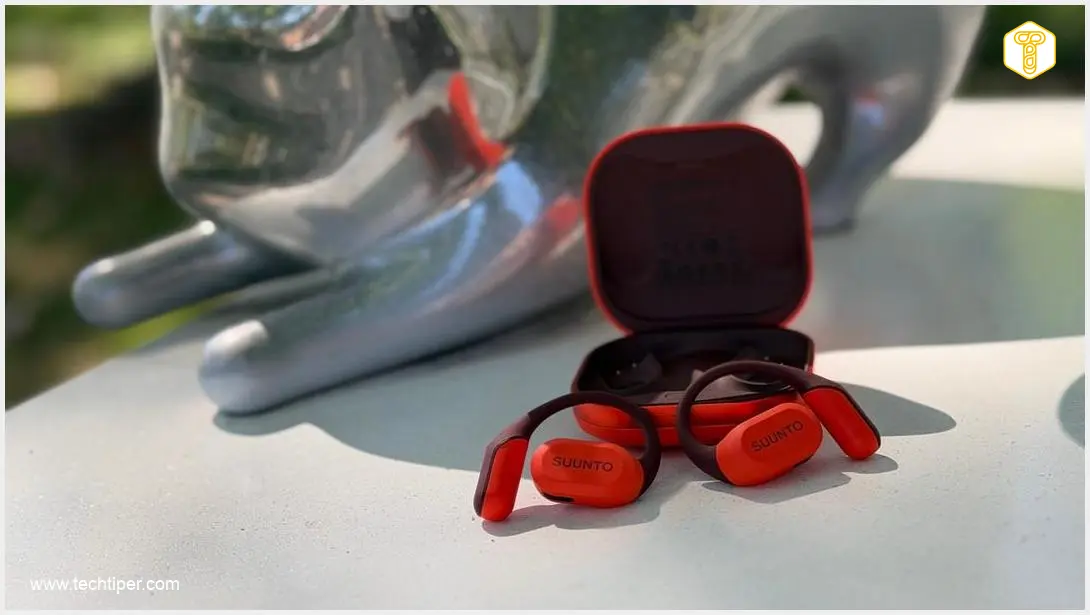
Suunto Spark Review
-
Sound Quality & Awareness
-
Design & Durability
-
Comfort & Fit
-
Revolutionary Running Biometrics
-
Controls Usability
-
Battery & Charging
A Game-Changer for Active Runners
The Suunto Spark excels in comfort and offers unique, integrated running biomechanics tracking, providing an excellent open-ear audio experience for athletes. While controls can be frustrating and wireless charging is absent, its overall performance and features make it a compelling choice for those seeking a sophisticated training companion.
Advantages
- Superior air-conduction sound with environmental awareness
- Revolutionary integrated running biomechanics tracking (cadence, posture, etc.)
- Exceptional comfort and secure fit, even with glasses/hats
- Robust, durable, and weather-resistant design (IP55, wide temp range)
- Long battery life (up to 36 hours) and convenient USB-C charging case
- Seamless multipoint Bluetooth 5.4 connectivity
- Comprehensive Suunto app for customization and training data
Disadvantages
- Inconsistent and sometimes frustrating touch controls
- Head gesture controls prone to accidental activation; reduce battery life
- Lack of wireless (Qi) charging
- Not suitable for swimming (IP55 is only splash/sweat resistant)
- Sound audibility diminishes significantly in very noisy environments
- Occasional Bluetooth disconnections reported
Contents

Suunto Spark Review: Headphones That Train With You
The Suunto Spark headphones are more than just a device for listening to music; they are a sophisticated training companion that understands how you run. Equipped with a built-in gyroscope, these open-ear headphones analyze your running cadence, neck posture, and stride technique—all without the need for additional sensors, bands, or smartwatches. For many active individuals, these have proven to be among the most athletic headphones available, capable of genuinely motivating activity, despite occasional frustrations with their controls. This in-depth review explores the Suunto Spark.
What Makes Suunto Spark Stand Out? Air-Conduction Technology
Suunto Spark represents a unique offering in Suunto’s audio lineup, being the sole model to utilize air-conduction technology. Unlike other Suunto models such as the Wing, Wing 2, Sonic, Aqua, or Aqua Light, which rely on bone-conduction, the Spark delivers sound through the air, much like traditional headphones. This approach aims to provide superior sound quality within the brand’s ecosystem while crucially maintaining environmental awareness—a vital feature for outdoor training and activities. This technology allows for a more natural and richer audio experience, a significant advantage for athletes who need to stay aware of their surroundings.
First Impressions: Packaging and Accessories
The Suunto Spark headphones arrive in a sleek, minimalist package that immediately conveys a premium feel. Inside, users will find a compact charging case, a USB-C cable for charging, and a quick start guide. No unnecessary extras or fillers are included, emphasizing functionality and design. The charging case itself is notably well-designed; it’s pleasant to the touch, closes with a satisfying click, and its color harmonizes with the headphone’s chosen variant. Its flat shape makes it particularly convenient for slipping into a pocket.
Robust Design and Build Quality
Suunto Spark headphones are available in three distinct color options: classic black, pristine white, and a vibrant coral orange. The coral orange variant is particularly eye-catching, offering a bright hue visible from a distance without being overpowering. It accentuates the headphones’ sporty character and makes them easier to locate if misplaced.
Each earbud weighs less than 10 grams and is crafted from soft, skin-friendly silicone, allowing for easy adaptation to the ear’s shape. The design ensures a stable and secure fit, preventing movement or slippage even during intense workouts. The overall aesthetic is well-thought-out and cohesive, clearly indicating that Suunto engineered these headphones specifically for active use, rather than as a general lifestyle gadget.
The IP55 certification means the headphones are protected against dust ingress (to a degree that prevents harmful deposits) and can comfortably withstand low-pressure jets of water from any direction. In practical terms, this guarantees the Spark will endure runs in the rain, intense sweaty workouts, and accidental splashes without issue.
Furthermore, the headphones operate within a broad temperature range of -20°C to 60°C. The lower limit is especially beneficial for those who train year-round, ensuring that winter runs in freezing temperatures pose no challenge for the Spark.
Immersive Sound with Environmental Awareness
While no open-ear headphones can fully replicate the immersive experience of in-ear models, Suunto has made significant strides to ensure the Spark delivers the best possible audio quality for its category. The air-conduction technology plays a crucial role here, contributing to a noticeably superior sound profile compared to bone-conduction alternatives. The Spark employs a hybrid transducer system, departing from the single-driver setup often found in sports headphones. This multi-driver configuration aims for a fuller sound, effectively compensating for some inherent limitations of open-ear designs.
Spatial audio is also incorporated to enrich the listening experience. The headphones support LHDC 5.0 up to 96 kHz and proudly carry the Hi-Res Audio Gold certification. While these benefits are most noticeable with compatible audio sources, they underscore Suunto’s commitment to high-fidelity sound.
The Suunto app offers further sound personalization with five distinct EQ modes:
- Legendary
- Bass Boost
- Treble Boost
- Voice Boost
- Customize
The differences between these profiles are significant, making it worthwhile to experiment and find the one that best suits your preferences. It’s important to note that audio nuances are best appreciated in quiet environments. In noisy surroundings, such as busy streets or gyms, sound audibility naturally decreases—a common characteristic of all open-ear headphones and not a specific flaw of the Spark.
Comfort, Seamless Connectivity, and Intuitive Controls
The Suunto Spark headphones excel in comfort. Their lightweight and soft design allows them to adapt perfectly to the ear without deforming. They can be worn effortlessly with glasses, hats, or even under a hood without interference, addressing issues found in some previous designs like the Suunto Wing. The automatic power-on feature when removed from the case is a convenient touch.
For connectivity, the headphones utilize Bluetooth 5.4 and support multipoint pairing, allowing simultaneous connection to two devices. This feature works exceptionally well in daily use, enabling seamless switching between a laptop and a smartphone with virtually imperceptible audio delay. However, occasional disconnections from the phone, requiring re-pairing, were noted by reviewers.
The control experience with the Suunto Spark is a mixed bag. The primary method involves a touch panel on each earbud, responding to short and long taps. While modern in concept, the tap combinations can be inconsistent in practice, making volume and media control less convenient than with physical buttons. The small touch area, lack of haptic feedback, and susceptibility to accidental activation during movement can be frustrating.
Secondly, head gestures offer a hands-free control option. Two nods can change tracks, and specific head movements can answer or reject calls without touching your phone. While appealing for activities like cycling or running, this feature can feel awkward in public and is prone to accidental activations during movement. Enabling head gesture control also reduces battery life by approximately 15%.
All these settings can be configured within the Suunto app, which is praised for its clear and organized interface. The app allows for EQ mode management, toggling head movement controls, setting a cadence metronome, activating multipoint mode, locating lost headphones via sound playback, and reviewing training data.
Revolutionary Sports Tracking for Runners
A standout feature of the Suunto Spark headphones is their integrated gyroscope, which collects valuable running technique data directly from the runner’s head or ears. This sensor enables the headphones to measure:
- Neck Posture: Assessing proper head alignment during a run.
- Cadence: Steps per minute.
- Ground Contact Time: The duration each foot spends on the ground.
- Vertical Oscillation: How much a runner “bounces” vertically with each stride.
This eliminates the need for a dedicated sports watch with advanced biomechanical sensors, as Suunto has effectively integrated some of these functions directly into the headphones—a truly innovative solution. The full spectrum of training capabilities, however, becomes apparent when paired with a Suunto smartwatch. In this integrated ecosystem, a voice assistant provides hands-free real-time feedback on pace, heart rate, and distance, alongside interval timings. This advanced integration transforms the headphones into a comprehensive training tool.
The neck state tracking is another unique aspect of the Suunto Spark. The headphones monitor neck flexibility, daily activity, and fatigue levels, issuing alerts to encourage better posture and prevent overload. Additionally, a cadence metronome function is available for runners. Within the app, users can set a rhythm from 120 to 180 steps per minute, aiding in maintaining a consistent pace and improving running efficiency.
Battery Performance and Charging Convenience
Suunto Spark headphones offer up to 7 hours of playback on a single charge, extending to a total of 36 hours with the included charging case. In practice, this should be ample for most typical training sessions or a full day of casual use, with the case providing significant reserve power for multiple recharges. It’s worth noting that battery life can be affected by factors such as low temperatures and the activation of additional features like head gesture control, which can reduce it by approximately 15%.
Charging is facilitated via the included USB-C cable, and battery status can be monitored through the Suunto app. The absence of wireless (Qi) charging is a notable omission, especially considering the price point of approximately 160 US Dollars, where it would be a welcome convenience. The headphones themselves fully charge in about 60 minutes, while the case takes closer to 100 minutes.
Specifications and Value Proposition
Here are the key specifications for the Suunto Spark headphones:
- Casing Material: Silicone + Titanium Alloy
- Speaker: Impedance: 32 Ω ±15%; Frequency Range: 20 Hz~20 kHz; Sensitivity: 137.5 ±3 dB; THD: < 2% @ 1 kHz; Balance: ≤3 dB @ 1 kHz
- Microphone: Sensitivity: -38 dB (1 kHz); Frequency Range: 100 Hz ~ 10 kHz; Signal-to-Noise Ratio: 65 dB
- Connectivity: Bluetooth 5.4, Multipoint (2 devices)
- Codecs: LHDC 5.0 (up to 96 kHz / 24-bit), AAC, SBC
- Controls: Touch Panel + Head Gestures (head-tracking)
- Sports Functions: Cadence, Ground Contact Time, Vertical Oscillation, Neck Monitoring
- Other Features: Hi-Res Audio Gold certification, IP55 (dust + low-pressure water), Temperature Range: -20°C to +60°C, Color Variants: Black, White, Coral Orange
- Battery Life: Up to 7 hours (headphones), up to 36 hours (with case); Case charges via USB-C
- Dimensions: Headphones: 42.1 × 58.6 mm; Case: 68 × 25.8 × 67.7 mm
- Weight: 9.7 g (one earbud), 57.5 g (case)
The Suunto Spark headphones are priced at approximately 160 US Dollars. Whether this is considered expensive depends on the chosen comparison. A significant competitor might be the Shokz OpenRun Pro 2, which retails for around 225 US Dollars. The Shokz model, known among runners, uses bone-conduction and offers longer battery life but features a different design and a higher price tag. Other, more budget-friendly alternatives include the Soundcore Sport X20 or Baseus Eli Sport 2. For those prioritizing design, the [Nothing Ear (Open)](/nothing-headphone-a-review-exceptional/) could be an interesting alternative. If advanced sports features are not a priority, headphones like the Huawei FreeBuds may suffice for a lower investment.
Final Verdict: Suunto Spark Review
The Suunto Spark stands as one of the most compelling recent launches in the open-ear sports headphone segment. Combining Finnish minimalism with advanced athletic features, it caters to both triathletes and casual enthusiasts. While not without its minor flaws, it represents an excellent choice for active individuals who train regularly and wish to enjoy music without losing situational awareness. Its sports functionalities, especially when integrated with a Suunto watch, surpass typical headphone expectations.
These headphones are well-suited for anyone who values sound quality and the comfort offered by an open-ear design. The Spark delivers high wearing comfort within its category, though some irritating aspects of its controls might lead users to miss physical buttons. Despite these control nuances, the headphones perform exceptionally well, not only during sports but also for everyday use and communication.
Frequently Asked Questions (FAQ)
What is air-conduction technology and how does it differ from bone-conduction?
Air-conduction technology delivers sound through the air, similar to traditional headphones, allowing sound waves to enter the ear canal naturally. Bone-conduction technology, conversely, transmits sound vibrations directly through the bones of the skull to the inner ear, bypassing the eardrum. Air-conduction often provides richer, more natural sound quality, while both technologies aim to maintain environmental awareness.
Are Suunto Spark headphones waterproof for swimming?
No, the Suunto Spark headphones are not suitable for swimming. They feature an IP55 rating, which means they are resistant to dust and low-pressure water jets (like sweat and rain). This protection is sufficient for intense workouts and running in bad weather, but it does not provide the level of waterproofing required for submersion in water or swimming.
How do Suunto Spark headphones enhance running performance?
The Suunto Spark headphones feature a built-in gyroscope that monitors crucial running biomechanics directly from the runner’s head. This includes tracking neck posture, cadence (steps per minute), ground contact time, and vertical oscillation. When paired with a Suunto smartwatch, they offer real-time voice feedback on pace, heart rate, distance, and interval timings, effectively providing a hands-free personal running coach. They also monitor neck fatigue and include a cadence metronome.
What are the key benefits of the Suunto app integration for these headphones?
The Suunto app serves as a central hub for customizing and managing your Spark headphones. It allows users to adjust EQ sound profiles, configure or disable head gesture controls, set up a running cadence metronome, activate multipoint connectivity, locate lost headphones by playing a sound, and review detailed training data collected by the headphones.
How do Suunto Spark’s controls (touch and head gestures) perform in real-world use?
While innovative, the controls on the Suunto Spark have a mixed performance. The touch panel on the earbuds can be inconsistent and less precise than physical buttons, sometimes leading to accidental activations during movement. Head gestures offer a convenient hands-free option for changing tracks or answering calls, particularly useful during activities where your hands are occupied. However, these gestures can also be prone to accidental activation and may reduce battery life by about 15%. Both control methods are customizable via the Suunto app.
Source: Original article, Suunto. Opening photo: Jolanta Szczepaniak
About Post Author
