

Contents
Tesla Kicks Off Optimus Production Amidst Significant Financial Declines
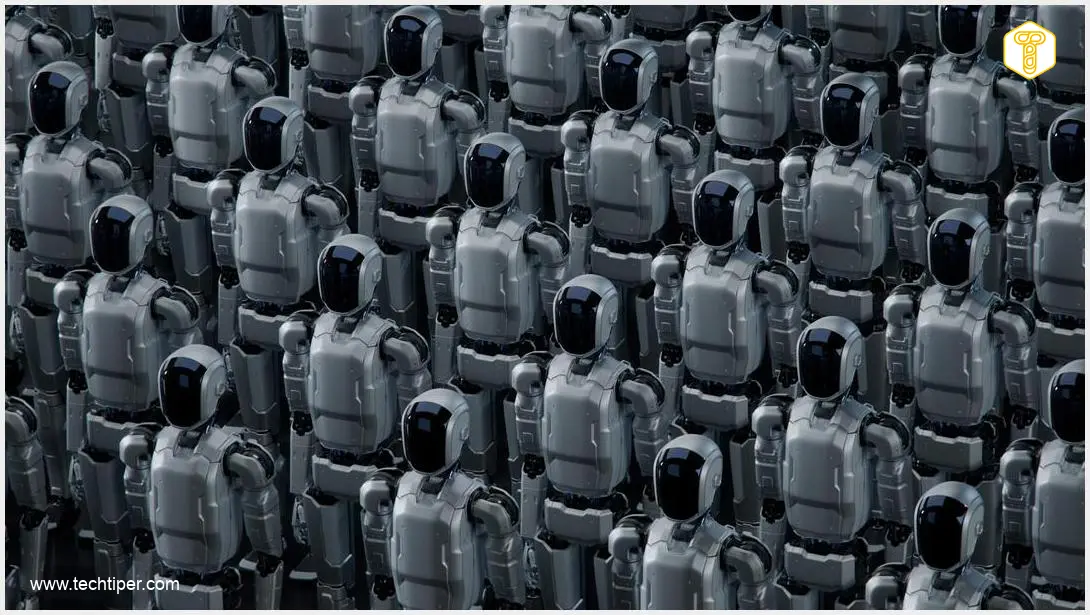
Tesla has officially confirmed that its humanoid robot, Optimus, is now rolling off the production lines at its Fremont factory. This groundbreaking announcement, however, coincided with a stark revelation: the company experienced a 43% drop in net profit.
Production Begins, But Shareholders Bear the Cost
The news of Optimus entering production felt like a monumental achievement when Tesla presented its Q3 2026 earnings. The production line, previously dedicated to manufacturing the Model S and Model X vehicles, was reportedly reconfigured in just 46 days to begin assembling humanoid robots. Elon Musk spoke enthusiastically about “early production on a high-volume line” and the first “production-quality robots.” While these statements sound promising, a closer look at the financial figures accompanying this declaration reveals a challenging landscape.
During the same period, Tesla’s revenues remained relatively stable, hovering around $28 billion. However, the company’s net profit plummeted by 43%, settling at $787 million. Operating profit saw an even sharper decline, contracting by 56%. Capital expenditures, critical for expansion and future projects, more than doubled, reaching $4.7 billion. A significant portion of this substantial investment was allocated directly to scaling up Optimus’s production capabilities and bolstering its underlying AI infrastructure. Consequently, free cash flow decreased by a substantial 62%. Tesla is aggressively investing in a product that, for now, it is not selling to any external customers, but rather deploying within its own factories.
The Path to Market: Analyst Projections and Challenges
Financial analysts at JPMorgan estimate that Tesla might produce between 10,000 and 20,000 Optimus units before it begins supplying robots to external clients. The timeline for these external deliveries has reportedly shifted further into late 2027. A concrete price for the Optimus robot has yet to be announced, though earlier speculation suggested a price point around $20,000 per unit. At this theoretical price, the robot could potentially compete with the cost of human labor in sectors like warehousing and light manufacturing. However, these figures remain speculative at this stage.
As the market for humanoid and service robots grows, companies like Amazon are also investing in child-sized robots for new-era homes, highlighting the diverse applications and intense competition in the robotics space.
Optimus’s Technical Hurdles
Reports from the first half of the year indicated significant challenges with Optimus’s hands and forearms, which reportedly halted assembly processes. Even with official production underway, information suggests that ongoing improvements are still necessary. Notably, the third-generation Optimus hand is considered the most ambitious component of its design. It represents a complex engineering challenge, balancing requirements for dexterity, durability, cost-effectiveness, and the potential for mass production. For instance, achieving sophisticated movements requires advanced engineering, similar to how agile robots achieve cat-like landings. The robot’s battery currently provides approximately eight hours of operational time, but its battery exchange system has not yet been fully validated under real-world industrial conditions.
The Data Dilemma: Fueling AI with Experience
A major obstacle for Optimus’s widespread utility is the acquisition of sufficient training data. Elon Musk has openly admitted that, unlike its extensive fleet of vehicles continuously collecting real-world driving data, Tesla does not possess a vast network of robots accumulating daily experiences. Optimus requires at least ten times more training data than Tesla’s Full Self-Driving (FSD) system to operate effectively in diverse environments. To address this, the company is constructing its own “academies” within its factories and leveraging simulators. However, these efforts are just beginning. Without a wide variety of simulated and real-world situations, the robot’s proficiency remains largely confined to tasks it has been specifically demonstrated or programmed for.
Conclusion: A Costly Investment for the Future
Despite the financial headwinds and technical challenges, the fact remains that Optimus production lines are now operational. The true measure of success will emerge when an external customer commits to purchasing a specific number of these robots to perform defined tasks with measurable efficiency and reliability. Until that point, Optimus remains a costly, internal project focused on building foundational capabilities, with Tesla’s shareholders currently bearing the financial burden of this ambitious endeavor.
Frequently Asked Questions (FAQ)
Tesla Optimus, also known as Tesla Bot, is a humanoid robot developed by Tesla Inc. designed to perform repetitive, mundane, or dangerous tasks, initially in industrial settings and eventually in homes. It aims to leverage Tesla’s expertise in AI and electric vehicle technology for robotic applications.

Tesla’s recent financial results showed a significant drop in net profit (43%) and operating profit (56%), coinciding with the start of Optimus production. This decline is largely attributed to substantial capital expenditures (over doubling to $4.7 billion) directed towards scaling Optimus’s production capabilities and AI infrastructure. The company is investing heavily in a product that is not yet generating external revenue, impacting short-term profitability.
Optimus faces several key challenges, including technical hurdles related to its hardware, particularly the complex design and functionality of its hands and forearms, which require high dexterity and durability. Another significant challenge is the “data dilemma,” as the robot requires vast amounts of real-world and simulated training data—reportedly ten times more than Tesla’s FSD—to achieve broad proficiency across diverse tasks and environments. Validating its battery exchange system in industrial conditions is also a current focus.
According to analyst projections, Tesla may produce 10,000 to 20,000 Optimus units for internal use before beginning external deliveries. The timeline for these external sales has reportedly been pushed back to late 2027, and a concrete price point has not yet been announced.
Source: Tech Times, Own elaboration.
Opening photo: IM Imagery / Shutterstock
About Post Author
