

Contents
The Environmental Cost of the AI Boom: Will Tech Giants Abandon Climate Pledges?
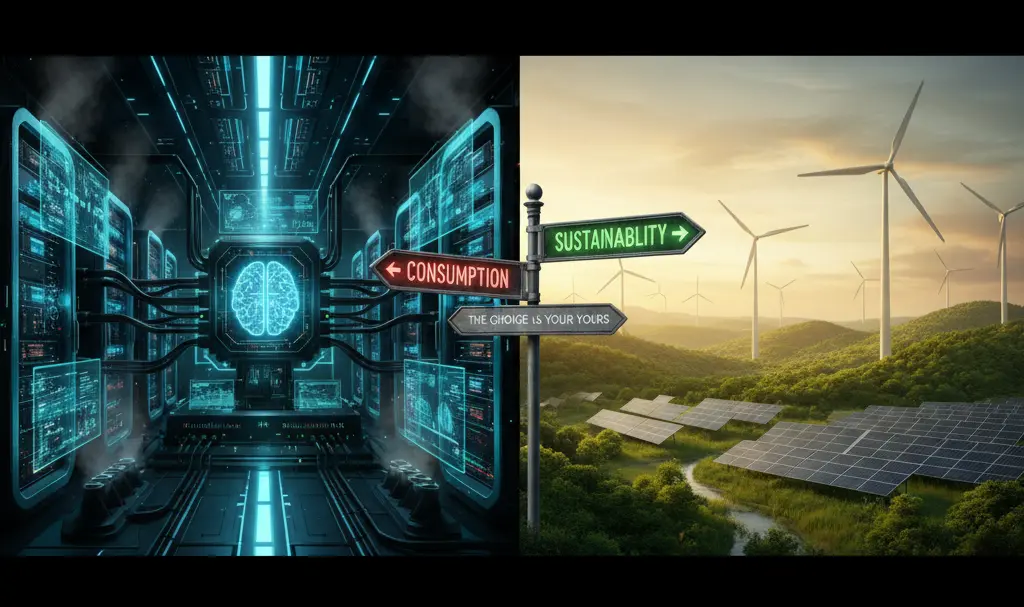
The dynamic development of artificial intelligence (AI) is forcing technology giants to make unprecedented investments in data centers and energy infrastructure. However, a stark reality is beginning to emerge: maintaining ambitious climate goals is actively limiting plans for AI expansion. Microsoft, one of the leading pioneers in the AI race, is currently facing a difficult choice that could shape the future of the technology sector.
Microsoft’s Dilemma: AI Demands vs. 2030 Clean Energy Goals
Internally, Microsoft is engaged in complex discussions regarding one of the most ambitious energy commitments in corporate history. The company had previously declared that by 2030, it would cover 100% of its energy consumption with zero-carbon, clean energy sources.
The core issue is that the rapid evolution and deployment of AI dramatically increase energy demand. Training and running large language models require vast computational power. Microsoft is aggressively expanding the data centers needed to support these AI models, but adhering to strict green energy standards could significantly raise operational costs and slow down the pace of new infrastructure investments.
While the company has not officially confirmed any plans to back out of its 2030 goal, Microsoft representatives have emphasized that the corporation is continuously analyzing its ability to maintain its annual clean energy commitments. This nuanced messaging suggests a far more flexible approach to its earlier, rigid declarations. As internal priorities are debated, some industry observers suggest that the current trajectory cannot hold, hinting at a reality where the AI revolution is canceled, or Microsoft shifts its strategy entirely to accommodate power constraints.
The Industry-Wide Shift: Why Data Centers Are Returning to Natural Gas
Microsoft’s predicament highlights a much broader problem facing the entire technology industry. For years, the market’s biggest players—including Google, Meta, and Apple—have positioned themselves as leaders in climate transformation, investing billions of dollars into renewable energy sources. However, the AI boom is fundamentally changing the operational realities of the sector.
Modern AI data centers are massive facilities that require absolute reliability. The continuous, intensive nature of AI processing, especially following the Nvidia AI trillion-dollar shift toward inference noted in recent GTC announcements, demands stable energy supplies 24 hours a day, 7 days a week. Renewable energy sources like solar and wind are inherently intermittent and often cannot guarantee this level of continuity without massive, prohibitively expensive battery storage systems.
Due to these limitations, technology companies are increasingly viewing natural gas as a necessary transitional bridge.
- High Reliability: Natural gas plants can generate baseload power consistently, regardless of weather conditions.
- Scalability: Gas power can be rapidly scaled up to meet the sudden spikes in demand characteristic of AI computational workloads.
- Infrastructure Readiness: The existing natural gas infrastructure allows tech companies to deploy new data centers faster than waiting for grid-scale renewable projects to be approved and built.
Community Backlash and the Future of AI Infrastructure
A potential retreat by Microsoft from its rigorous 2030 clean energy targets could severely damage the company’s public relations, making it much harder to convince local communities to accept new data center investments. Across various regions globally, residents are increasingly protesting the construction of these massive facilities.
Community concerns typically center around three main issues:

- Excessive Resource Consumption: AI data centers consume vast amounts of electricity and millions of gallons of water for cooling server racks.
- Impact on Utility Rates: The immense local power draw can strain regional grids, potentially leading to higher electricity prices for everyday consumers.
- Environmental Degradation: Relying on fossil fuels like natural gas directly contradicts global efforts to minimize carbon footprints and combat climate change.
As AI continues to embed itself into the fabric of modern technology, the industry must find a sustainable balance. The road ahead requires immense innovation not just in software, but in how we power the machines that run it.
Frequently Asked Questions (FAQ)
Why does AI require so much more energy than traditional computing?
AI models, particularly Large Language Models (LLMs), require massive amounts of computational power for both the training phase and the inference phase (when the AI generates responses). Processing billions of parameters simultaneously requires specialized hardware, like advanced GPUs, which draw significantly more power and require intensive cooling systems compared to traditional data servers.
What was Microsoft’s original 2030 climate goal?
Microsoft committed to becoming carbon negative, water positive, and zero waste by 2030. A key pillar of this pledge was to ensure that 100% of its electricity consumption, 100% of the time, would be matched by zero-carbon energy purchases. The sheer scale of new AI data centers is now putting immense pressure on this goal.
Why can’t tech companies just use solar and wind power for data centers?
AI data centers require a continuous, uninterrupted power supply, known as baseload power. Solar and wind energy are intermittent—they only generate electricity when the sun is shining or the wind is blowing. While battery storage technology is improving, it is currently not advanced or cost-effective enough at the massive scale required to power gigawatt-level data center operations around the clock.
Source: TechCrunch, own elaboration. Opening photo: Gemini
About Post Author
