Contents
Beyond Explosions and Lasers: The Top 6 Scientifically Accurate Sci-Fi Films
Science fiction is often synonymous with futuristic gadgets, laser battles, and interstellar warfare. However, a significant subgenre of sci-fi places a strong emphasis on the “science” rather than solely on the “fiction,” striving for scientific plausibility and accuracy. These films challenge audiences to think, offering intellectual depth alongside thrilling narratives. But which of these scientifically rigorous productions truly stand out?
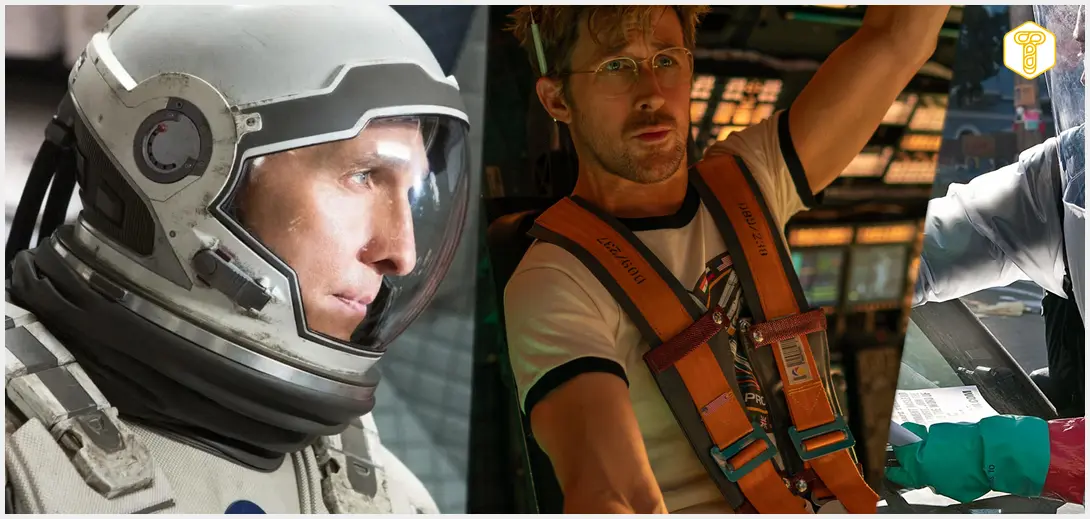
The highly anticipated film Project Hail Mary, a new science fiction blockbuster, aims to join the ranks of genre classics like Interstellar, The Martian, and 2001: A Space Odyssey. According to its creators, the movie’s driving force is its profound focus on scientific principles and their practical, spectacular application. This means audiences can expect to see more physics, chemistry, biology, and mathematics woven into the plot, rather than the typical explosions, alien encounters, and laser skirmishes often associated with the genre.
In anticipation of films like Project Hail Mary, we’ve compiled a list of six exceptional science fiction movies where scientific accuracy plays a leading role, providing both compelling storytelling and a thoughtful exploration of scientific concepts.
The Best Films Where Science Takes Center Stage
Interstellar
Could any list of scientifically accurate sci-fi begin differently? Interstellar is an epic saga about humanity’s journey beyond the known cosmos. A team of astronauts embarks on a perilous voyage through a wormhole to discover a new home for humankind. Starring Matthew McConaughey, Anne Hathaway, and Jessica Chastain, the film captivates with its gripping story and stunning visuals.
However, the true strength of Christopher Nolan’s masterpiece lies in its scientific credibility. Renowned theoretical physicist Kip Thorne served as an executive producer and scientific consultant, ensuring that complex concepts such as black holes, time dilation, and gravity were depicted in a manner consistent with current scientific understanding. This commitment to realism makes Interstellar one of the most accurate and thought-provoking films in its genre.
Interstellar is available on Amazon Prime Video and Netflix.
Contact
Based on Carl Sagan’s seminal novel, Contact tells the story of Dr. Eleanor Arroway (Jodie Foster), a scientist dedicated to searching for signals from extraterrestrial civilizations, who eventually makes a groundbreaking discovery. Accompanied by Matthew McConaughey, among others, the film offers a quieter, more reflective brand of science fiction, prioritizing dialogue and intellectual exploration over high-octane action.
The production faithfully captures the realities of scientific work and the methodologies used in the search for alien life. Furthermore, Contact stands out for its meticulous approach to astrophysics and interstellar communication, presenting a plausible scenario for first contact that resonates deeply with scientific principles.
Contact is available on Apple TV, Amazon Prime Video, and other streaming platforms.
The Martian
No ranking of scientific sci-fi would be complete without the extraordinary tale of an astronaut, Mark Watney (Matt Damon), presumed dead and left behind on Mars. To survive, Watney must rely on his extensive scientific knowledge and ingenuity. The narrative skillfully blends gripping survival tension with a light, at times ironic, tone.
The film’s realistic approach to science is central, showcasing practical applications such as cultivating potatoes in Martian soil and detailing the intricate operations of a NASA mission. The screenplay for The Martian was thoroughly vetted by experts, ensuring that physics, chemistry, and space engineering play a crucial and believable role in Watney’s struggle for survival.
The Martian is available on HBO Max and Disney+.
2001: A Space Odyssey
Stanley Kubrick’s iconic masterpiece is a philosophical odyssey through humanity’s evolution and the vastness of space. Most viewers remember this film for its minimalist narrative, hypnotic soundtrack, and visionary depictions of future technology. Its influence on the sci-fi genre is immeasurable.
Despite being released in the 1960s, the film’s script impresses with its scientific precision, particularly its realistic portrayal of space travel, artificial intelligence, and the conditions of outer space. Many technological solutions depicted in the film proved to be astonishingly accurate predictions, further solidifying its status as a timeless piece of scientifically grounded cinema.
2001: A Space Odyssey is available on Apple TV, Amazon Prime Video, and other streaming platforms.
Contagion
Watching Contagion in 2020 undoubtedly evoked a sense of unease for many. The film realistically portrays a global pandemic spreading at an alarming rate. Featuring an ensemble cast including Matt Damon, Kate Winslet, and Jude Law, the true protagonist is the chillingly accurate depiction of societal chaos and the global response to such an event.
This is arguably one of the most scientifically credible cinematic treatments of an epidemic. The filmmakers collaborated closely with epidemiologists and public health experts, ensuring that the processes of infection, viral mutation, and the actions of medical services are presented with remarkable fidelity to reality, making it a powerful and educational experience.
Contagion is available on Apple TV, Amazon Prime Video, and other streaming platforms.
The Andromeda Strain
Although The Andromeda Strain is over 50 years old, it remains a highly relevant and compelling film. It tells the story of a mysterious extraterrestrial microorganism that poses an existential threat to humanity. A team of scientists races against time to understand its nature and prevent a global catastrophe.
The narrative is driven by a cool, almost documentary-like approach to science. Laboratories, stringent safety protocols, and biological analysis are depicted with painstaking accuracy. The film vividly illustrates how real scientists might react and operate when confronted with an unknown, dangerous organism, offering a fascinating glimpse into emergency scientific response.
The Andromeda Strain is available on Apple TV and Amazon Prime Video.
Project Hail Mary Enters the Game
While the vast majority of science fiction leans more towards “fiction” than “science,” it’s important to recognize the growing number of films that prioritize scientific precision. It’s a testament to the genre’s versatility that it can both entertain and educate.
Who knows, perhaps one day we’ll witness a textbook-perfect film that no scientist could fault. But would such a film still be a fictional narrative, or would it cross into the realm of documentary? For now, let’s focus on what Project Hail Mary offers. Directed by Phil Lord and Christopher Miller, this production has all the elements to become a canonical work in science fiction cinema, promising to blend thrilling adventure with solid scientific grounding.
Frequently Asked Questions (FAQ)
Why is scientific accuracy important in science fiction films?
Scientific accuracy can enhance realism and immersion, making the fantastical elements of a story feel more plausible. It often allows for deeper exploration of complex scientific concepts, potentially inspiring viewers and providing a richer, more thought-provoking experience beyond mere entertainment. It also demonstrates respect for scientific principles, elevating the genre.
How do filmmakers ensure scientific accuracy in their movies?
Filmmakers often consult with leading scientists, physicists, biologists, and other experts during script development and production. These consultants provide guidance on scientific concepts, technological depictions, and plausible scenarios, helping to ground the fictional elements in real-world science. They might also draw from real scientific papers and theories.
Are there any challenges in balancing scientific accuracy with compelling storytelling?
Absolutely. Sometimes, strict adherence to scientific reality can limit dramatic possibilities or make certain concepts too complex for a general audience. Filmmakers must often strike a delicate balance, simplifying or slightly bending scientific truths for the sake of narrative flow, character development, and engaging visuals, without completely sacrificing credibility.
Source: Original content. Opening photo: Warner Bros. Pictures, Sony / press materials, modifications by author.
About Post Author