
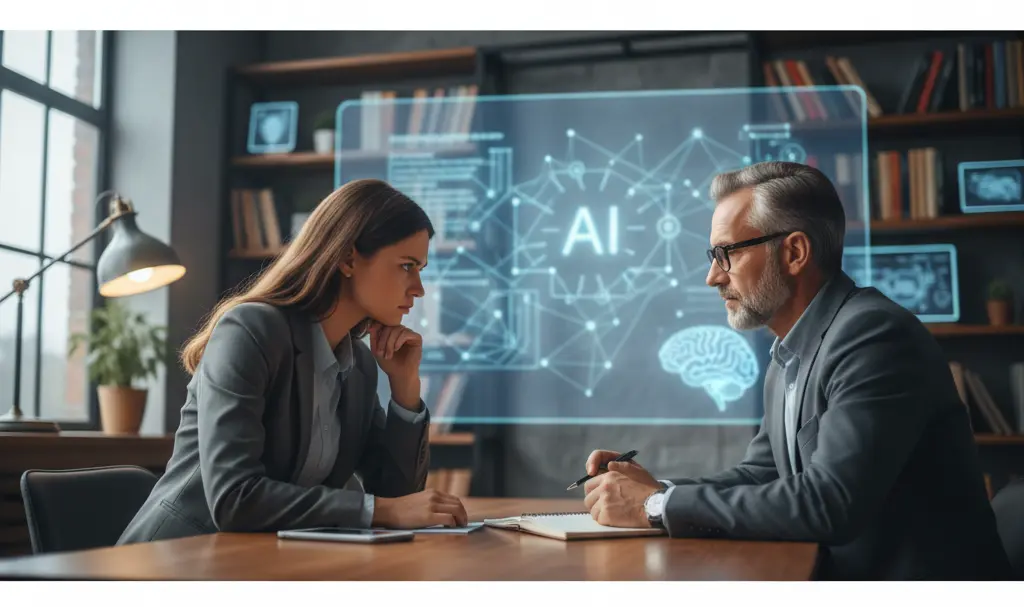
The rapid evolution of artificial intelligence, particularly the widespread adoption of tools like ChatGPT, has fundamentally challenged traditional methods of knowledge verification through written assignments. Faced with a surge in AI-generated submissions, a growing number of educational institutions worldwide are revisiting older assessment techniques, with oral examinations emerging as a key strategy. Educators increasingly believe that these face-to-face interactions are the most effective way to ascertain whether students genuinely comprehend the course material.
Contents
The Resurgence of Oral Exams: A University Response to AI
The increasing prevalence of AI-written work is raising concerns among educators, who note a potential decline in students’ cognitive abilities. This shift is evident in the proactive measures taken by institutions like Cornell University, where biomedical engineering students are now required to defend their written work through direct conversations with their instructors. During these defenses, students do not have access to laptops or notes. “This cannot be ‘done by AI,'” emphasizes Professor Chris Schaffer, highlighting the unique human element of such assessments.
This change stems from consistent observations across numerous universities. Educators report a rising trend of students submitting flawlessly written assignments that they are subsequently unable to articulate or defend in person. This has led many to conclude that these works were likely produced, at least in part, with the assistance of artificial intelligence.
A similar situation is unfolding at the University of Pennsylvania. Professor Emily Hammer explains, “It’s not just about preventing cheating. Students are losing cognitive abilities and creativity.” While official policies often prohibit the use of AI in written assignments, effective tools to enforce these rules have been lacking. Oral examinations, however, provide a quick and direct method to verify a student’s true grasp of the material.
Combating AI Misuse: Why Oral Exams are Making a Comeback
Oral examinations are far from a novel concept; they have long been a staple in educational systems in many countries, including the British university system and the Oxford tutorial model. However, in regions like the United States, written tests and assignments have dominated for many years.
The initial resurgence of oral assessments began during the pandemic, as universities sought innovative ways to curb cheating in remote learning environments. The trend significantly accelerated following the public release of ChatGPT in late 2022, underscoring the urgency for new verification methods in the age of generative AI. You can learn more about how AI tools are evolving, including ChatGPT file management updates and new features, which continuously reshape the digital landscape.
At New York University (NYU), instructors are increasingly integrating presentations, in-class discussions, and individual consultations into their assessment strategies. Clay Shirky, who oversees AI development in education at NYU, states, “I need to look a student in the eye and ask: Do you really understand this?”
Beyond Traditional Oral Exams: AI-Powered Assessment
Some institutions are taking an even more advanced approach, leveraging AI itself for examination purposes. At NYU, Professor Panos Ipeirotis has developed a system where students engage in a conversation with a voice bot that simulates an instructor. This AI program probes into project specifics and reacts dynamically to student responses.
“We wanted to check if the student truly knew what their team had accomplished, or if they merely ‘rode along’ or delegated everything to AI,” Ipeirotis clarifies. This innovative use of AI in assessment highlights the evolving strategies in education, mirroring the complexities seen in other fields, such as discussions around ChatGPT in emergency room discharge summaries and hospital responses to AI in healthcare.
While effective, the implementation of new assessment methods like oral exams isn’t without its challenges. Oral examinations can be a source of significant stress, particularly for shy individuals or those grappling with social anxiety.
However, many educators observe that one-on-one conversations often allow them to “unearth” knowledge from students who might otherwise remain silent in class settings. “Sometimes, this is precisely that breakthrough moment,” notes Carolyn Aslan from Cornell.
Although many students initially approach oral exams with trepidation, a significant number eventually change their perspective. Olivia Piserchia, a Cornell student, admits, “It’s stressful, but it helps you understand what you genuinely don’t know.” She adds that conversing with an instructor compels real preparation and teaches students to articulate their thoughts clearly—a valuable skill beyond academia.
Frequently Asked Questions (FAQ)
Why are universities shifting back to oral exams?
Universities are reverting to oral exams primarily to combat the misuse of AI tools like ChatGPT in written assignments. Oral assessments provide a direct way for instructors to verify a student’s authentic understanding of the material, which is increasingly difficult with AI-generated submissions.
How do oral exams help prevent AI cheating?
Oral exams require students to articulate their knowledge in real-time without the aid of external tools or notes. This direct interaction allows instructors to gauge the depth of comprehension, critical thinking, and communication skills, which are difficult for AI to fake in a live, interactive setting.
Are there any downsides to implementing oral examinations?
Yes, oral exams can be stressful for students, especially those with shyness or social anxiety. They can also be more time-consuming for instructors to administer compared to traditional written exams for large classes. However, proponents argue the benefits in verifying genuine understanding outweigh these challenges.
What role does AI play in the future of academic assessment beyond creating content?
Beyond content generation, AI is also being explored as a tool for assessment itself. Some universities are developing AI-powered bots that can conduct interactive oral examinations, asking detailed questions and evaluating student responses. This allows for scalability while still focusing on verifying deep understanding and critical thinking skills.
Source: ABC News
Opening photo: Gemini
About Post Author
