Contents
Xiaomi HyperOS 4: A Glimpse into the Next-Generation Ecosystem
Xiaomi HyperOS 4 is being heralded as the next significant advancement in the company’s unified ecosystem, designed to seamlessly connect smartphones, tablets, and a myriad of other smart devices. While much of the information currently pertains to the Chinese beta program, early insights reveal an ambitious vision for performance, aesthetics, and artificial intelligence. Here’s a comprehensive look at what HyperOS 4 aims to offer and what we know so far.
Enhanced Speed, Fluidity, and Performance
Xiaomi’s presentation of HyperOS 4 commenced with a strong emphasis on under-the-hood improvements that promise a smoother, more efficient user experience. The manufacturer has undertaken a comprehensive redesign and optimization of the system environment. Key declarations include a projected 14.4% reduction in executed instructions and a notable 27.2% increase in available free memory after eight hours of continuous use.
These optimizations are expected to translate into tangible benefits for users, such as faster application launch times, especially after extended device operation, and a significant reduction in frame drops or system stutters. Xiaomi also indicated minor improvements in battery life and a distinct acceleration in loading thumbnail previews within the Gallery application.
A Fresh Visual Identity: The New Xiaomi System Look
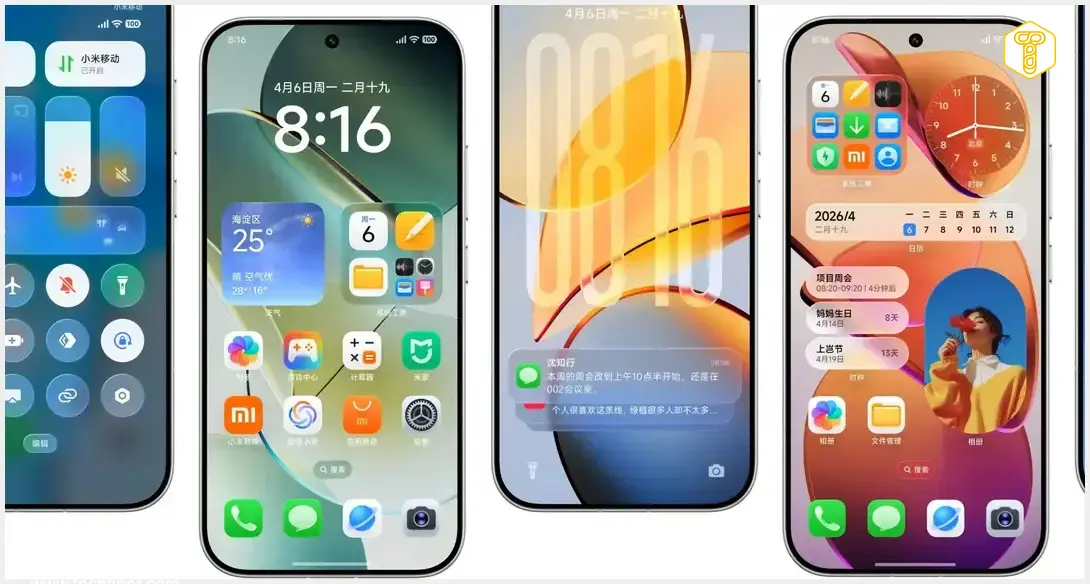
One of the most immediately noticeable changes in HyperOS 4 is anticipated to be a new visual theme dubbed “Soft Light Glass.” Xiaomi is adopting a design philosophy that incorporates translucent elements, layered surfaces, and subtle lighting effects, all contributing to a more “glass-like” and sophisticated system appearance.
These aesthetic enhancements are slated to extend across core interface elements, including the lock screen, notification panel, and home screen. Users can look forward to more intuitive widget and folder management. Furthermore, the device control center is being revamped to simplify the pinning of frequently used hardware and streamline switching between different smart home setups within the Xiaomi ecosystem.
It’s worth noting that the full extent of these visual effects may be contingent on the hardware capabilities of individual device models. This implies that older devices might not receive every interface element in its identical, most advanced form, ensuring optimal performance across a diverse range of hardware.
Artificial Intelligence Integrated into Applications
HyperOS 4 is set to significantly expand AI functionalities within its native applications. The voice recorder, for instance, is expected to generate outlines and summaries of recordings, pinpoint key segments, and automatically skip silent periods. Similarly, note-taking tools are slated to gain capabilities that help transform raw entries into actionable insights and task lists.
Xiaomi is also hinting at improved voice input features, encompassing advanced transcription and translation capabilities. These functions would be particularly beneficial for professionals who regularly work with conversations, notes, and documents. However, their actual availability outside of China will require separate confirmation. For more on advanced Android features, explore Android 17 Features and Release Date.
Super XiaoAI 2.0 and Advanced Automation
A cornerstone of this new system version appears to be Super XiaoAI 2.0, an enhanced AI assistant powered by the MiMo language model. In its “Expert Mode,” this assistant is designed to execute more complex commands across multiple applications and devices, moving beyond the limitations of single-command interactions.

Anticipated capabilities include voice-activated task automation, document handling, presentation creation, advanced “Deep Research” functions for information gathering, and even website generation. This positions Super XiaoAI 2.0 as a highly versatile personal and professional assistant within the HyperOS ecosystem.
HyperOS 4 Beta Rollout Schedule (China)
The initial testing phases for HyperOS 4 in China are reported to be rolled out in stages. Please note that the device names listed below might be early designations or specific to the initial Chinese beta program, and actual product names or global availability may vary.
First Wave: August 14
- Xiaomi 17 Ultra
- Xiaomi 17 Ultra Leica Edition
- Xiaomi 17 Pro Max
- Xiaomi 17 Pro
- Xiaomi 17
- REDMI K90 Pro Max
- REDMI K90 Pro Max Champion Edition
- REDMI K90
- Xiaomi Pad 8 Pro
- Xiaomi Pad 8
Second Wave: August 27
- Xiaomi 17 Max
- Xiaomi 17T Pro
- Xiaomi 17T
- Xiaomi 15 Ultra
- Xiaomi 15 Ultra Dual Satellite Edition
- Xiaomi 15S Pro
- Xiaomi 15 Pro
- Xiaomi 15
- REDMI K90 Max
- REDMI K90 Supreme Edition
Third Wave: September 17
- REDMI K100 Pro Max
- REDMI K100 Pro
- REDMI K80 Pro
- REDMI K80 Supreme Edition
- REDMI K80
- Xiaomi MIX Flip 2
- Xiaomi Pad 7 Ultra
- Xiaomi Pad 7S Pro 12.5
Certain advanced features, including Super XiaoAI 2.0, Deep Research, code and number memory, Inspiration Ball, and AI Calling, are expected to be progressively introduced to testers through subsequent over-the-air (OTA) updates.
When HyperOS 4 Will Be Available Outside China
Currently, Xiaomi’s global website acknowledges an Android 17 Developer Preview program exclusively for specific devices: Xiaomi 17, Xiaomi 17 Ultra, Leica Leitzphone powered by Xiaomi, and Xiaomi 15T Pro. The manufacturer explicitly states that this test version may lead to stability issues and is not intended for daily use. It’s important to note that Android 17 is a future version of Android, and specific integration details with HyperOS 4 for global markets are yet to be fully revealed. For comparisons with other upcoming interfaces, see Samsung One UI 9 and Android 17 Development.
As of now, Xiaomi has not disclosed any definitive timelines for a global beta or the stable release of HyperOS 4 in markets beyond China. Users outside the Chinese ecosystem will need to await official announcements for availability in their regions.
Frequently Asked Questions (FAQ)
Xiaomi HyperOS 4 is presented as the next major evolution of Xiaomi’s operating system, designed to create a unified and efficient experience across its diverse ecosystem of smartphones, tablets, and other smart devices, with a strong focus on performance, aesthetics, and advanced AI features.
HyperOS 4 aims for significant performance enhancements, including a reported 14.4% reduction in executed instructions and a 27.2% increase in free memory after extended use. These optimizations are expected to result in faster app loading, smoother operation, and improved battery efficiency.
The new “Soft Light Glass” visual theme and other UI enhancements in HyperOS 4 are anticipated to be widely available. However, the full extent and advanced effects of these visual features may depend on the hardware capabilities of individual device models, meaning older devices might have a slightly adapted experience.
Currently, Xiaomi has not announced specific timelines for a global beta or the stable release of HyperOS 4 for markets outside of China. The information available primarily concerns the Chinese beta program, and global users should await official regional announcements.
Source: TheTechOutLook, HyperOS, Xiaomi Community.
Opening photo: HyperOS, Xiaomi / screenshot
About Post Author