Contents

The Quest for Longer Lasting Samsung Galaxies: A 9600 mAh Experiment
In an era where smartphones with battery capacities exceeding 10,000 mAh are becoming increasingly common, Samsung continues to equip its flagship devices with comparatively smaller batteries. For instance, the standard Samsung Galaxy S26 features a 4300 mAh battery, a capacity that some users find surprisingly low. This disparity has prompted an innovative internet creator to demonstrate that a different, more powerful battery future is entirely possible for Samsung devices.

The Audacious Experiment: Upgrading a Samsung Galaxy Trifold
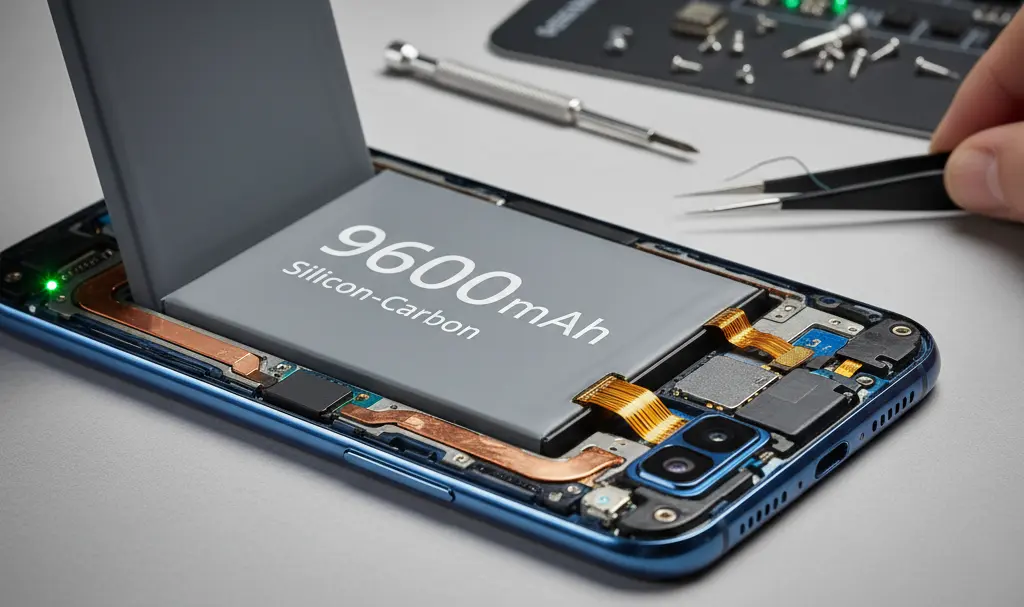
The subject of this groundbreaking experiment was a Samsung Galaxy Trifold, a device originally designed with a 5600 mAh battery. The ambitious goal, undertaken by the creator behind the “Strange Parts” YouTube channel, was to perform a “transplant” – replacing the original battery with a significantly more powerful silicon-carbon unit, aiming for an impressive 9600 mAh capacity.
Implementing Advanced Battery Technology
To achieve this, the creator utilized a silicon-carbon battery model similar to those found in devices like the Honor Magic V6. While the project received sponsorship, the successful integration of such a high-capacity battery into a modern smartphone’s often intricate and sealed design remains a significant technical feat.
Overcoming Challenges to Prove a Point
The path to success was not without its hurdles. The initial attempt to integrate the new battery into the Galaxy Trifold resulted in a malfunction. However, an ex-engineer from Silicon Valley, known for their expertise, persevered. Their second attempt proved successful, unequivocally demonstrating that, from a purely technical standpoint, Samsung could indeed offer smartphones with substantially larger battery capacities than it currently does.
Why Aren’t Samsung Flagships Using Silicon-Carbon Batteries Already?
The primary reason Samsung’s current flagship devices do not feature silicon-carbon batteries lies in its supply chain. Samsung exclusively uses batteries produced by its own division, Samsung SDI. As of now, Samsung SDI has not yet incorporated silicon-carbon battery technology into its commercial offerings.
The Future of Samsung’s Battery Technology
However, this situation is poised for change. In late February 2026, Samsung SDI officially confirmed that it is actively developing its own silicon-carbon battery technology. This strategic move could signal a major shift in Samsung’s battery strategy, potentially becoming a significant marketing highlight for future releases like the Galaxy S27 series in 2027 or the Galaxy S28 series in 2028.
What are Silicon-Carbon Batteries?
Silicon-carbon batteries represent a significant advancement over traditional lithium-ion batteries. They integrate silicon into the anode material alongside carbon, which allows for:
- Higher Energy Density: They can store more energy in a smaller and lighter package.
- Faster Charging: Improved material science often allows for quicker charge cycles.
- Longer Lifespan: Reduced degradation over time, leading to a longer overall battery life.
These advantages translate directly into longer battery life for smartphones without increasing their physical size or weight significantly, addressing a common desire among mobile users.
The Potential Impact on Samsung’s Flagships
The adoption of silicon-carbon batteries by Samsung could dramatically enhance the user experience of its flagship devices. Imagine a Galaxy S series phone that can comfortably last two days on a single charge, or offer extended heavy usage without needing a midday top-up. This would not only address a frequent complaint from power users but also significantly boost Samsung’s competitive edge in the premium smartphone market.
Frequently Asked Questions (FAQ)
What was the main purpose of the Samsung Galaxy battery experiment?
The experiment aimed to prove that Samsung smartphones could technically accommodate much larger battery capacities by successfully integrating a 9600 mAh silicon-carbon battery into a Samsung Galaxy Trifold, challenging Samsung’s current battery strategy.
Which Samsung phone model was used in the experiment?
A Samsung Galaxy Trifold, which originally had a 5600 mAh battery, was used as the base device for the battery transplant experiment.
Why doesn’t Samsung currently use high-capacity silicon-carbon batteries in its flagships?
Samsung primarily relies on its own Samsung SDI division for battery production, and Samsung SDI has not yet commercially offered silicon-carbon battery technology. However, they are actively developing it.
When might Samsung introduce silicon-carbon batteries in its smartphones?
Samsung SDI confirmed in February 2026 that they are working on silicon-carbon batteries. This technology might be integrated into the Galaxy S27 series in 2027 or the Galaxy S28 series in 2028.
Source: Strange Parts / YouTube, SamMobile. Opening photo: Gemini
About Post Author