

Contents
Amazon’s Zoox Expands Robotaxi Testing to Dallas and Phoenix
Amazon’s venture into autonomous transportation is gaining significant momentum. Zoox, its dedicated self-driving technology subsidiary, has announced the expansion of its robotaxi testing operations to two major U.S. cities: Dallas, Texas, and Phoenix, Arizona. This strategic move underscores Zoox’s commitment to advancing its autonomous driving capabilities and broadening its reach across varied urban landscapes.
Zoox’s Strategic Expansion of Autonomous Vehicle Tests
Zoox, an Amazon-owned company focused on developing and deploying a network of robotaxis, confirmed that initial testing phases have begun in both Dallas and Phoenix. These new locations will first see a limited fleet of specially equipped SUVs operating on public roads. Crucially, each vehicle will have a human safety driver behind the wheel, ready to take control if necessary. This phased approach allows for rigorous data collection and system validation under real-world conditions.
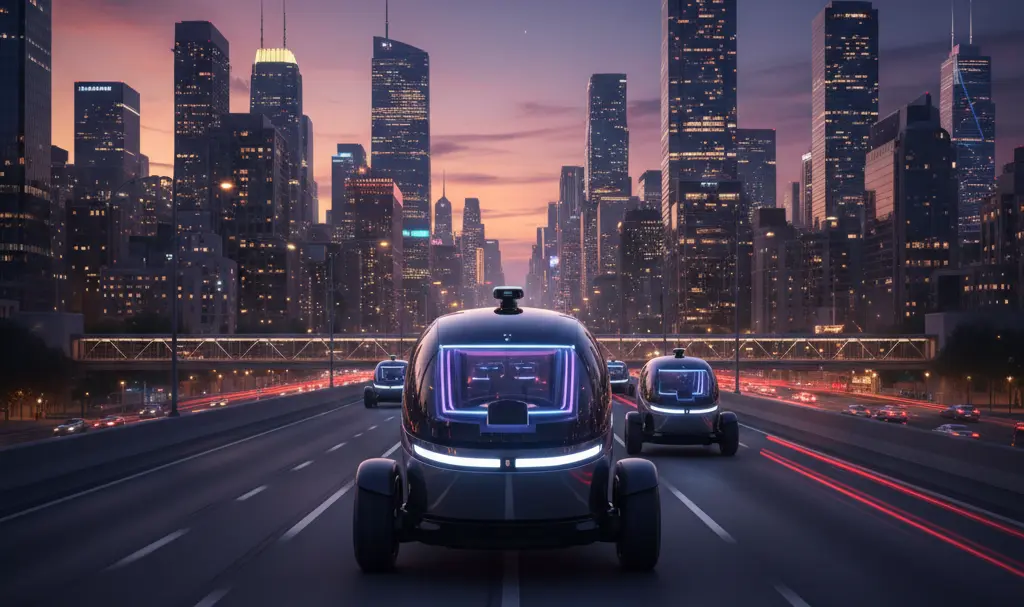
The first critical step involves comprehensive mapping of the streets and road infrastructure in both cities. This data is vital for Zoox’s autonomous systems to accurately perceive and navigate their environment. Once sufficient data is gathered and the systems demonstrate robust performance, Zoox plans to introduce its distinctive, purpose-built robotaxis. These vehicles feature a unique, symmetrical design and are engineered from the ground up without a traditional driver’s cockpit, embodying the true vision of a fully autonomous transportation service.
Zoox has previously announced its expansion into cities like San Francisco and Las Vegas, where its fully driverless robotaxis are already operating.
Why Dallas and Phoenix? Strategic Environmental and Road Condition Testing
The selection of Dallas and Phoenix for the latest round of testing is highly strategic and not coincidental. These cities present unique environmental and road conditions that differ significantly from Zoox’s existing testbeds. By diversifying its testing locations, Zoox aims to refine its autonomous technology against a broader spectrum of challenges:
- Phoenix: Engineers will focus on evaluating the performance of sensors and battery systems in extreme temperatures and dusty environments. This includes assessing how the technology withstands intense desert heat, which can significantly impact electronic components and battery life.
- Dallas: This metropolitan area will serve as a crucial testbed for refining Zoox’s artificial intelligence (AI) systems within a more complex road network. Engineers will analyze how the autonomous vehicles handle intricate intersections, varied traffic patterns, and unpredictable weather conditions, which are characteristic of the Dallas urban landscape.
This targeted approach ensures that Zoox’s technology is robust, reliable, and adaptable to a wide array of operational scenarios before full-scale deployment.
The Growing Competition in the Robotaxi Market
Zoox’s expansion unfolds amidst an increasingly competitive landscape within the autonomous transportation industry. The Amazon-owned company is already conducting extensive tests of its autonomous technologies in numerous U.S. cities, including Seattle, Austin, Miami, Los Angeles, Atlanta, and Washington D.C. Furthermore, Zoox’s fully operational robotaxi services are successfully running in Las Vegas and San Francisco. According to company data, over 300,000 passengers have utilized its ride-hailing service since its launch in these cities, demonstrating significant public acceptance and operational viability.
The race for dominance in the robotaxi sector is intensifying, with several key players vying for market share:
- Waymo: A subsidiary of Alphabet (Google’s parent company), Waymo currently maintains a leading position in the U.S. autonomous vehicle market, with extensive operations in cities like Phoenix, San Francisco, and Los Angeles.
- Tesla: While primarily known for its electric vehicles, Tesla is actively developing its full self-driving (FSD) software, with CEO Elon Musk often highlighting its potential for a future robotaxi network.
- Chinese Platforms: Major Chinese companies are also making significant strides in the autonomous transport space, with platforms like Apollo Go (Baidu), Pony.ai, and WeRide developing and deploying their own robotaxi services, primarily within China. These companies represent a formidable force in the global autonomous driving arena.
This fierce competition drives rapid innovation and underscores the transformative potential of autonomous transportation for urban mobility.

Frequently Asked Questions (FAQ)
What is Zoox?
Zoox is an autonomous vehicle company acquired by Amazon. It specializes in designing, developing, and operating fully autonomous robotaxis for ride-hailing services.
Where is Zoox currently testing its robotaxis?
Zoox is expanding its testing to Dallas, Texas, and Phoenix, Arizona. It also conducts tests in Seattle, Austin, Miami, Los Angeles, Atlanta, and Washington D.C. Fully operational robotaxi services are available in Las Vegas and San Francisco.
Why are human safety drivers used in the initial testing phase?
During the initial testing phase, human safety drivers are present to monitor the autonomous system’s performance and take manual control if unexpected situations arise. This ensures safety while the technology gathers data and refines its capabilities in new environments.
How do Zoox’s custom robotaxis differ from standard cars?
Zoox’s custom robotaxis are designed without a traditional steering wheel or driver’s cockpit. They feature a unique symmetrical design, allowing them to travel in either direction without needing to turn around, optimizing urban mobility.
Who are Zoox’s main competitors in the robotaxi market?
Key competitors in the autonomous vehicle and robotaxi market include Waymo (Alphabet/Google), Tesla (with its Full Self-Driving software), and several prominent Chinese platforms like Apollo Go (Baidu), Pony.ai, and WeRide.
Source: CNBC, internal compilation. Opening photo: Gemini
About Post Author
