

Contents
The Global RAM Crisis Deepens as Helium Supplies Dwindle
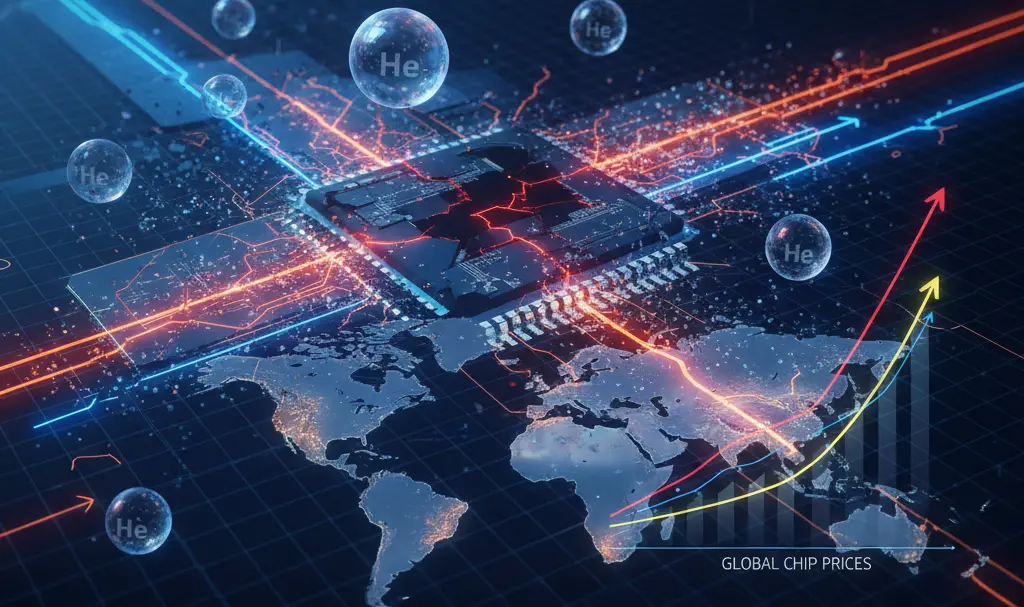
The ongoing global RAM (Random Access Memory) crisis is poised to intensify, potentially leading to further price hikes for memory modules. A critical shortage of helium, a gas commonly known for its recreational use in altering voice pitch, is now threatening the semiconductor industry’s supply chain.
The Unexpected Role of Helium in RAM Production
While not a direct component of RAM chips, helium is indispensable in the semiconductor manufacturing process, specifically for cooling the delicate silicon wafers used to create these memory modules. This cooling process is crucial for maintaining the integrity of the wafers during various manufacturing stages.
The current supply chain for this vital gas faces significant geopolitical challenges. A major source of helium for South Korea, a key player in global RAM production, is Qatar. Qatar’s proximity to Iran, with the politically sensitive Persian Gulf separating them, introduces substantial instability into the supply route.
Force Majeure Declared by Qatar Energy
On March 4, 2026, Qatar Energy, the company responsible for helium exports, declared force majeure. This contractual clause, meaning “superior force” in French, allows a party to be freed from its contractual obligations, particularly concerning the supply of raw materials to other entities, due to unforeseen circumstances beyond their control. This declaration immediately impacted global helium availability, sending ripples across industries reliant on the gas.
It’s important to note that helium is not a primary product but rather a byproduct extracted during natural gas mining, making its supply inherently linked to the dynamics of the natural gas industry.
Broader Supply Chain Vulnerabilities
While SK Hynix, one of the world’s leading RAM manufacturers, has reportedly secured alternative helium sources, the broader semiconductor supply chain in South Korea faces additional concerns. Attention is also turning to bromine, another critical element used in the production of semiconductor wafers. A staggering 98% of Korea’s bromine supply originates from Israel, introducing another layer of geopolitical risk given the ongoing regional conflicts.
Taiwan’s Energy Dilemma
Taiwan, a global hub for semiconductor manufacturing, is actively working to secure its supply of Liquefied Natural Gas (LNG). Following the shutdown of its last nuclear reactor, LNG now accounts for a substantial 50% of the nation’s energy supply. A significant portion – approximately one-third – of Taiwan’s state-controlled LNG imports previously came from Qatar, until Qatar Energy invoked force majeure, further complicating global energy markets and, indirectly, the semiconductor industry.
The Geopolitical Shadow Over RAM Prices
While specific supply issues might appear to be temporarily managed, the overall situation remains dynamic and highly susceptible to external factors. The future trajectory of the RAM crisis, and consequently global memory prices, is deeply intertwined with the duration and evolution of geopolitical tensions, particularly those involving Israel, the United States, and Iran. These conflicts create a volatile environment that can swiftly impact critical raw material supplies and energy markets worldwide, ultimately affecting consumer prices for electronics globally.
Frequently Asked Questions (FAQ)
What is causing the current RAM crisis to accelerate?

The acceleration of the RAM crisis is primarily driven by a critical shortage of helium, an essential gas for cooling silicon wafers during semiconductor manufacturing. Geopolitical tensions in the Middle East are disrupting the supply chain of helium and other vital raw materials.
How is helium used in RAM production if it’s not a direct component?
While not directly found in RAM chips, helium is crucial for cooling silicon wafers during the various stages of semiconductor manufacturing. This cooling process is vital to prevent damage and ensure the integrity of the delicate components being formed on the wafers.
What is “force majeure” and how does it affect the supply chain?
“Force majeure” is a contractual clause that frees a party from its obligations due to unforeseen circumstances beyond its control, such as natural disasters, wars, or extreme political instability. Qatar Energy invoked this clause, significantly disrupting the global supply of helium and impacting countries like South Korea and Taiwan that rely on it.
Are there other raw material concerns besides helium?
Yes, beyond helium, there are concerns about the supply of bromine, which is used in semiconductor wafer production. South Korea, a major producer, imports 98% of its bromine from Israel, adding another layer of geopolitical risk to the supply chain.
How do geopolitical conflicts impact RAM prices?
Geopolitical conflicts, particularly in regions critical for raw material extraction and transport (like the Middle East), create instability in supply chains. This instability can lead to shortages of essential materials, increase transportation costs, and ultimately drive up manufacturing expenses, which are then passed on to consumers in the form of higher RAM prices.
Source: Nikkei Asia. Opening photo: Gemini.
About Post Author
