

Contents
Unraveling the Secrets of Dinosaur Incubation: A Glimpse into Oviraptor Nests
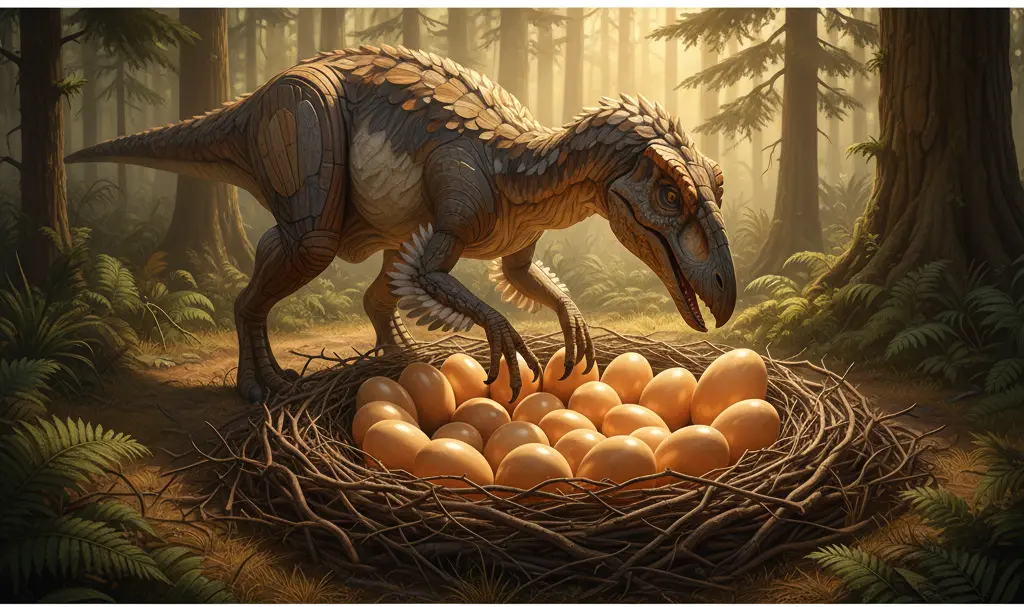
Even without fossilized dinosaur remains on their island, scientists in Taiwan have made significant strides in understanding these prehistoric reptiles. By constructing a life-sized Oviraptor nest and conducting a series of meticulous experiments, researchers have uncovered how these creatures likely incubated their eggs millions of years ago. This innovative approach provides crucial insights into the reproductive strategies of dinosaurs during the Late Cretaceous period.
Reconstructing an Ancient Nursery: The Oviraptor Nest Experiment
To simulate the natural incubation process, researchers meticulously recreated a 1:1 scale model designed to mimic the body of an adult Oviraptor. This intricate model was built using a wooden and styrofoam frame, carefully layered with cotton, bubble wrap, and fabric. These materials were chosen to accurately replicate the soft tissues of the ancient animal, ensuring a realistic thermal interaction with the eggs.
The eggs themselves were crafted from resin and arranged in two concentric rings. This specific arrangement mirrored fossilized clutches of Heyuannia huangi, a well-documented Oviraptor species that lived approximately 70 to 66 million years ago in what is now China. Heyuannia huangi was a relatively modest dinosaur, measuring around 1.5 meters (5 feet) in length and weighing close to 20 kilograms (44 pounds).
The design of the reconstructed nest suggested a semi-open incubation strategy, where the eggs were partially buried in the ground. Their unique arrangement—positioned in a ring with the blunt ends pointing inward—created a distinctive “crown” around the central adult. In this configuration, the incubating Oviraptor would primarily make direct thermal contact with the eggs in the outer ring, leaving the inner circle of eggs less directly influenced by the parent’s body heat.
The Dynamics of Dinosaur Incubation: Body Heat Versus Sunlight
A series of tests was conducted to measure the temperature distribution within the nest under various conditions. Researchers explored scenarios with and without the “incubating” adult model, and under differing environmental temperatures. The results provided compelling evidence of how Oviraptors managed their nests.
During cooler ambient temperatures, the presence of the adult model significantly impacted the egg temperatures. The eggs in the outer ring, in direct contact with the simulated parent, could exhibit a temperature difference of up to approximately 6°C (10.8°F) compared to other eggs. This substantial temperature gradient suggests a potential for asynchronous hatching, meaning chicks from warmer eggs might develop and hatch earlier than those from cooler eggs.
Conversely, in warmer environmental conditions, these temperature disparities notably decreased, dropping to around 0.6°C (1.1°F). This finding indicates that intense solar radiation played a crucial role in equalizing temperatures across the entire nest. The research team concluded that while Oviraptors did utilize their body heat for incubation, sunlight was a pivotal factor in maintaining stable nest temperatures. These dinosaurs were likely “co-incubators,” combining their own warmth with environmental heat sources, similar to how modern-day turtles or crocodiles incubate their eggs in semi-open nests with exposed clutches.
Future Insights and Research Limitations
The simulations and experiments conducted suggest that the efficiency of incubation in these dinosaurs was considerably lower than that observed in modern birds. Nevertheless, it was still sufficient to ensure reproductive success under the prevailing conditions of the Late Cretaceous period.
It is important to acknowledge the inherent limitations of this research. Significant uncertainties remain regarding the precise climatic conditions in which Oviraptors lived. Furthermore, the experiment focused on a single nest type and a specific Oviraptor species. It is plausible that other members of this diverse group of dinosaurs might have employed different nesting strategies or constructed their nests in varied ways. The detailed findings of this study were published in the esteemed journal Frontiers in Ecology and Evolution.

Frequently Asked Questions (FAQ)
Why is it challenging to study dinosaur incubation without fossilized nests?
Fossilized dinosaur nests with intact eggs and parental remains are incredibly rare, making direct observation of incubation behaviors nearly impossible. Scientists often rely on indirect evidence, comparative anatomy with modern birds and reptiles, and innovative experimental reconstructions like this study to infer how dinosaurs incubated their eggs.
What was the most significant finding regarding Oviraptor incubation?
The study revealed that Oviraptors likely used a combination of their own body heat and solar radiation to incubate their eggs. While parental warmth contributed, intense sunlight played a critical role in equalizing nest temperatures, especially in warmer environments, making them “co-incubators” rather than solely relying on metabolic heat.
How did the Oviraptor nest experiment provide insights into asynchronous hatching?
In cooler conditions, the model adult created a significant temperature difference (up to 6°C) between the outer and inner rings of eggs. This thermal gradient suggests that eggs in the warmer outer ring might have developed faster, leading to asynchronous hatching—where chicks emerge at different times from the same clutch.
What are the broader implications of this research for our understanding of dinosaur reproductive biology?
This research underscores the diversity of reproductive strategies among dinosaurs, demonstrating that some groups, like Oviraptors, employed incubation methods more akin to modern reptiles than to modern birds. It highlights the complex interplay of biological and environmental factors that influenced dinosaur nesting success and provides a foundation for future studies to explore climatic effects and species-specific variations in greater detail.
Source: Discover Magazine, Science Daily, Earth, Frontiers
Opening photo: KtD / Adobe Stock
About Post Author
