

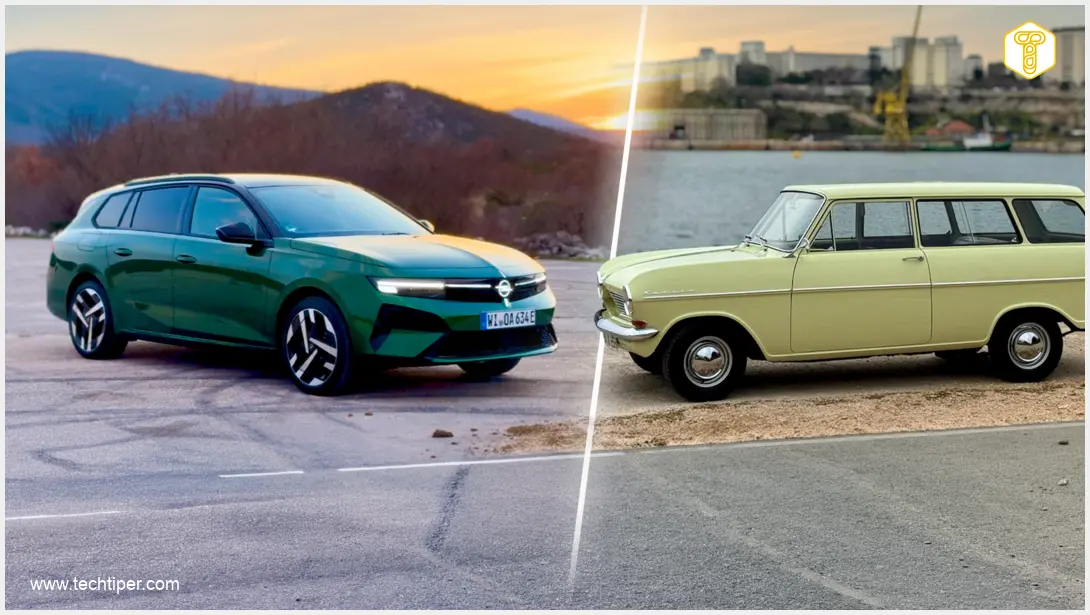
The New Opel Astra Review
-
Exterior Design & Headlights
-
Electric Version Dynamics
-
Hybrid Version Performance & Efficiency
-
Interior & Ergonomics
-
Driving Experience
-
Electric Version Competitiveness
A Solid Update, But Lacks Spark
The refreshed Opel Astra brings modern design, excellent headlights, and practical ergonomics. While hybrid versions offer good efficiency and a mature drive, the electric model’s modest dynamics and charging speeds, coupled with its price, make it less competitive. It’s a very good, conservative car that does everything well but nothing exceptionally, struggling to be an “obvious choice” in its segment.
Advantages
- Brilliant Intelli-Lux HD headlights
- Modern exterior design
- Excellent ergonomics with physical buttons
- Stable and predictable handling
- Efficient hybrid powertrain
- Comfortable Intelli-Seats
- Wide range of powertrains (including diesel)
Disadvantages
- Modest dynamics in the electric version
- High price and average charging speed for electric model
- Interior material quality is average
- 3-cylinder engine sound under acceleration
- Lacks distinct character or “wow” factor
- Conservative update, not a major revolution
Contents

The New Opel Astra: A Modern Facelift Meets Classic Heritage
The new Opel Astra is one of those vehicles that, theoretically, “should be important.” The compact car segment in Europe still holds immense significance, and the Astra itself has been a cornerstone for decades. Recently, this model underwent a significant facelift. Consequently, I traveled to Croatia for the premiere test drives to experience the refreshed Astra firsthand.
Opel covered the costs associated with attending this event. However, the company exercised no influence over the content of this review.
Croatia, a Marina, and… an Astra on the Roof
The entire trip began in Split, where upon landing, we were transported to a truly beautiful marina. It was immediately clear that Opel aimed for a “wow” factor—dozens of new Astras were meticulously arranged in one location, showcasing various powertrain versions and colors.
The most absurd (and simultaneously brilliant) moment? The car presentation took place… on the roof of a building. I have no idea how these vehicles managed to get there, but it certainly made an impression.
The Refreshed Opel Astra: What’s Truly New?
Observing the new Astra in person, its distinct character is undeniable. The front fascia indeed appears more modern—the narrow Vizor grille, illuminated logo, and characteristic light signature create a positive impression, especially in the evening.
Yet, this remains the same Astra L that we’ve known since 2021. The platform, proportions, and overall concept largely remain unchanged. This is more of a facelift than a new generation, even if Opel endeavors to present it with grander rhetoric.
The most significant new feature is the Intelli-Lux HD headlights. And here, credit must be given—this is not merely marketing. Over 50,000 pixels truly make a difference. During night driving, the system performed impressively. It precisely cut out other vehicles, avoided dazzling oncoming drivers, while simultaneously providing excellent road illumination. Finally, we’ve reached a point where drivers can effectively utilize high beams continuously. For further information on vehicle safety and related topics, you might be interested in our Opel airbag recall guide.
I was particularly impressed by the system’s ability to dim traffic signs in a way that prevents reflected light from blinding the driver. It’s a minor detail, perhaps, but it highlights the impressive level of refinement.
First Drive: The Electric Astra Sports Tourer
I completed the first leg of the journey—approximately ninety minutes on winding Croatian roads—in the electric wagon version.
My initial impression? Silence. And a remarkable amount of it. Even for an electric vehicle, this is a very pleasantly insulated car.
My second impression? The handling. The Astra is stable, predictable, and simply “easy” to drive. The suspension leans towards the stiffer side, but it’s not harsh; it handles corners well, and the steering system provides a sense of control.
However, this is where my enthusiasm somewhat wanes.
The concern lies with its dynamics. With 156 horsepower and an approximate 0 to 100 km/h (0-62 mph) acceleration time of 9.5 seconds, the performance appears rather modest. This is particularly noticeable in the context of electric cars, which have accustomed me to a distinct “kick in the back” with every press of the accelerator pedal. That sensation is absent here.
A Journey Through Time: Driving Classic Opels
The next day brought an unexpected treat—the opportunity to drive classic cars.
First, an Opel Kadett A appeared. With 40 horsepower, no seatbelts, and a gear lever seemingly from another era. And yet—it was immensely fun. Everything felt mechanical, simple, and direct.
I was surprised that despite its venerable age, everything operated lightly and efficiently. The interior also brought a smile to my face—it was largely constructed from sheet metal.
Next was an Opel Astra generation F, in the sporty GSi version. With 136 horsepower and a lightweight construction, it suddenly became clear that this car offered more excitement than the modern Astra.
Weighing just over a ton, 136 horsepower proves entirely sufficient. A good gearbox, a sound incomparably richer than today’s 3-cylinder designs, and winding serpentine roads. It truly evoked a longing for “old motoring.” For more insights into diverse automotive experiences, consider reading our review of a premium urban crossover.
The Return Journey: Hybrid Astra
For the return trip, I was assigned a version with a 145-horsepower mild hybrid powertrain.
Here, the Astra performs very reasonably. Fuel consumption of approximately 6-6.5 liters per 100 kilometers (around 40-45 MPG) in hilly terrain is remarkably efficient. The car drives maturely and confidently.
However, once again, it lacks character. The 3-cylinder engine produces an unpleasant sound under harder acceleration, and its performance is at best adequate.
This is a car that does everything well… but nothing exceptionally.
As the return journey partly involved highway driving, I had the opportunity to test the driver-assistance systems. They performed very well, as did the multimedia system and the head-up display on the windshield.
Interior: Practicality, Ergonomics, and No “Wow” Factor
The interior of the new Opel Astra represents an evolution rather than a revolution—and that’s immediately apparent. We have two 10-inch screens, a clear system, and, most importantly, excellent ergonomics. Opel opted against a fully “tablet-centric” approach, retaining physical buttons for essential functions. Such a solution is simply more convenient for daily use.
The quality of materials, however, is less impressive. It’s acceptable, average. The fit and finish are good, but the materials themselves could be better. A welcome change is the departure from glossy piano black finishes, favoring more practical gray plastics.
A new feature includes the Intelli-Seats, with a distinctive indentation designed to relieve pressure on the tailbone. And indeed, they are comfortable, even on longer journeys. However, there’s no revolution here. They are simply good, proper seats, without any “wow” factor.
Overall? Highly functional, intuitive, and easy to like—but probably not one that makes a huge impression at first glance.
The Electric Astra: A Major Question Mark
I have the most reservations regarding the electric version.
On one hand, it offers:
* A range of up to 454 km (approximately 282 miles).
* V2L (Vehicle-to-Load) functionality, allowing the car to power external devices.
On the other hand:
* Maximum charging power of 100 kW (approximately 32 minutes for a 20-80% charge).
* Average dynamics.
* The starting price for the entry-level electric model, at over 162,000 PLN (approximately 40,000 USD/EUR), presents a significant challenge.
And here lies the problem. By 2026, this simply won’t be a competitive offering. For slightly more, one can purchase a base Tesla Model 3, and significantly cheaper Chinese models offer faster charging and better dynamics.
Conclusion: Very Good, But Is It Enough?
The event was excellently organized—beautiful routes, ideal testing conditions, and a truly engaging mix of modernity and brand history.
As for the Astra itself? It’s a good car. Really good.
But it’s also very conservative.
Opel has improved the design, added brilliant headlights, maintained a wide range of powertrains (a 130 hp diesel is still available), and offered sensible ergonomics. Base prices for the hybrid and diesel variants, starting at around 125,000 PLN (approximately 30,000 USD/EUR), also seem reasonable by today’s standards.
Purchasing a new Astra certainly won’t be a bad decision. The problem is that it has ceased to be the obvious choice it once was.
Frequently Asked Questions (FAQ)
What are the main improvements in the refreshed Opel Astra?
The refreshed Opel Astra features updated exterior design elements, most notably the Vizor grille and signature lighting, along with advanced Intelli-Lux HD headlights offering exceptional night visibility. While the core platform remains, these cosmetic and technological enhancements contribute to a more modern appearance and improved driving safety.
How does the electric Opel Astra perform in terms of power and charging?
The electric Astra Sports Tourer offers 156 horsepower and accelerates from 0 to 100 km/h (0-62 mph) in approximately 9.5 seconds, which is considered modest compared to many electric vehicles. Its maximum charging power is 100 kW, allowing for a 20-80% charge in about 32 minutes. It also boasts a range of up to 454 km (282 miles) and V2L functionality.
What is the interior experience like in the new Astra?
The interior maintains a focus on practicality and ergonomics, featuring two 10-inch screens alongside physical buttons for essential functions. While the material quality is considered average, the design is functional and intuitive. New Intelli-Seats are designed for comfort on longer journeys, contributing to an overall pleasant but not revolutionary cabin experience.
Is the new Opel Astra a competitive option in its segment?
The new Opel Astra is a competent and well-rounded vehicle, particularly its hybrid and diesel variants which offer good value. However, the electric version faces stiff competition due to its average charging speeds and dynamics at its price point. While a good car, it no longer stands out as an “obvious choice” in a rapidly evolving market with many strong contenders.
Source: Original article. Opening photo: Lukasz Skalba
About Post Author
