

Contents

The Future of Wearables: Non-Invasive Glucose Monitoring on Smartwatches
Modern smartwatches offer a comprehensive suite of health metrics, effortlessly tracking everything from blood oxygen saturation (SpO2) to heart rate and sleep patterns. However, the holy grail of wearable health technology—a smartwatch capable of measuring blood glucose levels without piercing the skin—has remained out of reach. Fortunately, a groundbreaking new technology developed by researchers at the Massachusetts Institute of Technology (MIT) might soon change the wearable landscape forever.

A Breakthrough from MIT: How It Works
For decades, diabetics have relied on traditional, invasive finger-prick methods or continuous glucose monitors (CGMs) that require inserting a small needle beneath the skin. The recent innovation from MIT scientists introduces a completely needle-free alternative.
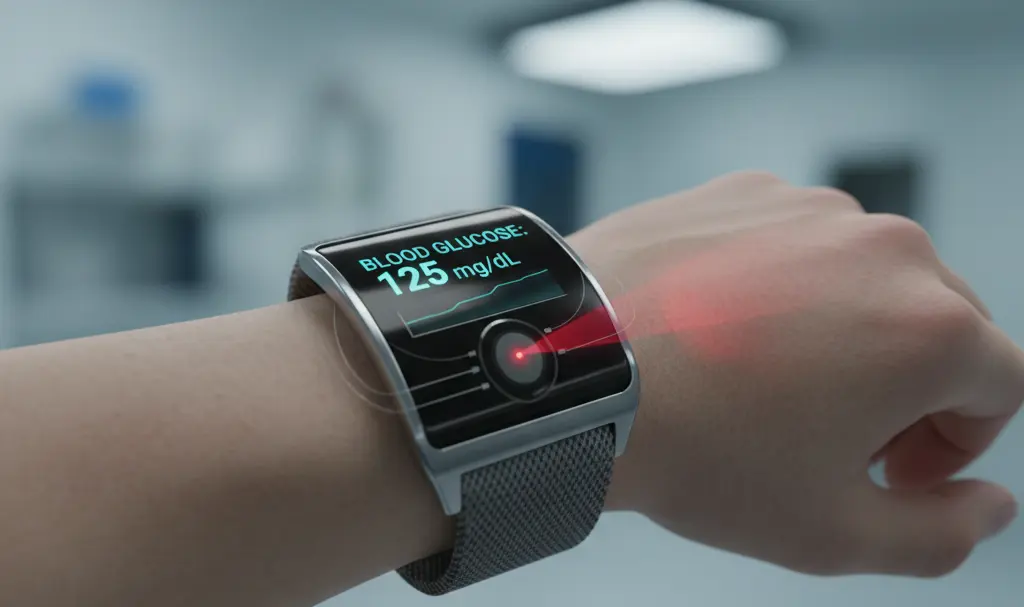
The new device utilizes a technique known as Raman Spectroscopy. Here is why this technology is highly anticipated:
- Near-Infrared Light: The device shines a safe, near-infrared laser directly onto the skin from a close distance.
- Molecular Analysis: It analyzes how the light interacts with the interstitial fluid and molecules within the tissue.
- Completely Non-Invasive: Because it relies purely on light analysis, there is no pain, no risk of infection, and no need for disposable needles.
Real-World Testing and Future Integration
This is not just a theoretical concept; the device has already undergone live human testing. In a recent trial, a volunteer consumed glucose-heavy beverages to intentionally fluctuate their blood sugar levels. Over a four-hour period, the device monitored these changes every four minutes. Impressively, the prototype generated readings that were highly comparable to results from industry-standard, commercial glucometers.
The MIT research team is actively working to miniaturize and commercialize this technology. They have already tested a smaller prototype designed to pair with smartphones, with the ultimate goal of integrating the sensors directly into smartwatches. Several major tech companies are also exploring this frontier. For instance, Huawei is currently testing advanced software systems designed to detect the risk of diabetes and hyperglycemia. If you are interested in exploring their current premium offerings, you can check out this Huawei Watch GT 4 elegant smartwatch deal.
The Hidden Danger: PFAS in Smartwatch Bands
While we rely on smartwatches to monitor and improve our health, not every component of these devices is entirely beneficial. Recent studies have highlighted potential concerns regarding the materials used to manufacture watch straps.
A prime example is the use of fluoroelastomer bands, which are incredibly common in the wearable industry. These synthetic bands often contain per- and polyfluoroalkyl substances (PFAS), widely known as “forever chemicals” because they do not easily break down in the environment or the human body.
These chemicals have been used in various popular wearables, including some models of the Apple Watch. However, the tech giant from Cupertino was quick to address consumer speculation. Apple has publicly emphasized that all of their manufactured bands undergo rigorous safety testing and announced a comprehensive plan to completely phase out the use of PFAS in their products. This commitment to user safety makes exploring their premium lineup, like discovering the best features of the Apple Watch Ultra, a confident choice for health-conscious consumers.
Frequently Asked Questions (FAQ)
When will non-invasive blood glucose smartwatches be available to the public?
While MIT’s prototype and clinical trials show immense promise, the technology is still in the miniaturization and regulatory approval phase. Experts estimate it may take a few more years before FDA-approved, consumer-ready smartwatches with optical glucose monitoring hit the global market.
How accurate is Raman spectroscopy compared to traditional needle glucometers?
In preliminary tests, continuous monitoring over a four-hour period using Raman spectroscopy yielded results comparable to commercial, traditional glucometers. However, factors like skin thickness, pigmentation, and sweat can affect optical sensors, so extensive clinical trials are required to guarantee medical-grade accuracy.
Are “forever chemicals” (PFAS) in smartwatch bands dangerous to wear?
Dermal absorption of PFAS through solid watch bands is considered quite low, so immediate health risks from simply wearing the band are unlikely. The primary concern is environmental accumulation and long-term exposure. Major manufacturers like Apple are proactively phasing out PFAS to ensure complete consumer safety and environmental responsibility.
Source: Digital Trends | Opening photo: Gemini
About Post Author
